✅ Updated on 20.03.2026

🐘 A Few Facts About Khao Yai
- Khao Yai is Thailand’s first national park, established in 1962.
- It spans 2,206 km², making it the third-largest park in the country. It stretches across four provinces: Nakhon Ratchasima, Saraburi, Nakhon Nayok, and Prachinburi.
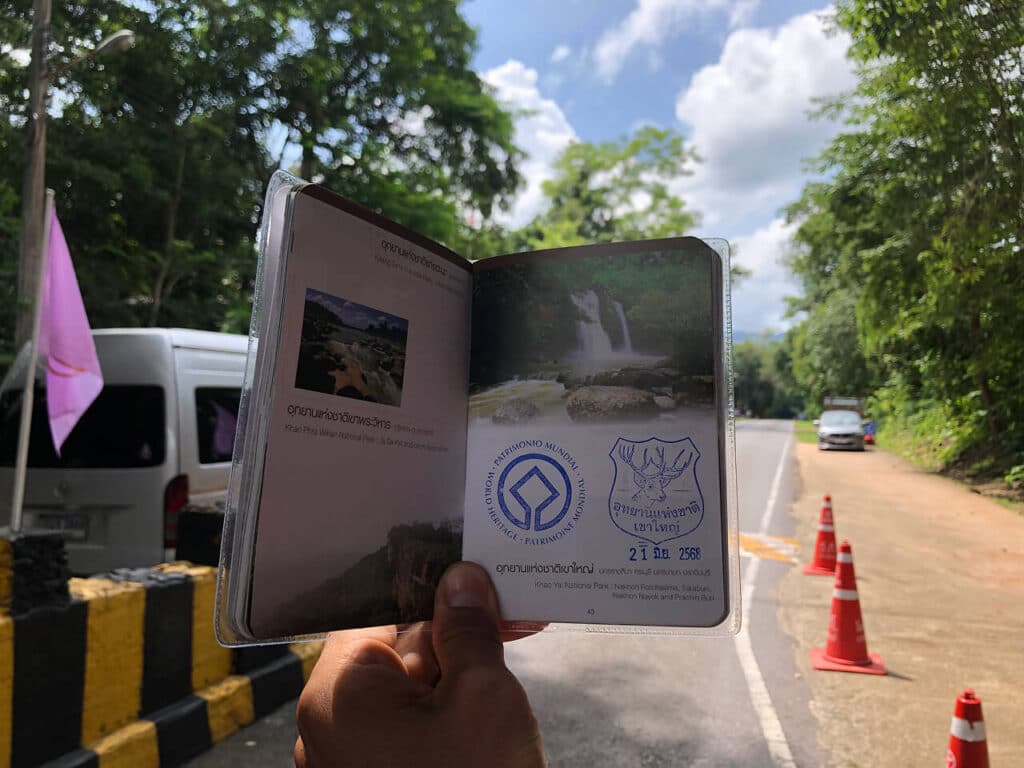
- Since 2005, it’s been a UNESCO World Heritage Site as part of the Dong Phayayen–Khao Yai Forest Complex.
- The park’s logo features a deer head — a nod to the graceful Schomburgk’s deer, which once roamed Thailand.
- Wild elephants live here — one of the few places in Thailand where you can see them in their natural habitat. (I actually saw them!)
- Khao Yai is home to over 20 waterfalls. The tallest is Haew Narok (about 150 meters), while the most famous is Haew Suwat — featured in the movie The Beach with Leonardo DiCaprio.
💸 Entrance Fees for Khao Yai National Park
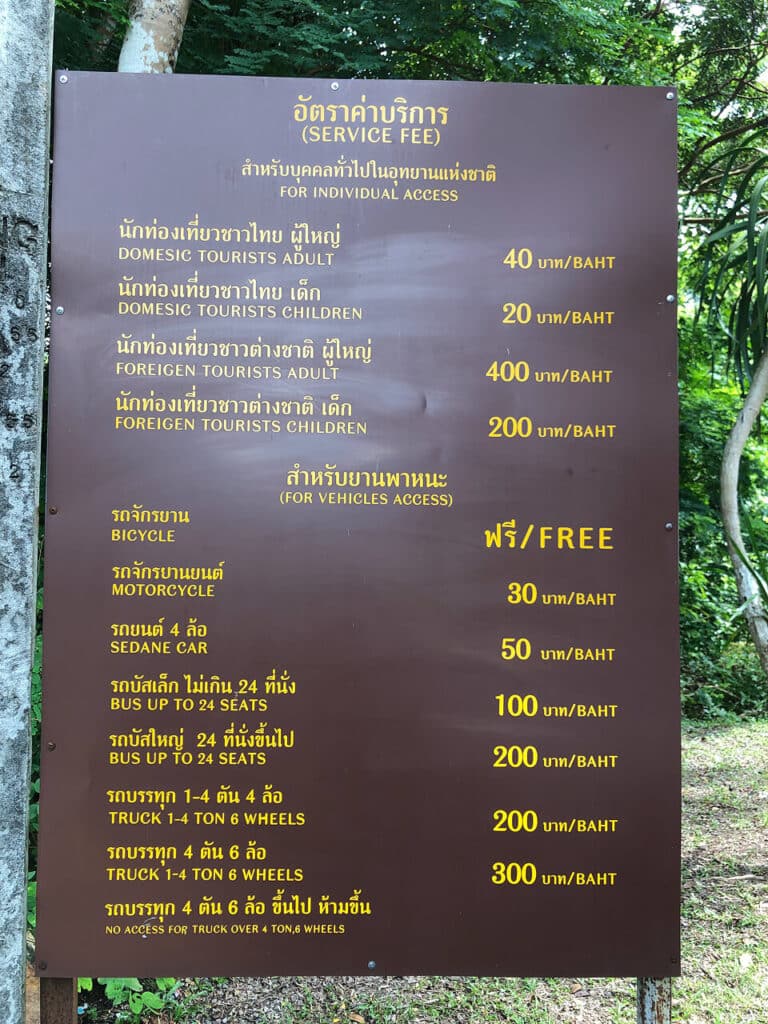
Tickets:
- With a Thai ID: Adults — 40 THB, Children — 20 THB
- Without a Thai ID: Adults — 400 THB, Children — 200 THB
Vehicle Fees:
- Bicycle — Free
- Motorcycle — 30 THB
- Car — 50 THB
- Bus — 100–200 THB
- Truck (1–4 tons) — 200–300 THB
🕕 Opening Hours
The park is open daily from 6:00 AM to 6:00 PM.
🧭 How to Get There
The easiest way to get to Khao Yai is by car or motorbike. There are two main entrances — the southern and northern gates — so it’s best to map your route directly to one of the checkpoints.
⛅ Best Time to Visit Khao Yai: Weather by Season
Khao Yai sits in the mountains, so even during the hot months, the air feels fresh. The average annual temperature is around 21°C, with cool evenings year-round. The climate can be roughly divided into three seasons:
☀️ Hot Season (March – May)
Temperatures can reach up to 27°C, but the altitude keeps it comfortable. It’s an ideal time for trekking and wildlife watching.
🌧️ Rainy Season (June – September)
The park turns lush and jungle-like, with waterfalls in full force. Rain is frequent but usually short and comes in the late afternoon. Just don’t forget a raincoat.
❄️ Cool Season (October – February)
The most popular time to visit. Clear skies during the day, misty mornings, and chilly nights — sometimes dropping below 10°C, especially in December and January. Warm clothing is a must.
📊 Monthly Temperature and Rainfall in Khao Yai
| Month | Avg (°C) | Min (°C) | Max (°C) | Rainfall (mm) |
|---|---|---|---|---|
| January | 19 | 14 | 24 | 24.1 |
| February | 21 | 15 | 26 | 84.4 |
| March | 20 | 16 | 23 | 66.4 |
| April | 23 | 18 | 27 | 141.9 |
| May | 23 | 20 | 27 | 283.5 |
| June | 23 | 20 | 26 | 266.8 |
| July | 22 | 19 | 25 | 355 |
| August | 22 | 19 | 25 | 322 |
| September | 22 | 19 | 25 | 426.2 |
| October | 20 | 17 | 23 | 283.5 |
| November | 19 | 14 | 25 | 71.4 |
| December | 18 | 14 | 23 | 13 |
✌️ Things to Do in Khao Yai

🏞️ Trekking: 7 Trails to Choose From
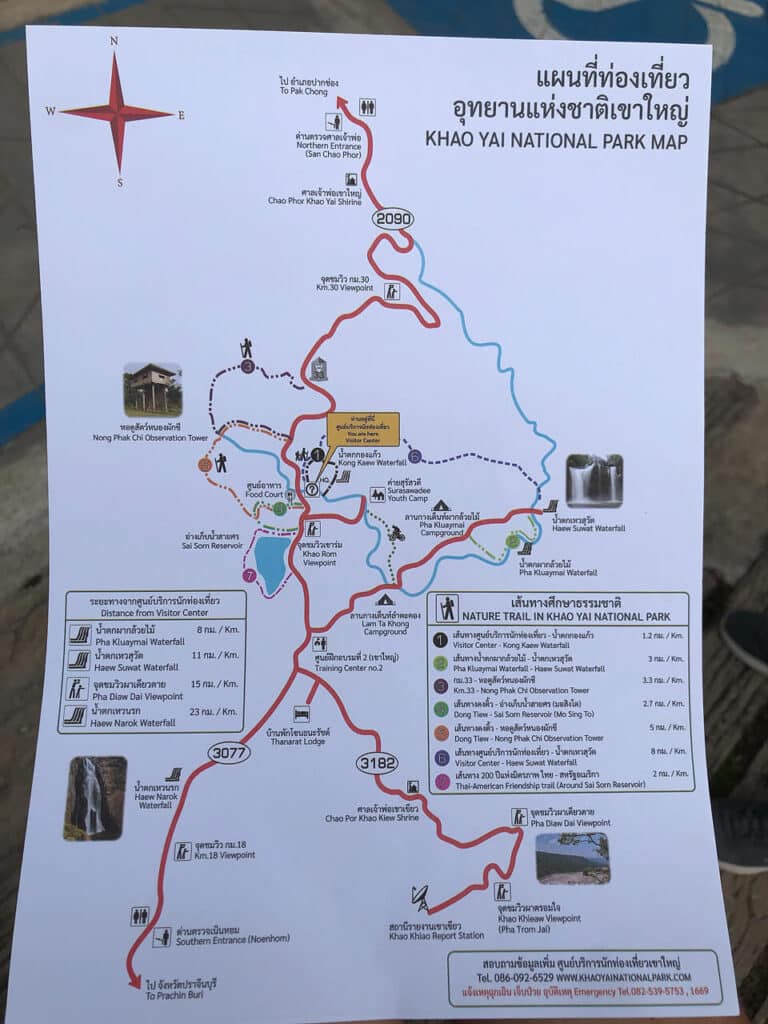
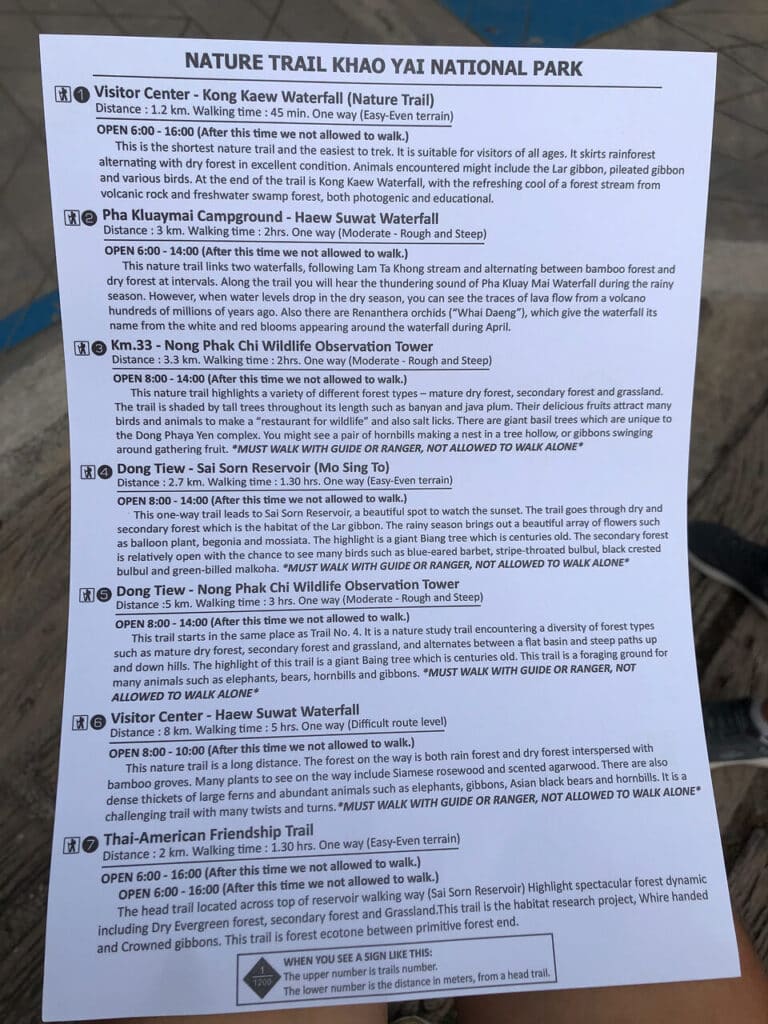
1. Visitor Center — Kong Kaew Waterfall
🛣️ Distance: 1.2 km (one way)
🕒 Duration: ~45 minutes
🟢 Difficulty: Easy (flat trail)
🕕 Hours: Open from 6:00 AM to 4:00 PM
A short, beginner-friendly trail suitable for all ages. The path winds through both rainforest and drier forest zones. Along the way, you might spot gibbons and other wildlife. The trail ends at the scenic Kong Kaew Waterfall.
2. Pha Kluaymai Campground — Haew Suwat Waterfall
🛣️ Distance: 3 km
🕒 Duration: ~2 hours
🟡 Difficulty: Moderate (some inclines and elevation changes)
🕕 Hours: Open from 6:00 AM to 4:00 PM
This trail connects two waterfalls and cuts through bamboo groves and dry forest. During the rainy season, you’ll hear the roar of cascading water. In spring, blooming orchids turn the path into a breathtaking sight.
3. Kilometer 33 — Nong Phak Chi Watchtower
🛣️ Distance: 3.3 km
🕒 Duration: ~2 hours
🟡 Difficulty: Moderate
🕕 Hours: Open from 8:00 AM to 2:00 PM
❗ Guide or ranger required
This route passes through diverse forest types and open grasslands. Along the way, you may spot animal tracks, birds, and even baboons. The trail ends at a watchtower with panoramic views.
4. Dong Tiew — Sai Sorn Reservoir
🛣️ Distance: 2.8 km
🕒 Duration: ~1.5 hours
🟢 Difficulty: Easy
🕕 Hours: Open from 8:00 AM to 2:00 PM
❗ Guide or ranger required
A scenic trail through bamboo thickets, secondary forest, and open meadows. Birdwatchers and wildlife lovers will enjoy spotting gibbons and rare plants. Especially beautiful during the rainy season.
5. Dong Tiew — Nong Phak Chi Watchtower
🛣️ Distance: 5 km
🕒 Duration: ~3 hours
🟡 Difficulty: Moderate
🕕 Hours: Open from 8:00 AM to 2:00 PM
❗ Guide or ranger required
This trail winds through forests, plains, and low hills. Wildlife sightings are common — from elephants to bears and gibbons. The watchtower at the end offers sweeping views of the surrounding wilderness.
6. Visitor Center — Haew Suwat Waterfall
🛣️ Distance: 8 km
🕒 Duration: ~5 hours
🔴 Difficulty: Hard
🕕 Hours: Open from 8:00 AM to 10:00 AM
❗ Guide or ranger required. Closed from July 1 to August 31. Other trails remain open year-round.
This is the longest and most challenging trail in the park. It leads through dense jungle, with river crossings and bamboo thickets. Wildlife and rare plants are often seen along the way.
7. Thai-American Friendship Trail
🛣️ Distance: 2 km
🕒 Duration: ~1.5 hours
🟢 Difficulty: Easy
🕕 Hours: Open from 6:00 AM to 4:00 PM
A gentle trail along the Sai Sorn Reservoir, perfect for families with kids. A relaxed way to enjoy the park’s nature without strenuous effort.
📸 Wildlife Spotting: What You Might See in the Forest
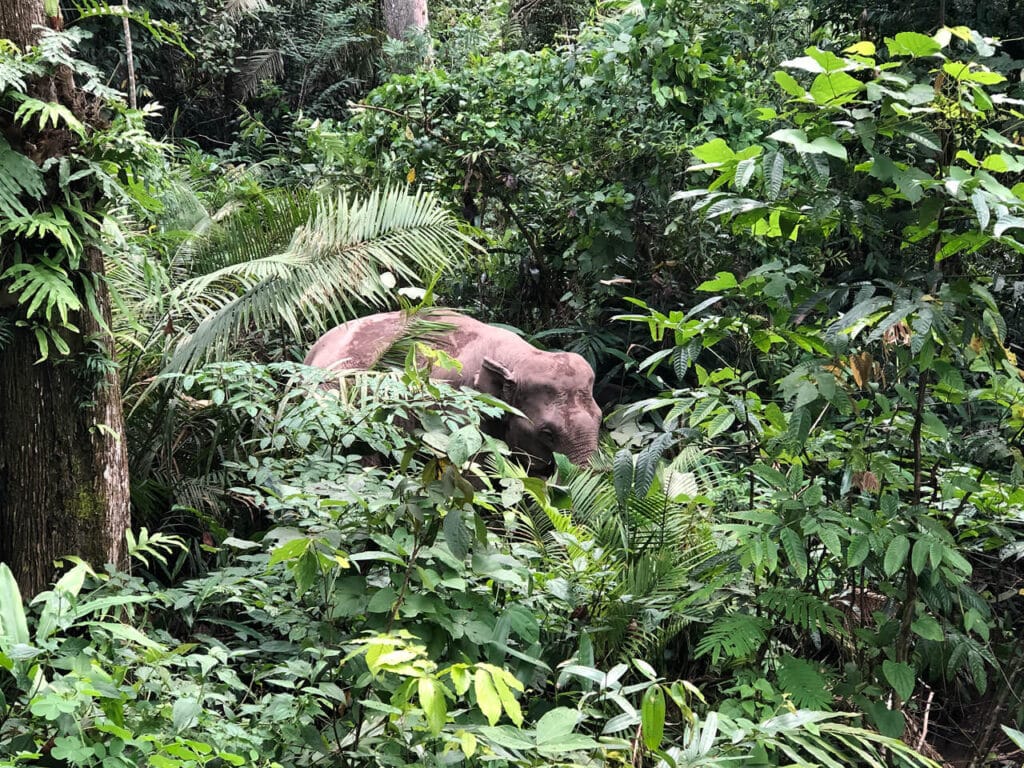
Khao Yai National Park is a dream destination for wildlife enthusiasts. It’s home to rare birds, large mammals, reptiles, insects, and even amphibians. The key is to move quietly, stay low-profile, and bring binoculars for the best viewing experience.
🐦 Birdwatching in Khao Yai
Khao Yai is recognized as an Important Bird Area (IBA), making it one of the world’s key birdwatching sites. Over 280 bird species have been recorded here, including:
- Siamese fireback
- Blue-winged pitta
- Coral-billed ground cuckoo
- Four species of hornbills
- Long-tailed broadbill, Azure-winged magpie, Orange-breasted trogon
- Blossom-headed parakeet and the rare Banded kingfisher
📍 Top spots for birdwatching: the visitor center, Mor Boonsong campground, Nong Phak Chi watchtower, Haew Suwat Waterfall, and nearby trails.
🐘 Wildlife in Khao Yai
Over 70 species of mammals live in Khao Yai — here are some of the most iconic ones:
- Asian elephant — up to 4 meters tall, sometimes seen crossing the road
- Gaur — wild cattle weighing up to 900 kg
- Dhole — the park’s top predator, also known as the Asiatic wild dog
- Gibbons (white-handed and pileated) — known for their morning songs
- Deer — muntjacs and sambars often roam the grasslands at dawn
- Also spotted: macaques, bears, leopard cats, porcupines, giant squirrels, and otters
🦎 Reptiles & Amphibians
Look closely and you might spot:
- King cobra and reticulated python
- Chinese water dragon and monitor lizards
- Tree toads and various frogs hiding in the undergrowth
🐞 Insects & Butterflies
Macro photography lovers will find Khao Yai especially rewarding:
- Stag beetles unique to the park
- Orange oakleaf butterfly, perfectly camouflaged as a dry leaf
- Jewelled Nawab, a rare forest butterfly known to sip from streams — or animal dung
🌙 Night Safari
When the sun sets, the jungle stirs. On a night safari, you might spot deer, porcupines, owls, elephants, and even civets — if luck is on your side.
You’ll ride in a pickup truck with a ranger and a high-powered spotlight, covering 10 km of forest road. These tours are guided only — private vehicles aren’t allowed.
🕖 Times:
- 7:00 PM – 8:00 PM
- 8:00 PM – 9:00 PM
💰 Cost: 600 THB per truck (up to 8 people)
📍 How to join: Sign up at the visitor center before 6:00 PM.
Stay Overnight in Khao Yai
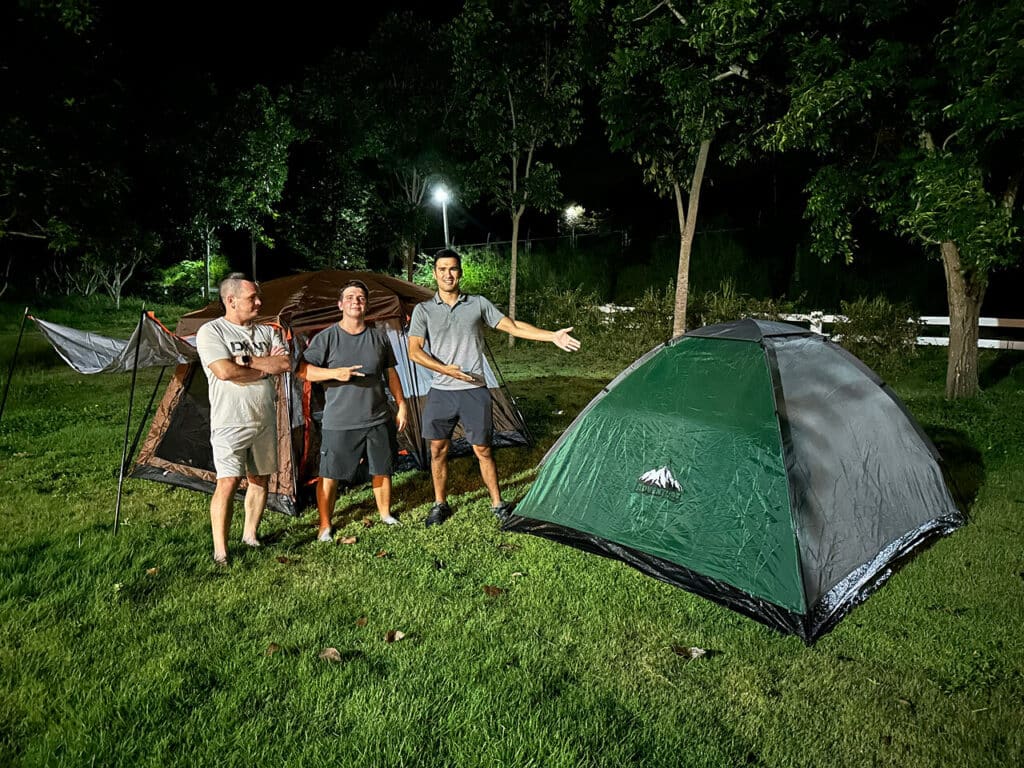
To truly experience the magic of the park, spend the night. You can rent a bungalow or camp under the stars. The air is cool, the evenings are quiet, and your neighbors might include deer, gibbons — even otters.
🏡 Guesthouses
There are several park-owned houses available for rent, ranging from basic bungalows to large cabins perfect for groups.
Important booking info:
Reservations can only be made online at nps.dnp.go.th/reservation — the site is known to be buggy, so here are some alternatives:
- Call the park: 0860926529
- Message their official Facebook group
- Visit the Visitor Center in person (preferably before noon)
🎯 Booking rules:
- Up to 3 nights
- Bookings open 60 days in advance
📉 Weekday discount: 30% off Monday–Thursday
⛺️ Camping
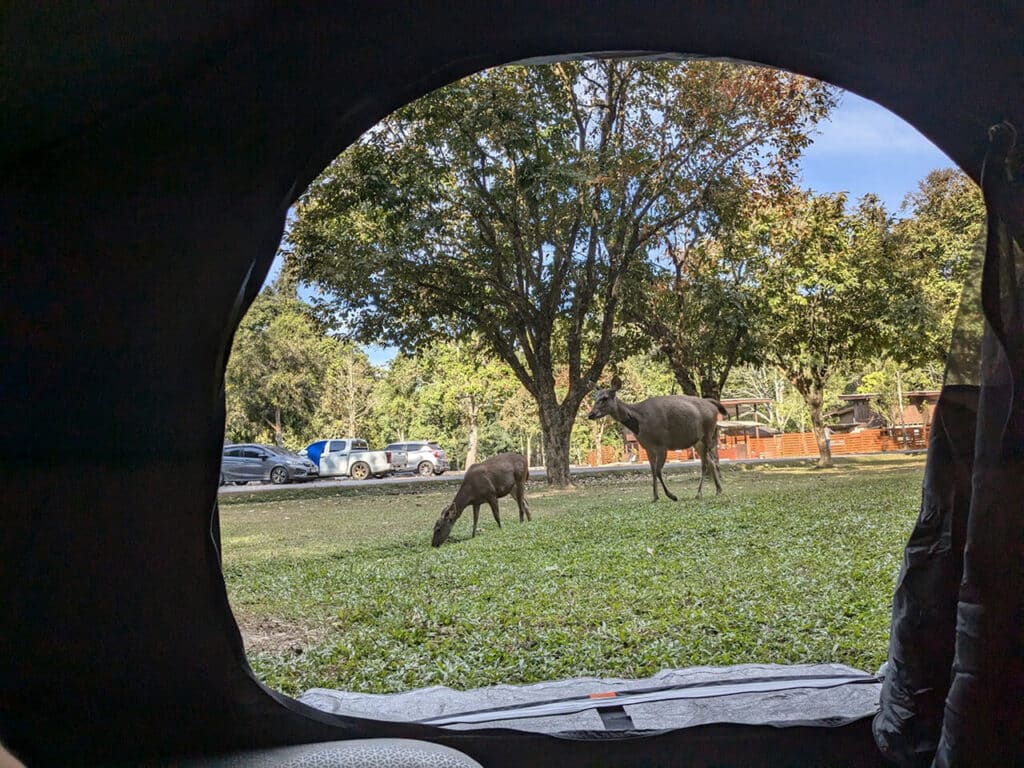
The best camping spot in the park is Lam Ta Khong Campground — a wide grassy field by the river, where otters swim and deer roam freely. It’s cozy, green, and well-equipped with showers, toilets, electricity, a café, and a small shop.
📍 A second campground, Khao Rom Viewpoint, opens only during long holidays.
📆 Best time to camp: November to March
How it works:
- You can reserve online or try your luck on arrival (if space is available)
- Bring your own tent or rent one on site
💵 Prices:
- Tent pitch: 30 THB/adult, 10 THB/child
- 3-person tent rental: 225 THB/night
- 2-person tent rental: 150 THB/night
- Sleeping bag: 30 THB
- Mat/pillow: 10–20 THB
⛔ Tents must be pitched only in designated areas
🕗 Café and shop hours: 8:00 AM – 5:00 PM — bring snacks or food
📍 Must-Visit Spots in Khao Yai
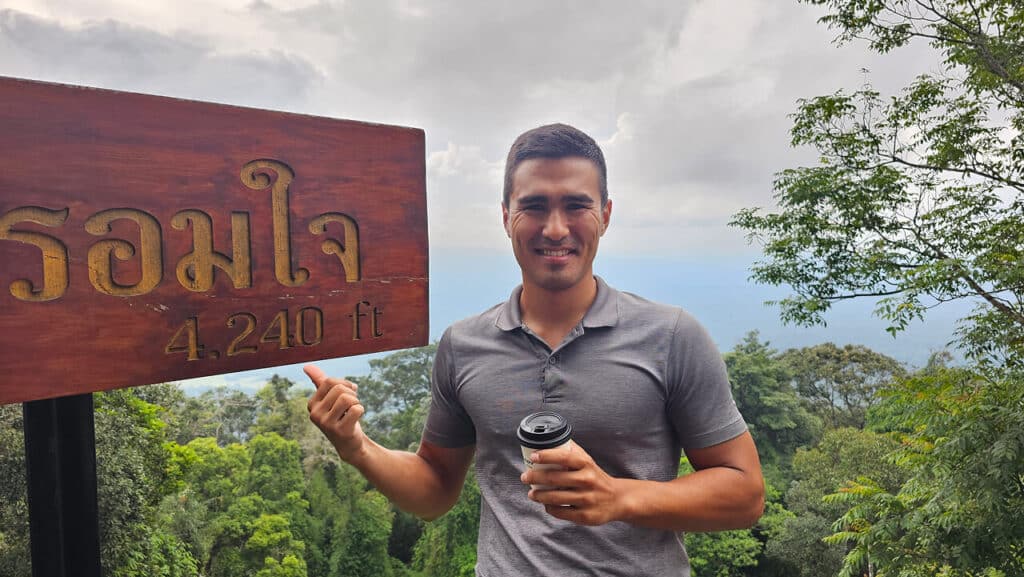
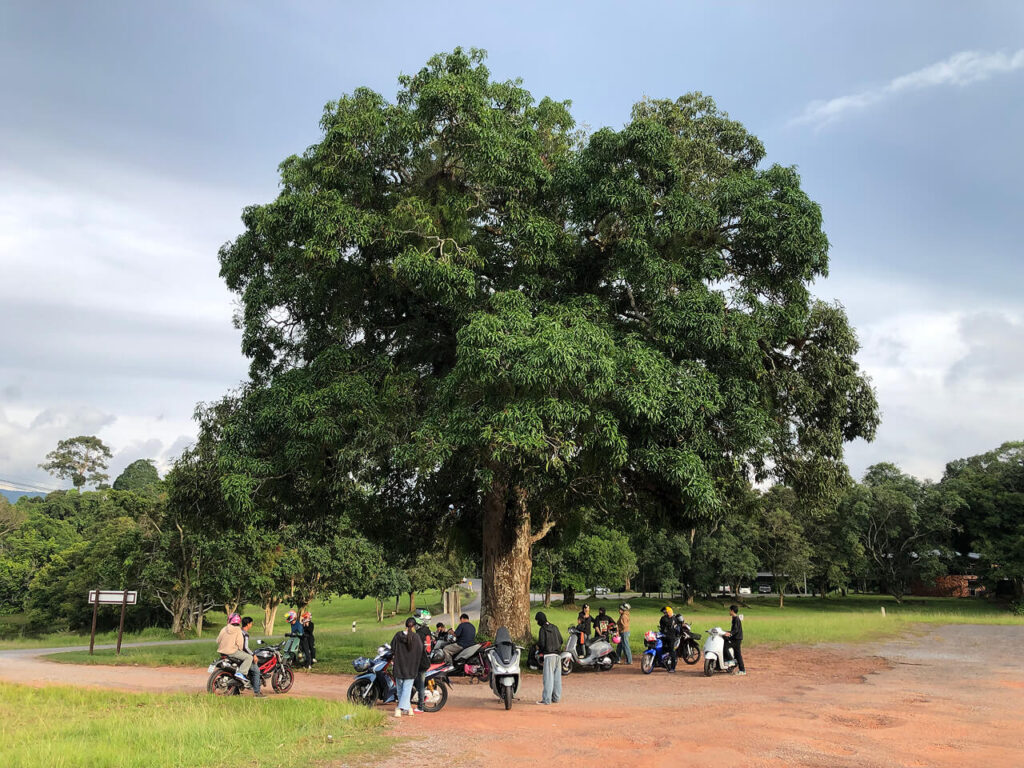
- Haew Narok Waterfall — the park’s tallest and most powerful fall, especially impressive during the rainy season.
- Pha Trom Jai Viewpoint — stunning panoramic views over the forested mountains.
- The Giant Tree — a massive tree along the trail to Sai Sorn Reservoir. It’s a scenic spot that’s perfect for photos and a peaceful break in nature.
- Sai Sorn Reservoir — peaceful water views, ideal for a picnic or sunset stroll.
- Haew Suwat Waterfall — famous from The Beach movie; easily accessible and very photogenic.
- Km 30 Viewpoint — a quick stop on Thanarat Road with sweeping jungle vistas.
FAQs
Absolutely. Whether you read this guide or check the official website, you’ll quickly see why it’s one of Thailand’s most fascinating national parks. With wild elephants, lush jungles, waterfalls, and incredible biodiversity, it’s a must-visit for nature lovers and adventure seekers.
I recommend staying at least 2 days and 1 night. Trekking alone can take up to 6 hours, and you won’t want to miss camping under the stars or joining a night safari — both essential experiences that make Khao Yai unforgettable.
The best option is to drive yourself — by car or motorbike — so you’re not limited by public transport schedules. We rented a car through Local Rent for 1,300 THB per day and had a fun road trip with friends all the way to the park.
There’s no single best month — it really depends on what you’re looking for. If you’re after roaring waterfalls and a jungle bursting with green, the rainy season from June to September is your window. For hiking and wildlife spotting, the hot season from March to May offers dry trails and active animals. And if you want to enjoy cool air and cozy nights under the stars, the best time to camp is during the cool season from October to February.
Yes — and it’s not uncommon. Wild elephants are often seen crossing roads, especially in the early morning or late afternoon. I personally saw two adults with a baby during my visit!
Not necessarily. Most of the park can be explored on your own, especially the shorter, well-marked trails and general sightseeing spots. However, if you plan to join a night safari or hike on trails #3 to #6, a guide or ranger is mandatory for safety and navigation.
If you’re visiting during the cool season, pack warm clothes — temperatures can drop to 14°C at night. For trekking, wear sturdy shoes and long sleeves to protect against sun, insects, and scratchy plants. Lightweight, breathable layers work best year-round.
