✅ Updated on 06.11.2025

Top 10 Things to Do in Chiang Rai
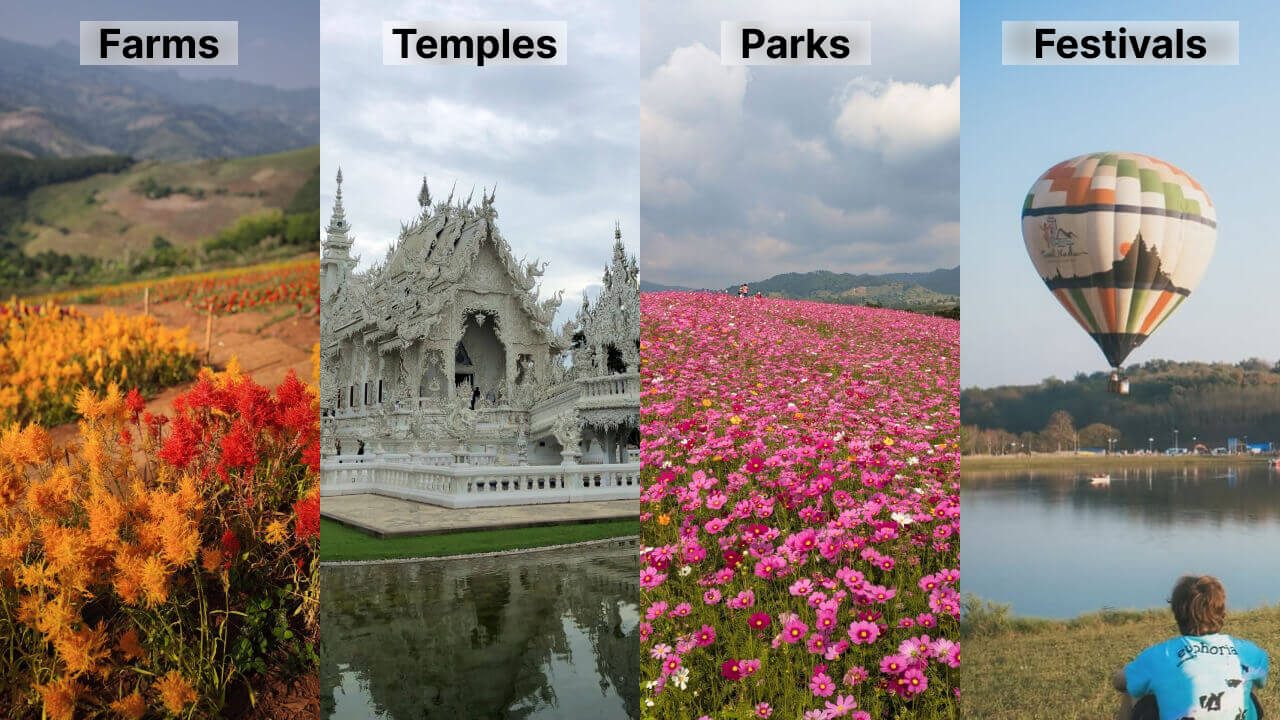
- Visit the White Temple (Wat Rong Khun) — Chiang Rai’s most iconic and surreal attraction
- Explore the Blue Temple (Wat Rong Suea Ten) — a vibrant blend of art and spirituality
- Eat boiled eggs at Pa Tueng Hot Springs — keep them in for at least 15 minutes
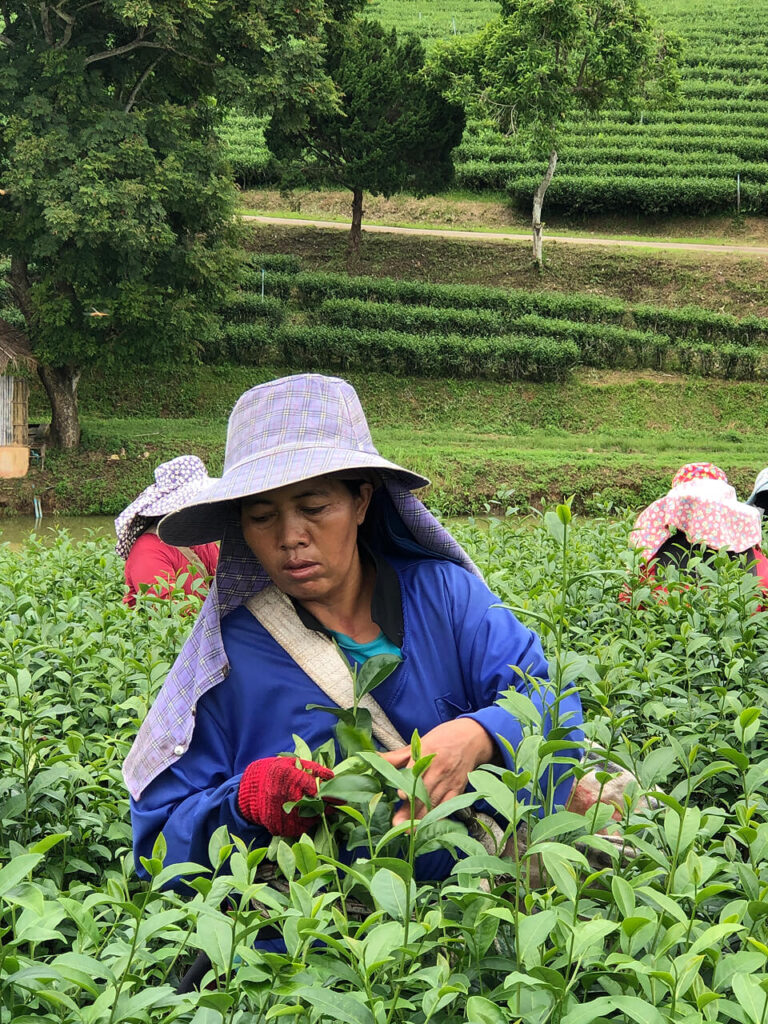
- Walk through tea plantations — watch local women handpick tea leaves and sip fresh matcha with a view
- Stand at Thailand’s northernmost point — peer across the river into Myanmar
- See the Golden Triangle — where Thailand, Laos, and Myanmar converge
- Attend the Chiang Rai Balloon Festival, held annually from February 14–18 at Singha Park
- Take a photo at Lalitta Café — Chiang Rai’s most Instagrammable spot
- Ride to Doi Mae Mon — for misty sunrises, epic views, and hilltop coffee
- Feed sheep at Akha FarmVille — a cute, clean mountain farm perfect for families and couples
🏨 Good and affordable hotels in the center of Chiang Rai: B2, Diamond Park, Hi, The Space. Here are some more hotels I liked, though they’re not in the center: The Imperial, Amarin, Meesuk, Le Meridien, La Maison, Lavanda.
The White Temple (Wat Rong Khun)

🎟️ Entry fee: 100 THB
The White Temple is the crown jewel of Chiang Rai and easily one of the most unusual temples in Thailand. Unlike traditional Buddhist sites, this one is more of a modern art installation, created by contemporary Thai artist Chalermchai Kositpipat. He began building it in 1997 with his own money and continues adding new details — the project is expected to be completed by 2070.
The temple’s standout feature is its dazzling white exterior and shimmering glass inlays, symbolizing the purity of the Buddha. To reach the main hall, visitors cross a bridge over “Hell” — a pit filled with sculptures of tormented souls. Inside, you’ll find some truly unexpected artwork: murals featuring comic book characters, scenes from The Matrix, and even 9/11 airplanes.
👉 For more fascinating temples in the area, check out my full guide to Chiang Rai’s most interesting temples. Personally, I loved the Blue Temple the most.
Singha Park
🎟️ Entry fee: 50 THB
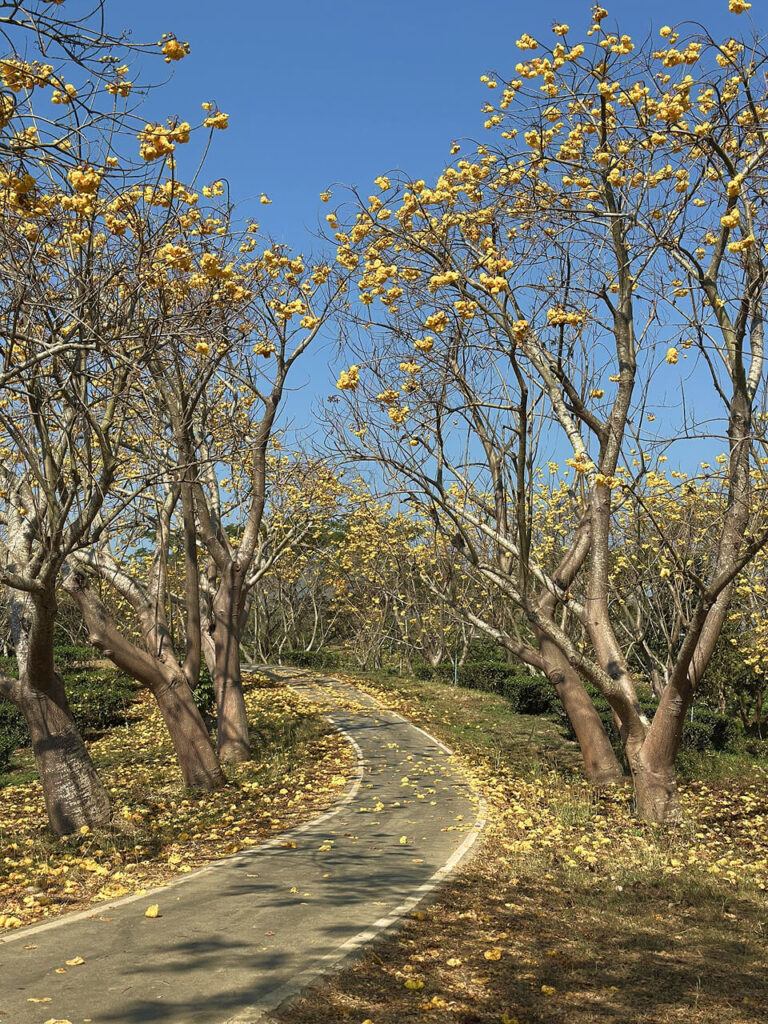
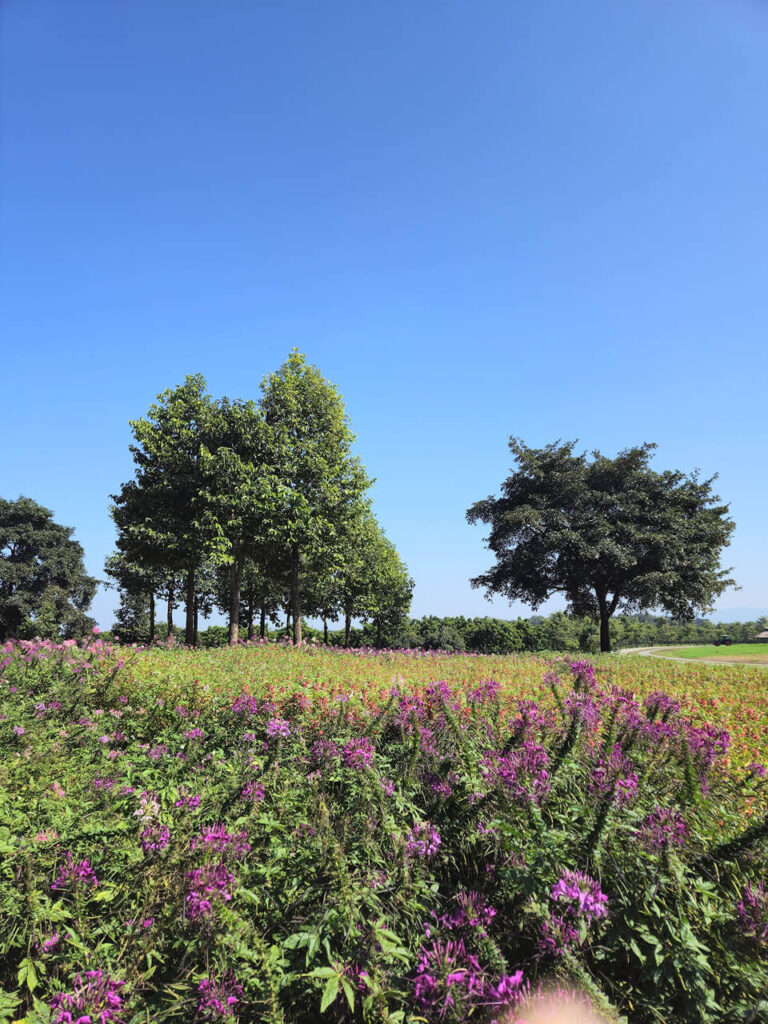
Singha Park is one of the top attractions in Chiang Rai — a massive 3,000-acre park featuring lush tea plantations, flower fields, a swan lake, and even a small petting zoo. You can explore it by golf cart (600 THB), rent a bike (200 THB), or join a guided bus tour. The park also has cafes, restaurants, and a zipline for the adventurous.
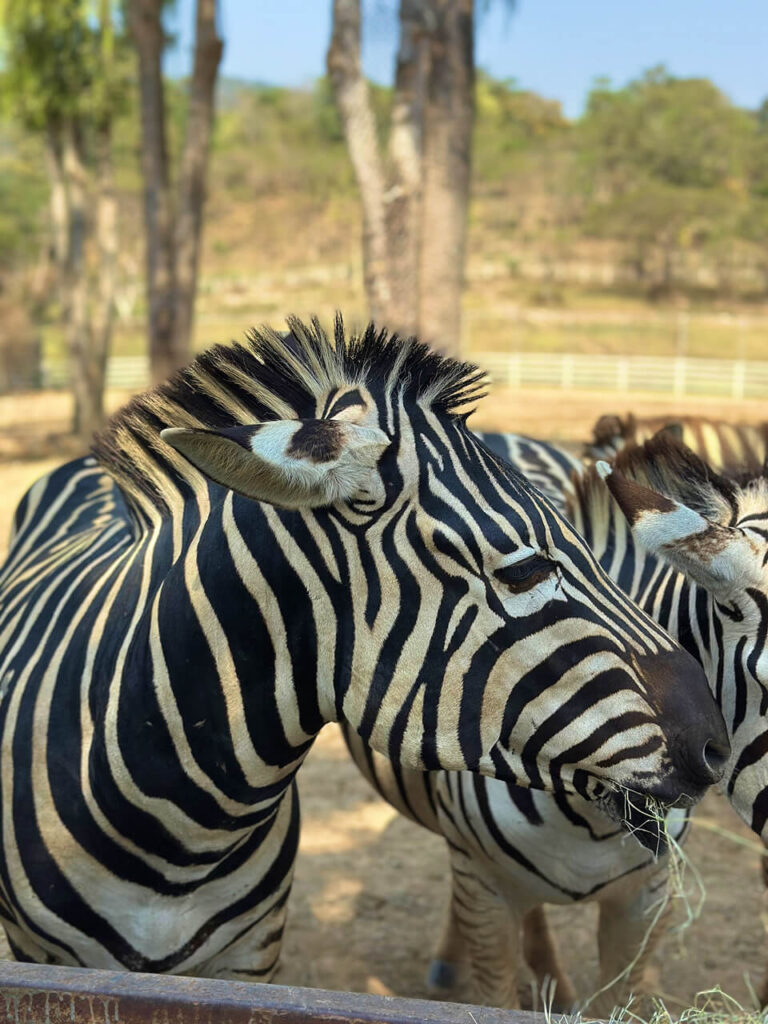

It’s a great spot for nature lovers, photographers, and anyone looking for relaxing things to do in Chiang Rai. I recommend setting aside at least 2–3 hours, or better yet, half a day to fully enjoy everything.
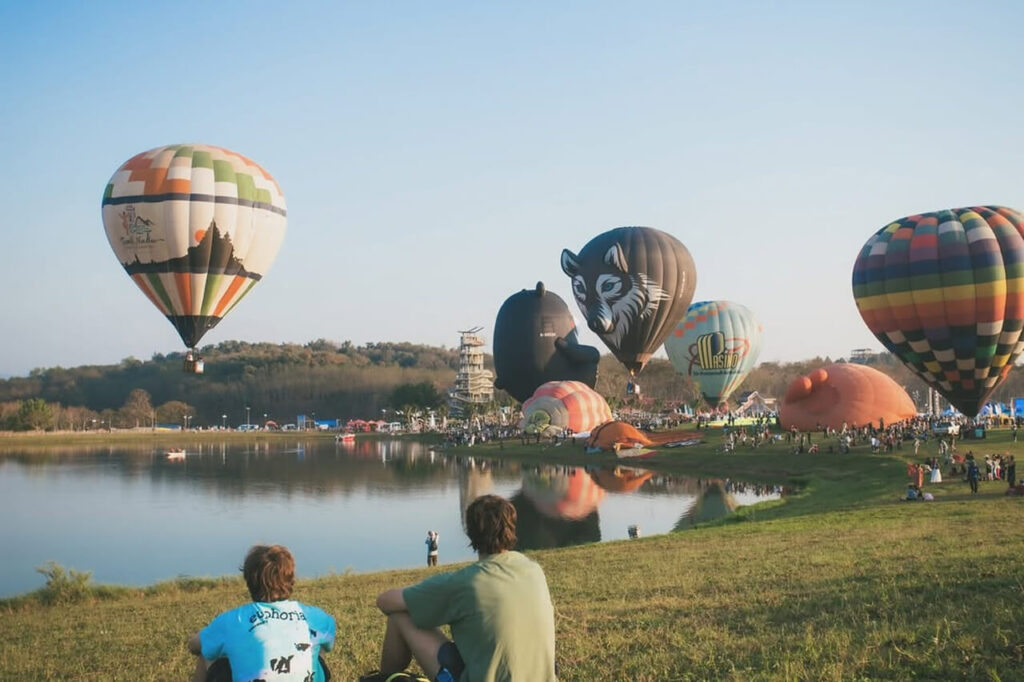
🎈 If you’re visiting in February, don’t miss the annual Chiang Rai Balloon Festival, held here every year from February 14–18.
Chiang Rai Flower Festival
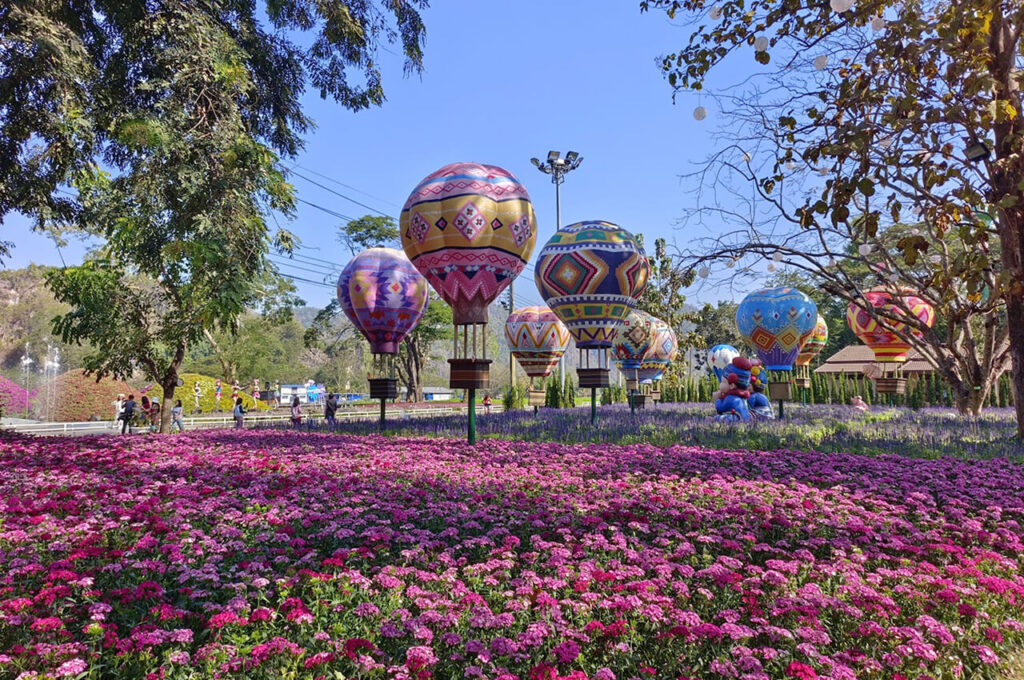
📍 Usual location on Google Maps
🎟️ Free entry
The Chiang Rai Flower Festival is the city’s biggest winter event, held annually from mid-December to early January. The park transforms into a sea of vibrant blooms, featuring themed art installations, floral sculptures, and evening light shows. There are also food courts and a local market selling crafts and souvenirs.
🌅 The best time to visit is around sunset when the garden lights come on and the whole park glows beautifully. But even outside festival season, this park remains one of the most peaceful places to go in Chiang Rai — perfect for a quiet walk or a nature break.
Khun Korn Waterfall
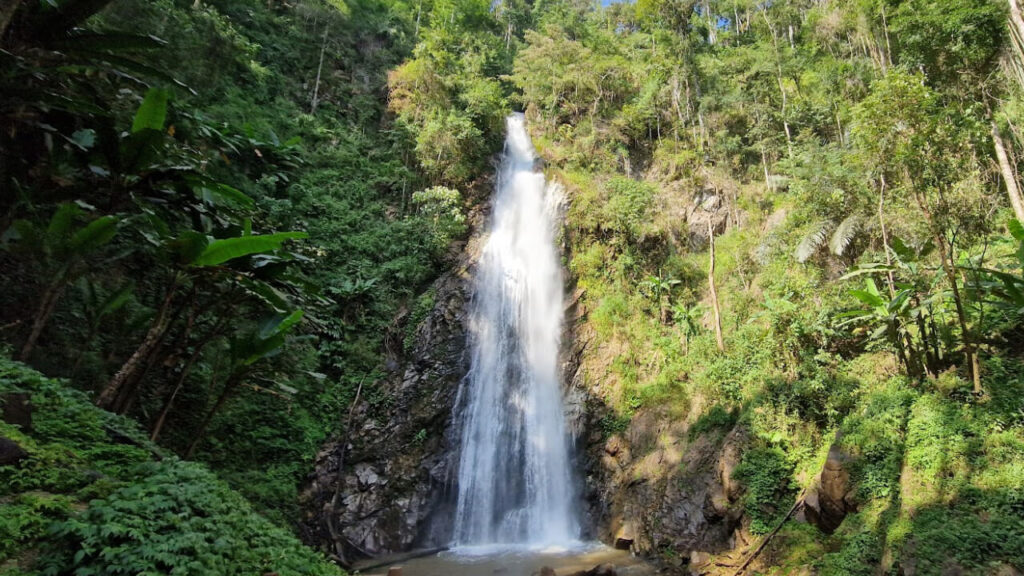
🎟️ Free entry
Khun Korn Waterfall is the tallest in Chiang Rai, standing at 40 meters high and surrounded by dense jungle. To reach it, you’ll hike for about 30 minutes through a scenic bamboo forest, crossing small streams and enjoying lush mountain views. The trail starts from a parking area with toilets, and entrance is free.
You can take a dip at the base of the falls, but be warned — the water is cold and the pool is shallow. It’s best to visit in the morning to avoid crowds. Wear sturdy shoes, especially during the rainy season when the path can get slippery.
Oub Kham Museum
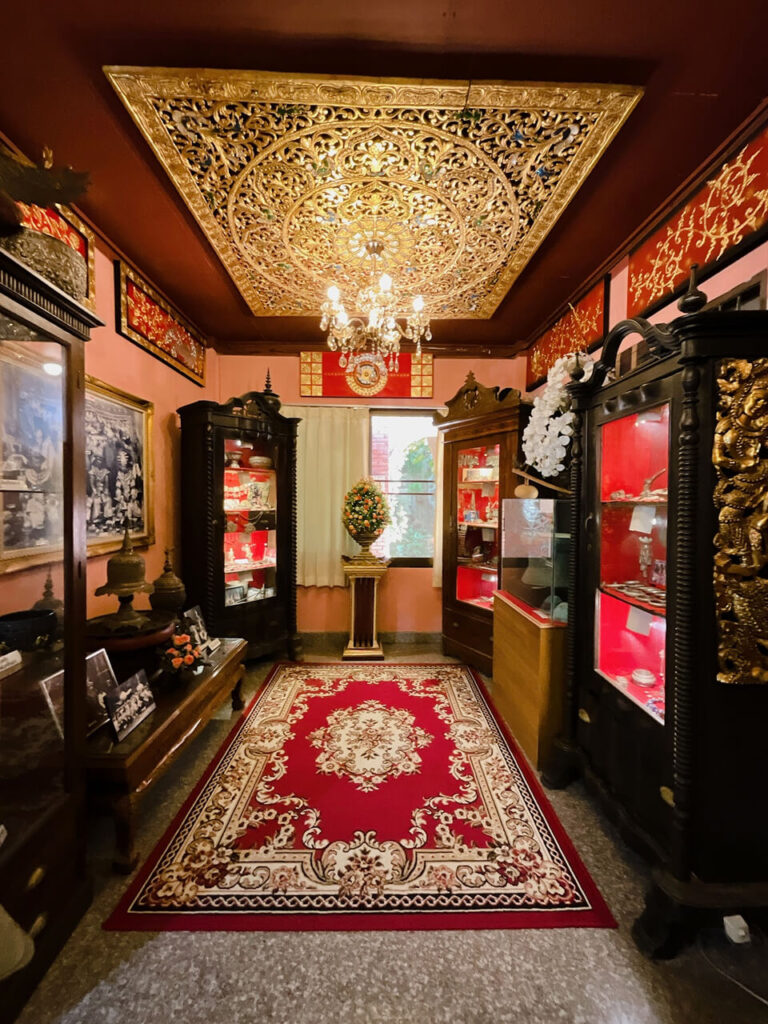
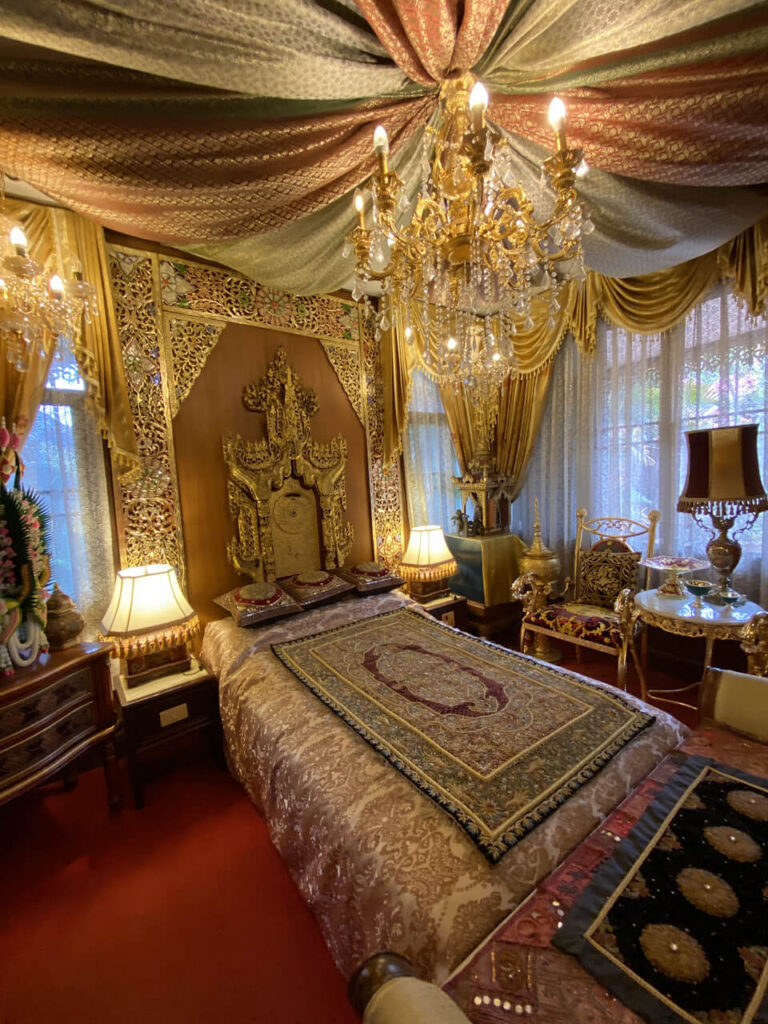
🎟️ Entry fee: 300 THB (includes English-speaking guide)
Oub Kham Museum is a privately-owned museum dedicated to the rich heritage of the ancient Lanna Kingdom and the cultures of the Mekong region. Its collection includes rare artifacts, traditional costumes, sacred relics, and household items — some over a thousand years old. The ticket price includes a guided tour in English, making the experience even more engaging.
While the museum isn’t large, it’s full of atmosphere and attention to detail. At the end of the tour, guests are treated to a cup of green tea. Note: photography is restricted in some rooms, and you may be asked to remove your shoes in others.
📚 If you’re interested in Lanna history, this is one of the top cultural attractions in Chiang Rai not to miss.
Baan Dam Museum (The Black House)
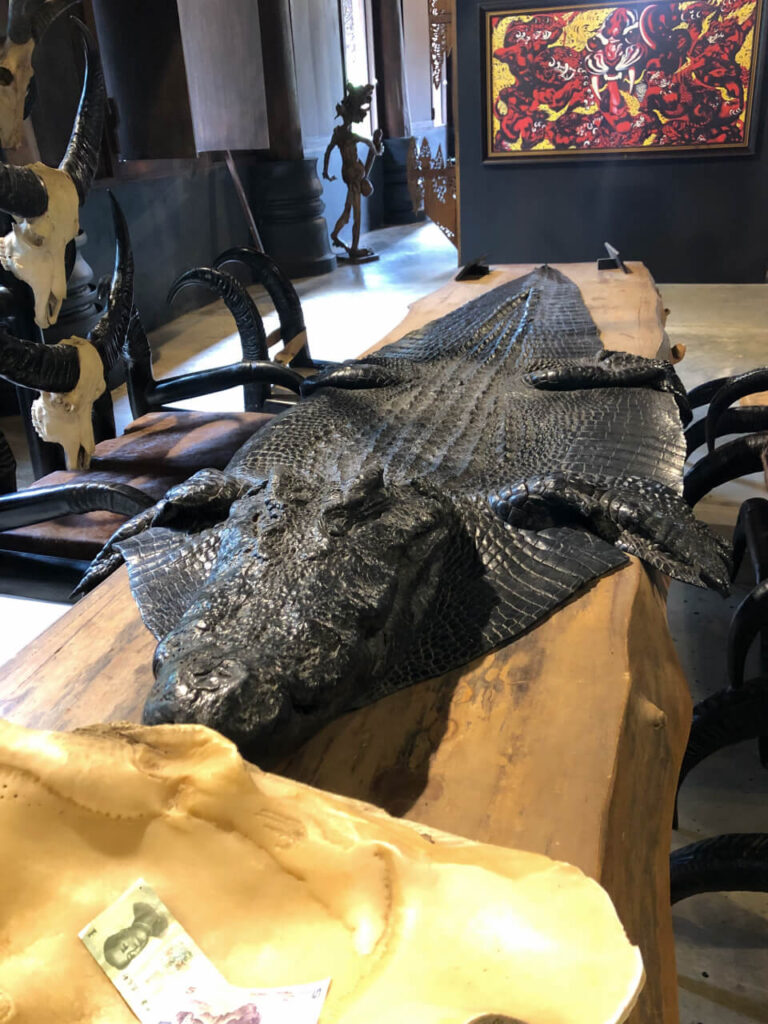

🎟️ Entry fee: 80 THB
Baan Dam, also known as the Black House, is one of Chiang Rai’s most unique and thought-provoking attractions. Created by Thai artist Thawan Duchanee, this eerie art complex features dozens of black buildings filled with sculptures, furniture, and installations made from wood, animal bones, skins, and horns.
The overall atmosphere is dark yet captivating — a stark contrast to the White Temple. While not for everyone, Baan Dam is a fascinating exploration of unconventional Thai art and the themes of life, death, and spirituality.
🎭 If you’re into unusual things to do in Chiang Rai or want to see a more philosophical side of Thai culture, this spot should be on your to-do list.
Long Neck Karen Village
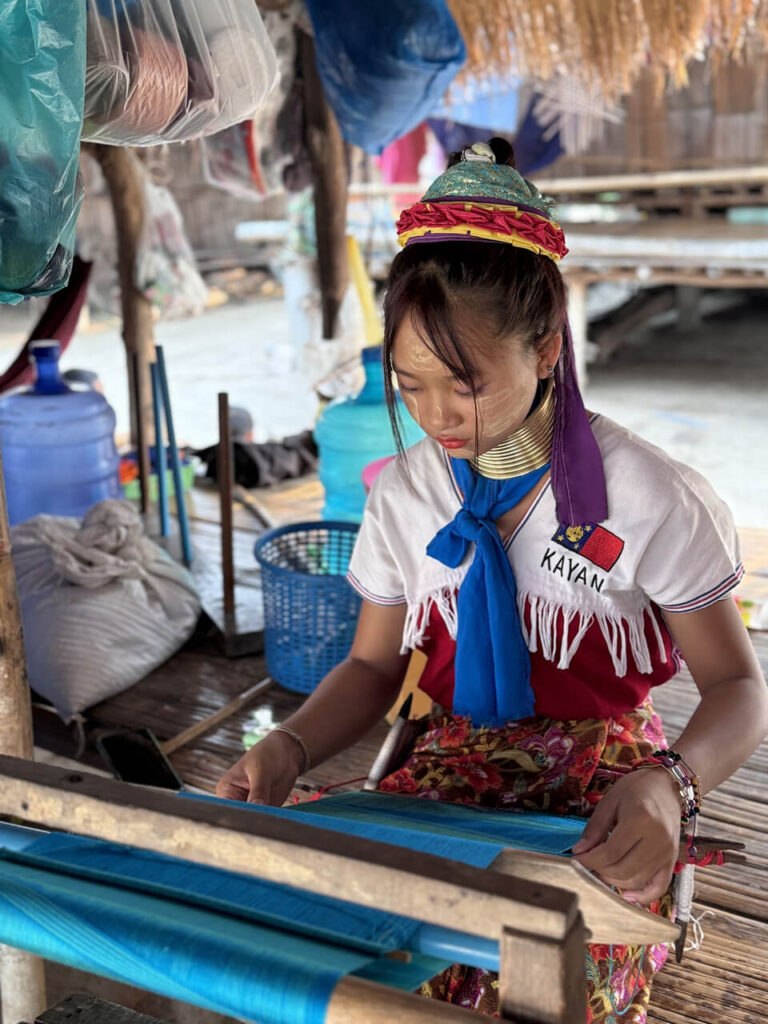
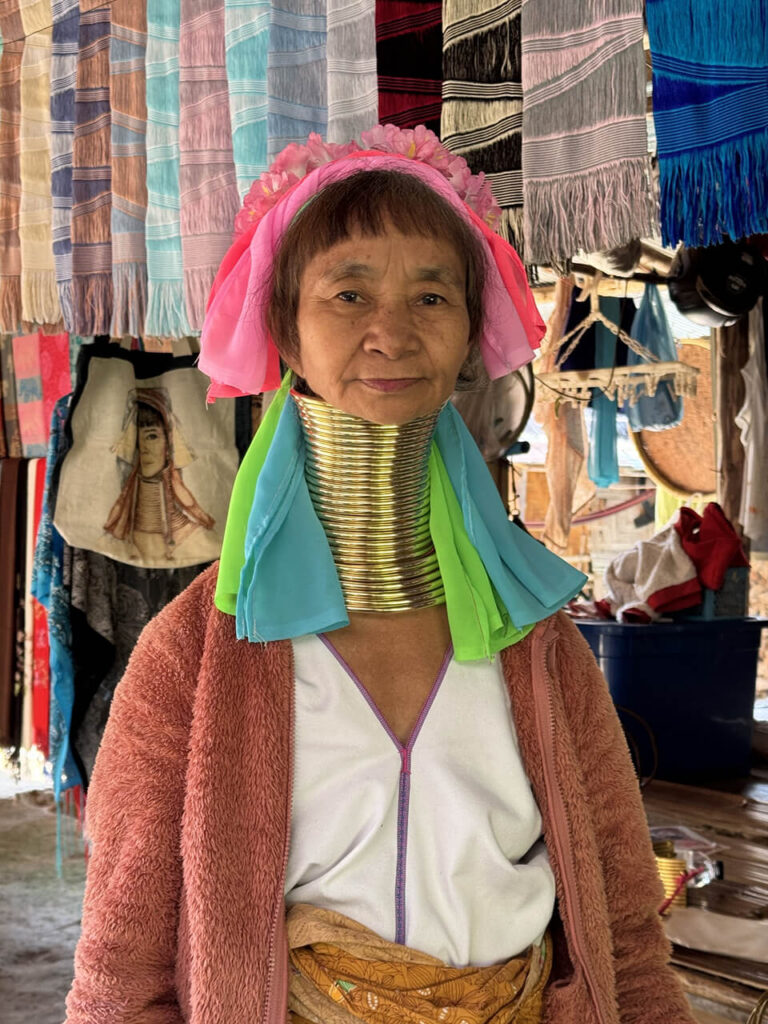
🎟️ Entry fee: 300 THB
This traditional village is home to the Karen people, particularly the women known for wearing multiple brass rings around their necks — a cultural practice that creates the appearance of elongated necks. Visitors can observe daily life, interact with locals, and purchase handmade crafts and souvenirs.
The experience is undeniably unique, offering a glimpse into a rare tradition. However, it also raises ethical questions. The Karen community’s livelihood relies heavily on tourism, and the setting can feel commercialized.
👣 If you’re curious about indigenous cultures and want to support local artisans, this is one of the more complex but interesting places to visit in Chiang Rai.
Pa Tueng Hot Springs
🎟️ Free entry
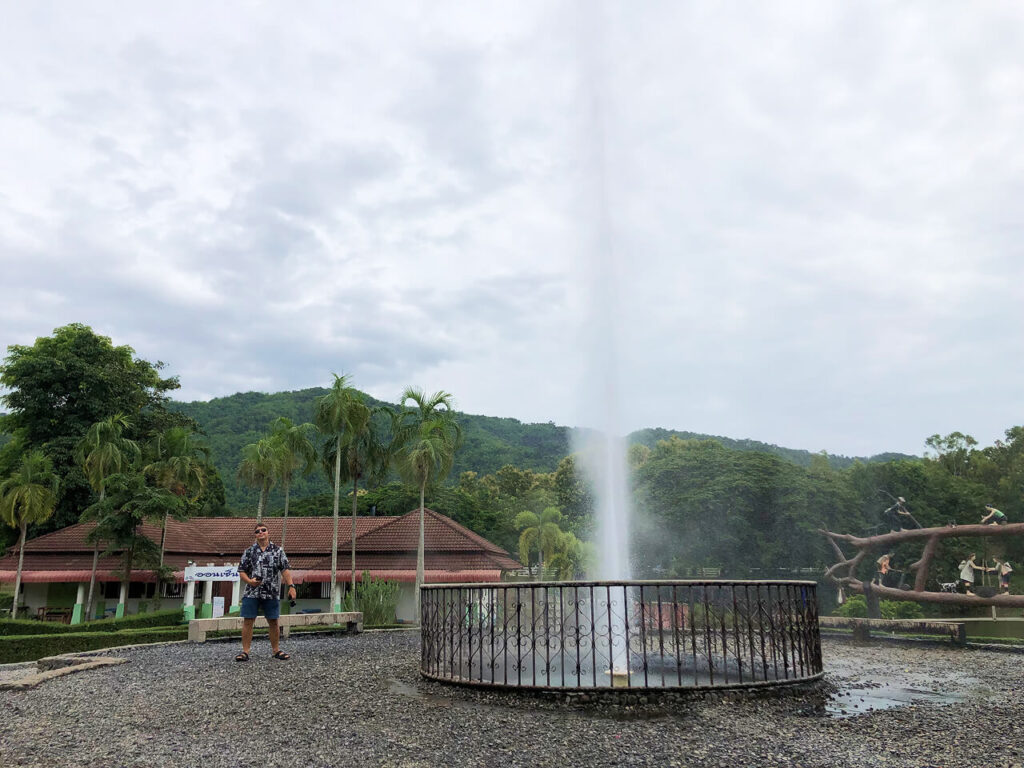
Pa Tueng is a peaceful spot where you can soak your feet in natural hot springs or rent a private tub for just 100 THB. There’s also a small geyser and a fun local tradition — boiling eggs right in the hot spring. (Tip: keep them in for at least 15 minutes. I did 7 and got soft-boiled!)
The springs get busier on weekends with local visitors, but during the week it’s almost empty — making it a perfect place to relax after long travel days.
Tea Plantation
🎟️ Free entry
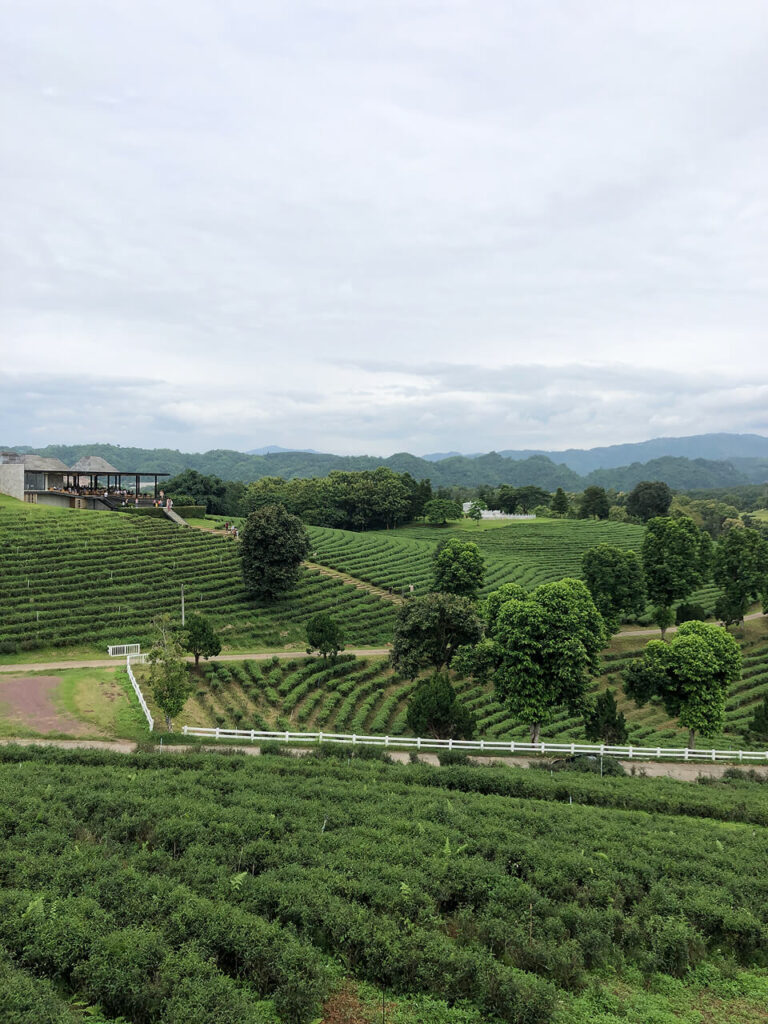
This picturesque tea plantation offers sweeping views, peaceful vibes, and cozy cafes where you can try local oolong and matcha. Drinks range from 55–100 THB, and desserts around 120 THB — making it a budget-friendly stop for tea lovers.
There are no official tours, but you’re free to wander among the tea bushes and watch the harvesting process. The best time to visit is early morning or around sunset, when the light is soft and the temperature more pleasant.
🚗 It’s best to come with your own transport, as finding a taxi back can be tricky.
Thailand’s Northernmost Point
🎟️ Free entry
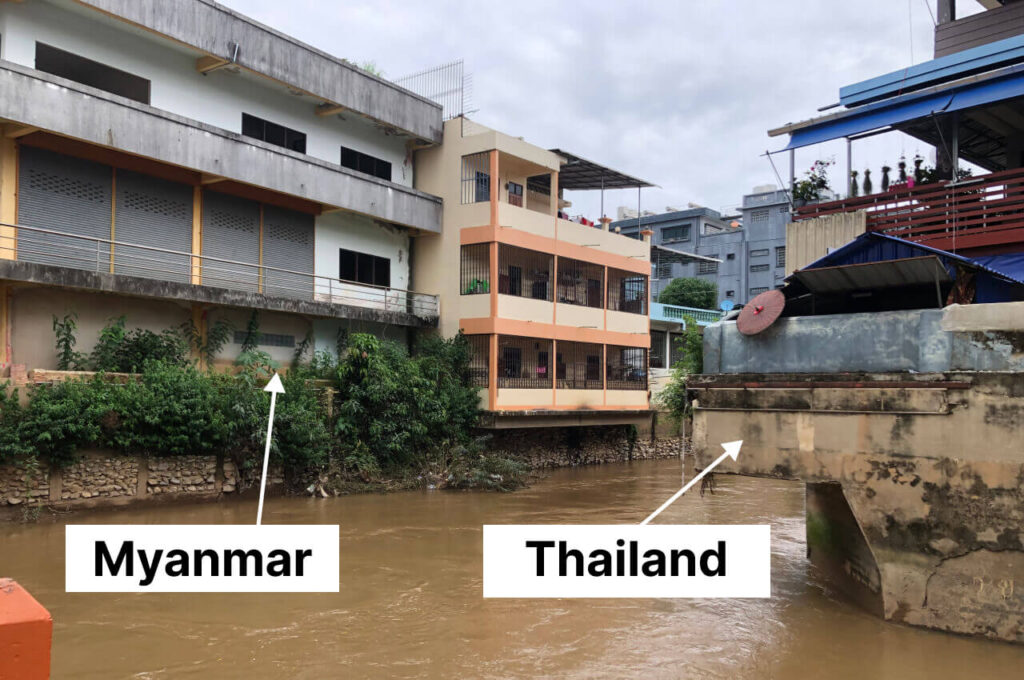
This quiet border crossing marks the northernmost point of Thailand, offering a direct view of Myanmar across the Ruak River. Locals cross the border daily for work or trade, giving you a glimpse into everyday cross-border life.
You can browse a small market for souvenirs and enjoy the unique setting — the houses on both sides are so close, it’s said a neighbor in Thailand could toss a beer to a friend in Myanmar.
The Golden Triangle: Where Three Countries Meet
🎟️ Free entry
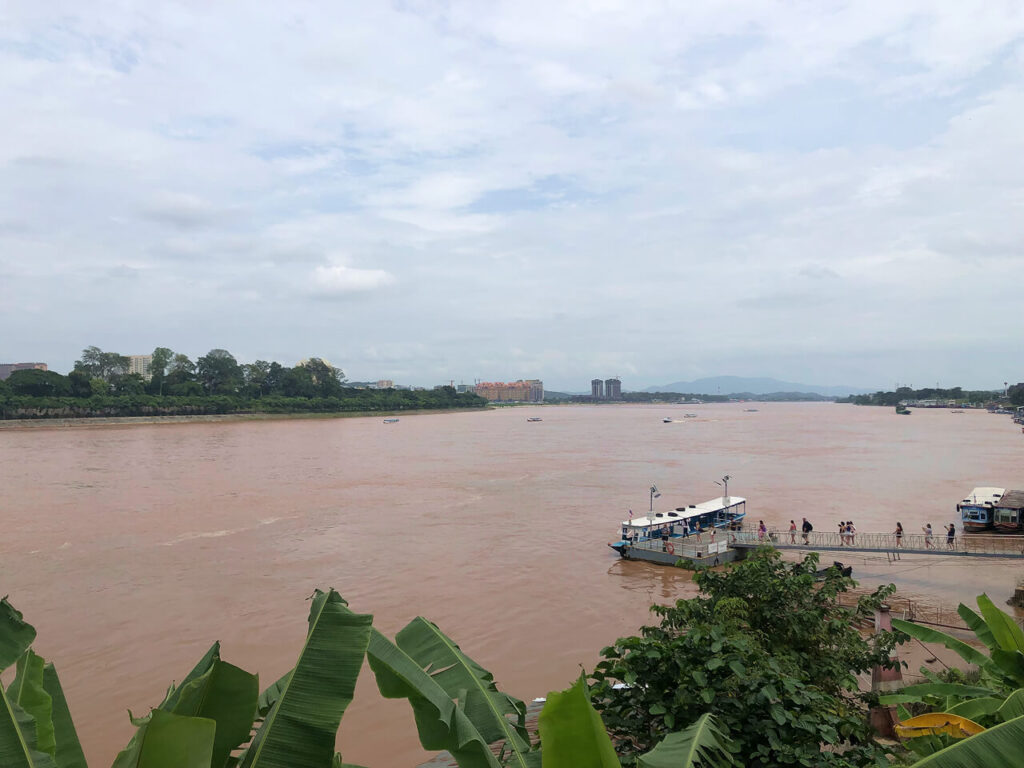
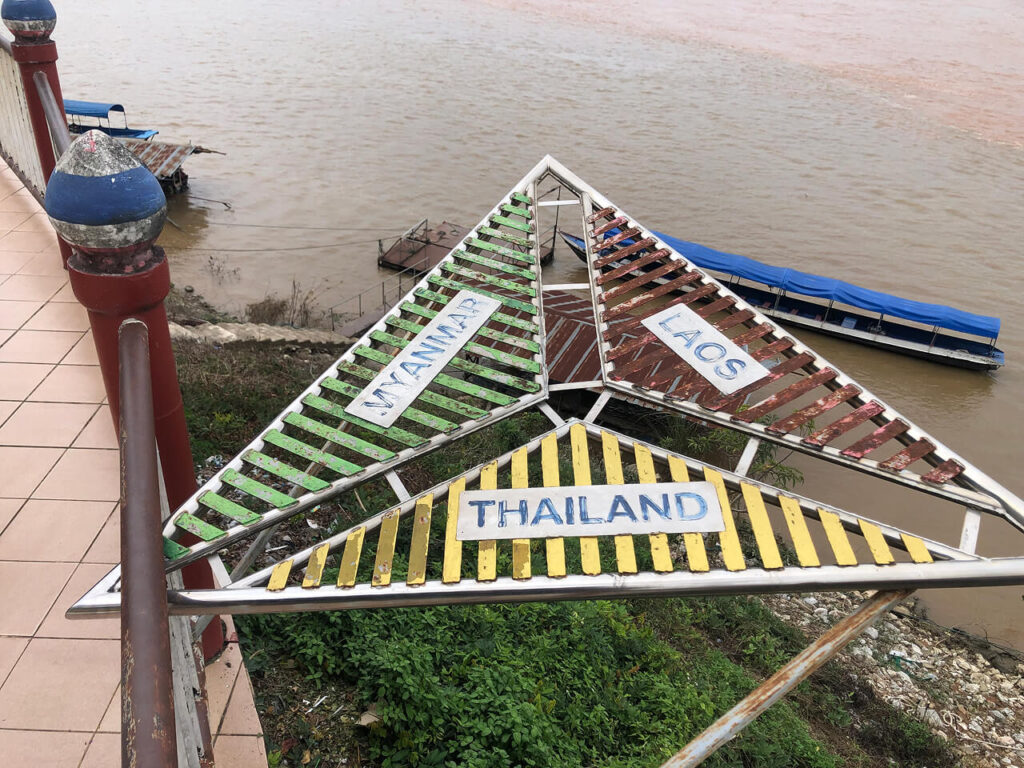
The Golden Triangle is the iconic point where Thailand, Laos, and Myanmar converge, and where the Mekong River meets the Ruak River. It’s one of the most famous tourist places in Chiang Rai, more for its symbolic significance than for any single attraction.
There’s a scenic viewpoint with panoramic river views, a large Golden Buddha statue, and souvenir stalls. For something extra, you can take a boat ride (around 600 THB) to a duty-free market in Laos. The nearby Hall of Opium Museum offers a fascinating look into the region’s past as a major opium trade hub.
Flower Farms Near Doi Mae Mon

📍 Farm 1 on Google Maps (60 THB, includes a drink)
📍 Farm 2 on Google Maps (80 THB)
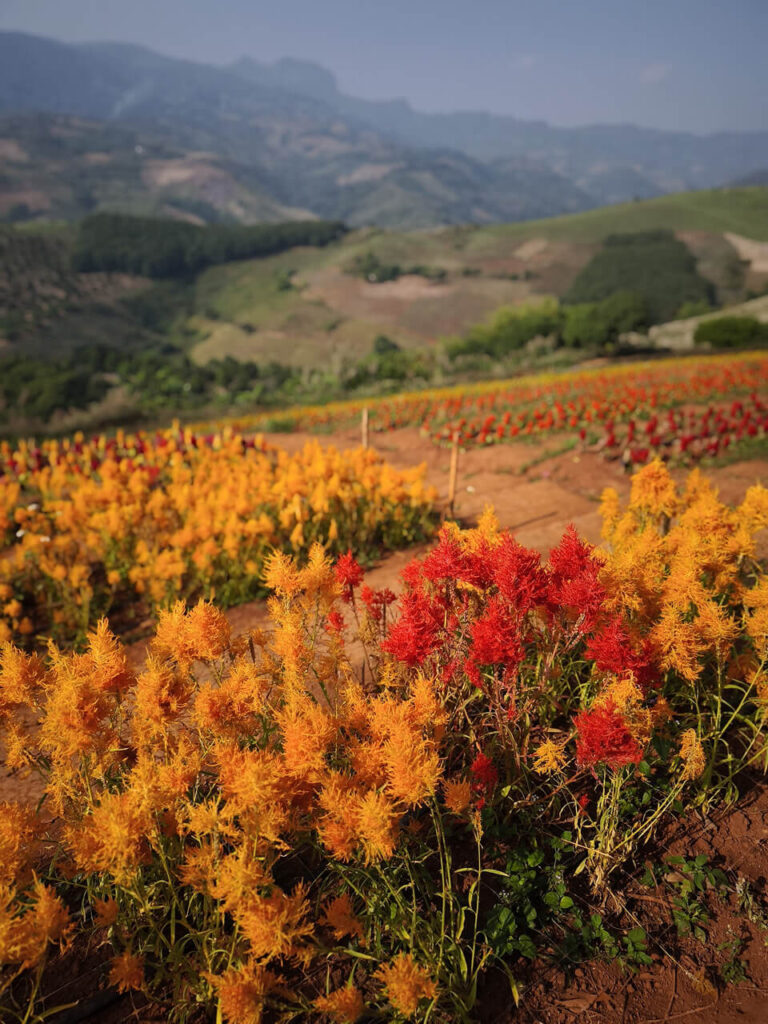
If you’re heading toward Doi Mae Mon, make time for a stop at these scenic flower farms. The first offers peaceful seating areas with tea and beautifully arranged photo spots — perfect for a relaxing break. The second is a hydrangea plantation, best visited between October and January when the blooms are at their peak.
Both locations are stunning, especially at sunrise or sunset. The road up can be steep in places, so it’s best to go by car or motorbike with good brakes.
Sheep Farm
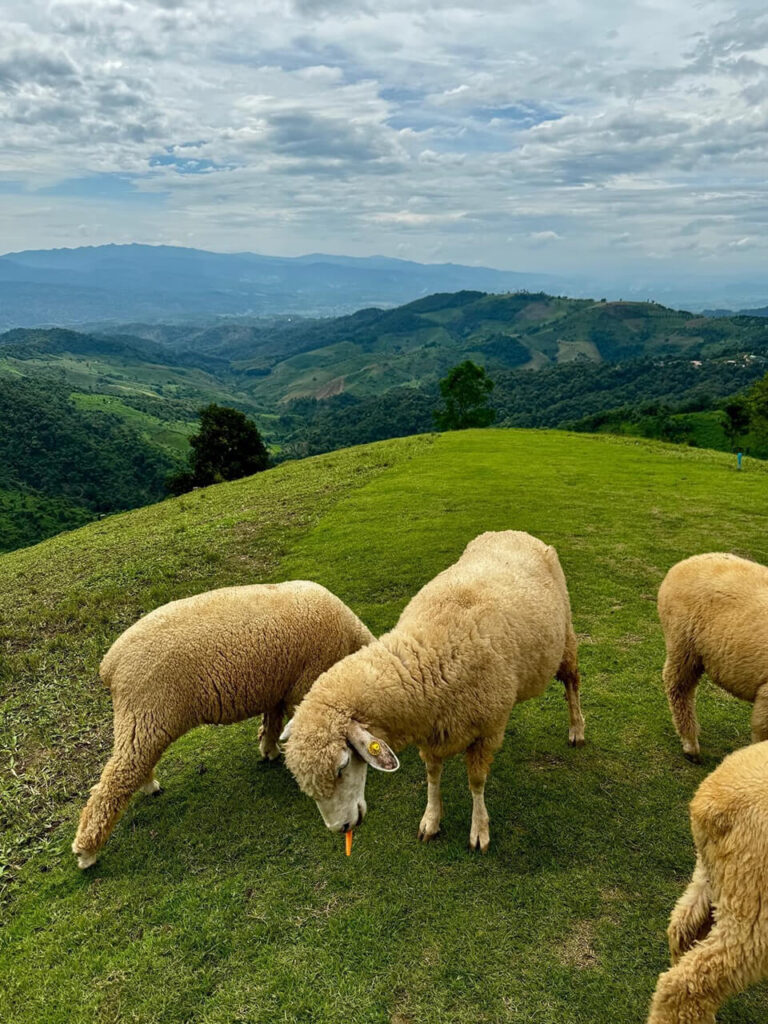
🎟️ Entry fee: 100 THB (includes a drink)
🥕 Sheep food: 30 THB per basket
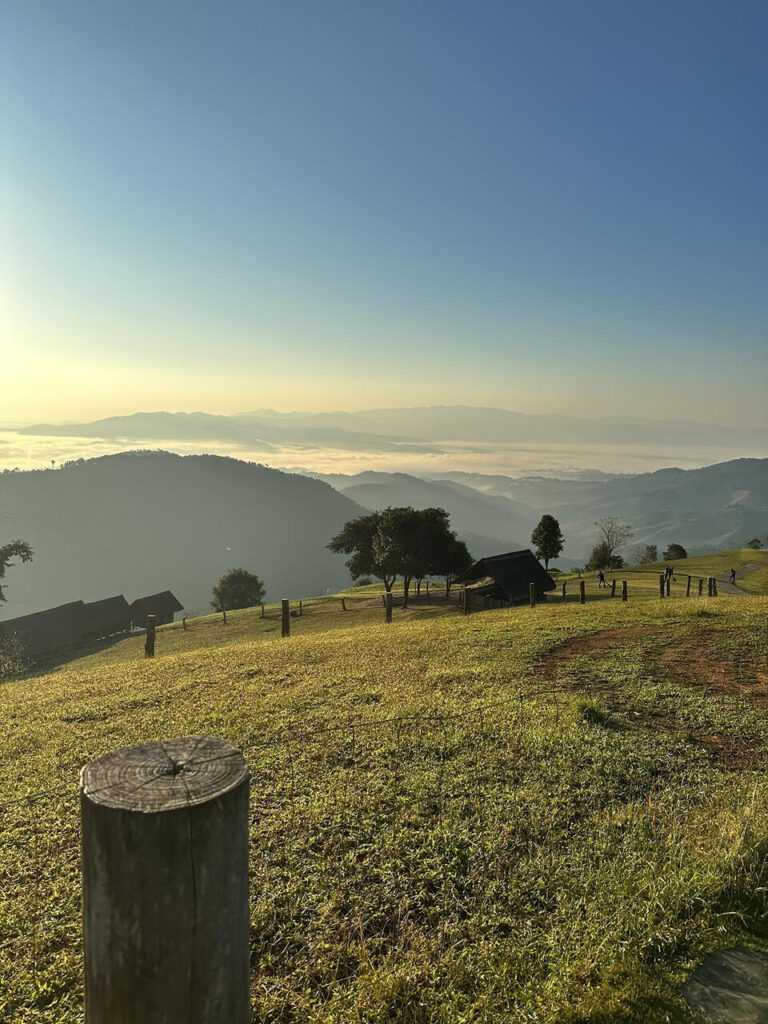
This charming hilltop sheep farm offers panoramic mountain views, the chance to feed friendly sheep, and a peaceful countryside atmosphere. The place is clean and well-maintained, with almost no odor — a rare bonus for an animal farm.
There’s also a cozy café, photo zones, and a small souvenir shop. It’s a great spot for families or couples looking for light-hearted, outdoor activities in Chiang Rai.
🌤️ Best to visit on a clear day — after rain, the area can get foggy.
Doi Mae Mon
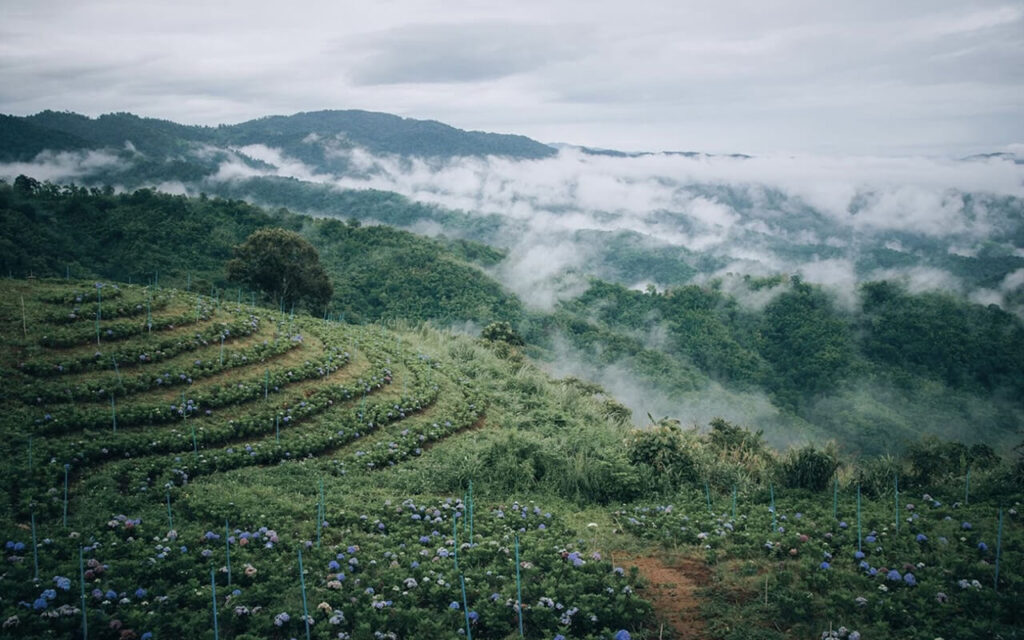
Doi Mae Mon is a peaceful mountain escape in Chiang Rai province, known for its panoramic views, cool climate, and lush surroundings. The area is home to coffee plantations, fruit orchards, and cozy cafes where you can enjoy a freshly brewed cup with a view. Even in summer, temperatures stay refreshingly cool, and in the mornings you’ll often find the hills wrapped in a thick mist.
On the way up, you’ll pass Huai San Reservoir — where the road literally dips into the water — a quirky photo stop worth pulling over for.
☕ There are also a few glamping sites at the top, perfect for those seeking a quiet night in the mountains.
🌄 If you’re looking for unusual things to do in Chiang Rai or want to escape the crowds, Doi Mae Mon is one of the most underrated places to visit.
Doi Chang
🎟️ Free entry
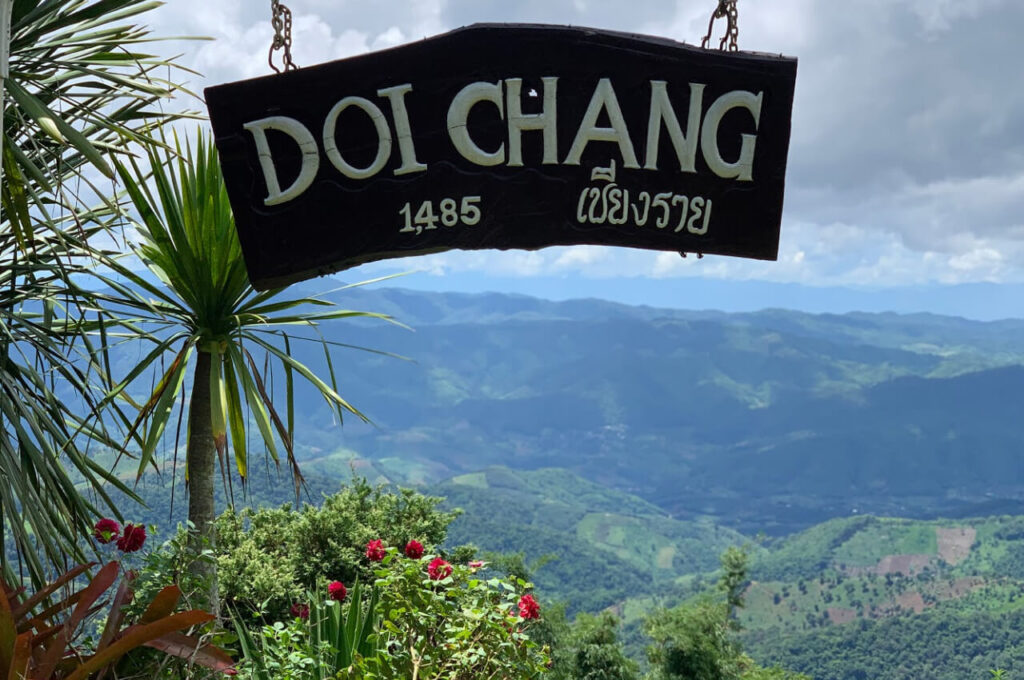
Doi Chang is a mountainous region famous for its cool climate, scenic landscapes, and world-renowned Thai coffee. The road to the top is steep but stunning — especially if you catch it shrouded in morning mist. A powerful motorbike or car is recommended for the climb.
At the summit, there’s a panoramic viewpoint offering breathtaking sunset views. You’ll also find glamping sites and homestays, along with cafés serving freshly brewed local coffee right from the source.
☕ If you’re into nature, photography, or coffee culture, Doi Chang is one of the top places to visit in Chiang Rai — and still relatively undiscovered by most tourists.
What to do in Chiang Rai in 2 days?
Day 1 is my recommendation, day 2 is exactly what I did in one day.
Day 1: Temples, Parks & Local Coffee (My recommendation)
- Start your morning at the stunning White Temple (Wat Rong Khun)
- Visit the Blue Temple (Wat Rong Suea Ten) for vibrant photo ops
- Head to Singha Park for lunch, tea fields, and flower gardens
- Spend the afternoon exploring Chiang Rai’s best coffee shops — the town has some surprisingly good ones
Day 2: Nature, Views & Border Adventures (What I actually did)
- Begin early with a soak at Pa Tueng Hot Springs
- Visit a scenic tea plantation for a morning walk and fresh matcha
- Continue to the northernmost point of Thailand for border views
- Wrap up the day at the iconic Golden Triangle
Chiang Rai Tourist Attractions Map
FAQs
Absolutely. While often overshadowed by Chiang Mai, Chiang Rai offers a more laid-back vibe, unique architecture, stunning nature, and fewer crowds. It’s a top destination for travelers who enjoy culture, mountains, and local experiences.
2–3 full days are ideal for exploring the top attractions in Chiang Rai without rushing. You’ll have time to visit iconic sights like the White Temple and the Golden Triangle, relax in hot springs, explore mountain viewpoints, and enjoy local coffee culture. If you’re into slow travel or want to venture further into the hills, consider staying 4–5 days.
Chiang Rai is best known for its unique temples — especially the White Temple (Wat Rong Khun) and the Blue Temple (Wat Rong Suea Ten) — as well as the Golden Triangle, where Thailand, Laos, and Myanmar meet. It’s also famous for scenic mountains, tea and coffee plantations, and its cooler, more peaceful atmosphere compared to Chiang Mai.
Chiang Rai has plenty of free things to enjoy: soak your feet at Pa Tueng Hot Springs, watch a misty sunrise at Doi Mae Mon, explore markets and border towns, wander flower farms with free entry, and visit the colorful Flower Festival in December–January.
