
✅ Updated on 15.11.2025

What Is a DTV Visa?
The DTV visa (Destination Thailand Visa) is a special type of Thai visa designed for remote workers, digital nomads, and freelancers. It officially launched on July 15, 2024.
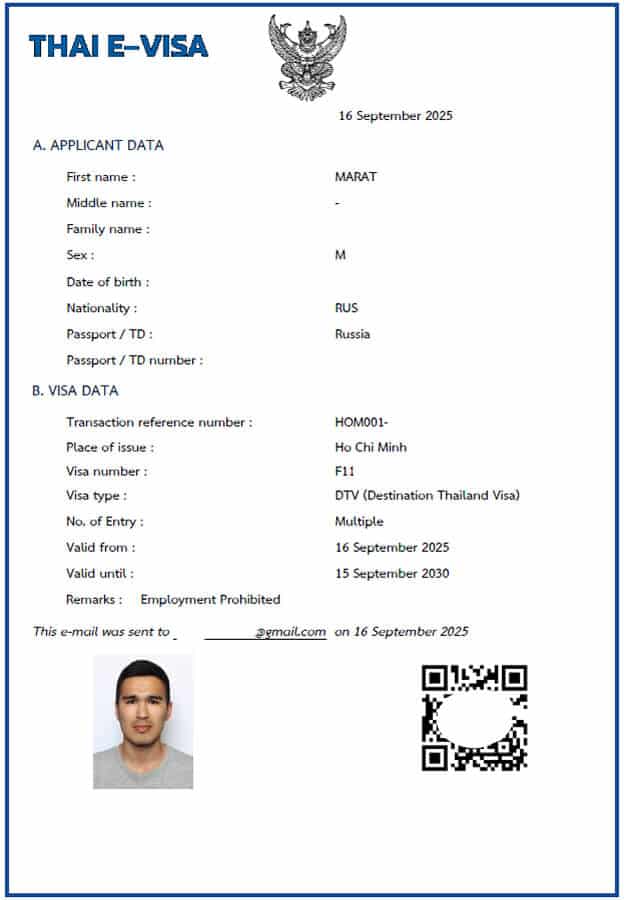
Key Details
- Validity: 5 years
- Stay per entry: 180 days
- Extension: One-time extension per entry for another 180 days through an immigration office — fee: 1,900 THB (~$60).
- Multiple entries: Unlimited re-entry during the 5-year period. Each entry resets the 180-day stay.
- Application website: thaievisa.go.th
Advantages of a DTV Visa
✈️ Free entry and exit
Thailand has an unofficial rule limiting tourists to 180 days of stay per year. In the past, if I left the country — say, for Bali — I’d have to return via the “Green Corridor” service, which costs 5,000–5,500 THB each time. With the Thai DTV visa, I don’t have to worry about that anymore.
❌ No more visa runs
Before, I lived in Thailand on visa runs: first extending my stay by 30 days for 2,400 THB, then leaving the country every 90 days — usually to Cambodia. Each border run cost around 3,400 THB and took 10 hours. Now, I no longer deal with that hassle.
🌴 Freedom to live anywhere in Thailand
If you’re in Thailand on a student or work visa, you’re usually tied to a specific school or employer. For example, if your language or Muay Thai school is in Chiang Mai, it would be odd (and risky) to live in Phuket. Technically, some people do it — but they still have to show up occasionally for school checks or police visits.
With the DTV visa, you’re classified as a tourist, so you’re free to live wherever you want — no strings attached.
🥋 Can apply for other visas while in Thailand
My friend got a visa to Japan while living in Phuket — he simply mailed his documents to the Japanese embassy in Bangkok. You can also apply for a Schengen visa or a U.S. visa from Thailand.
Drawbacks of the DTV Visa
🚫 You can’t open a Thai bank account
The DTV visa is not a non-immigrant visa, which means you’re not officially allowed to open a bank account, finance a car or motorbike, or apply for a mortgage in Thailand.
That said, I’ll still try to open a Thai bank account with the DTV visa — and if it works, I’ll share the details on Instagram. Feel free to follow me at @maratnomad.
Where to Apply for the DTV Visa
You can’t apply for the DTV visa while you’re in Thailand. You must apply from abroad — specifically from a country where a Thai embassy accepts DTV visa applications.
As of this writing, there are 52 eligible countries, including:
Australia, Austria, Argentina, Bangladesh, Bahrain, Belgium, Brazil, Brunei, United Kingdom, Hungary, Vietnam, Germany, Hong Kong, Greece, Denmark, Egypt, Israel, India, Indonesia, Jordan, Spain, Italy, Kazakhstan, Cambodia, Canada, Kenya, Kuwait, Laos, Malaysia, Morocco, Mexico, Nepal, Netherlands, New Zealand, Norway, UAE, Oman, Poland, Portugal, Russia, Saudi Arabia, Senegal, Singapore, USA, Taiwan, Finland, France, Czech Republic, Switzerland, Sweden, South Africa, South Korea.
✅ To be safe, always double-check your country’s eligibility on the official site: thaievisa.go.th
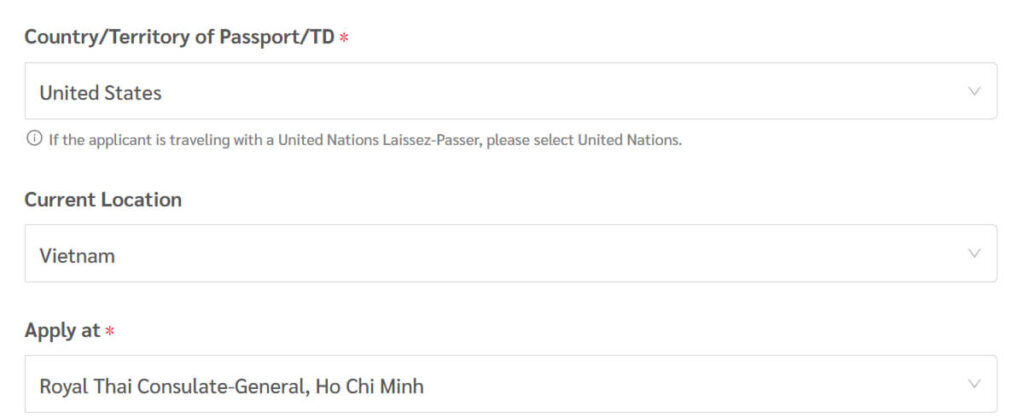
Online Application for the DTV Visa
Before January 2025, you had to submit physical documents in person at a Thai embassy. I know people who flew from Bali to the Thai embassy in Jakarta just to hand in their paperwork.
Now it’s much easier — the DTV visa application process is fully online.
For example, you can:
- Submit your documents to the Thai consulate in Ho Chi Minh City while relaxing on the beach in Da Nang
- Apply through the Jakarta consulate without leaving Bali
🚨 Important: You must be physically present in the country where you’re applying. That means you can’t submit your application to an embassy in Vietnam while sitting in Bali.
DTV Visa Categories and Purposes
When applying for the Destination Thailand Visa, you’ll need to select one of the following three purposes:
- Digital nomad / remote worker
- Taking courses (such as cooking or sports training), or receiving medical treatment in Thailand
- Dependent of a DTV visa holder — for example, a spouse or a child under 20 years old
💰 The DTV visa fee is the same for all categories, and it must be paid in full. For instance, if you already hold a DTV visa and your spouse applies as a dependent, the consular fee must still be paid for them. There are no discounts or exemptions for family members.
What Affects Your Chances of Getting a DTV Visa in Thailand
While the DTV visa application process is relatively straightforward, approval is not guaranteed. Here are the main factors that influence your chances:
1️⃣ Country of Application
According to the several visa agencies I asked, each Thai embassy has a monthly approval quota. In popular countries like Indonesia and Vietnam, demand is high.
Meanwhile, places like Cambodia see fewer tourists — and fewer applicants — so your chances of approval may be higher if you apply there.
2️⃣ Timing of Your Application
Thailand’s high tourist season runs from November to March. During this time, demand for the DTV visa spikes, and embassy quotas may fill up quickly.
📅 Your best bet is to apply off-season, between May and September, when there’s less competition and a better chance of approval.
3️⃣ Visa Purpose
If you’re applying as a digital nomad or remote worker, be aware that this is the most competitive category — and also the one with the most rejections. Visa officers tend to scrutinize applications more closely.
In contrast, applying for a visa to study Muay Thai or attend cooking classes in Thailand is less common.
4️⃣ Document Quality
Make sure your documents are clear, complete, and error-free. The fewer questions your application raises, the higher your chances of getting approved.
🚫 Keep in mind: Visa rejections do happen — sometimes without any explanation. I saw a YouTube video of an American who got rejected twice in Vietnam. Each time, he lost the non-refundable consular fee ($680 total).
DTV Visa Cost
The official DTV visa fee is 10,000 THB, but it must be paid in USD, and the exact amount varies depending on the country where you apply:
- Vietnam: $340
- Indonesia & Cambodia: $400
💸 Important: If your visa is not approved, the fee is non-refundable.
DTV Visa Duration and Rules
The DTV visa is valid for 5 years and comes with multiple entry privileges. You can leave and re-enter Thailand as often as you like, and each entry gives you 180 days of stay.
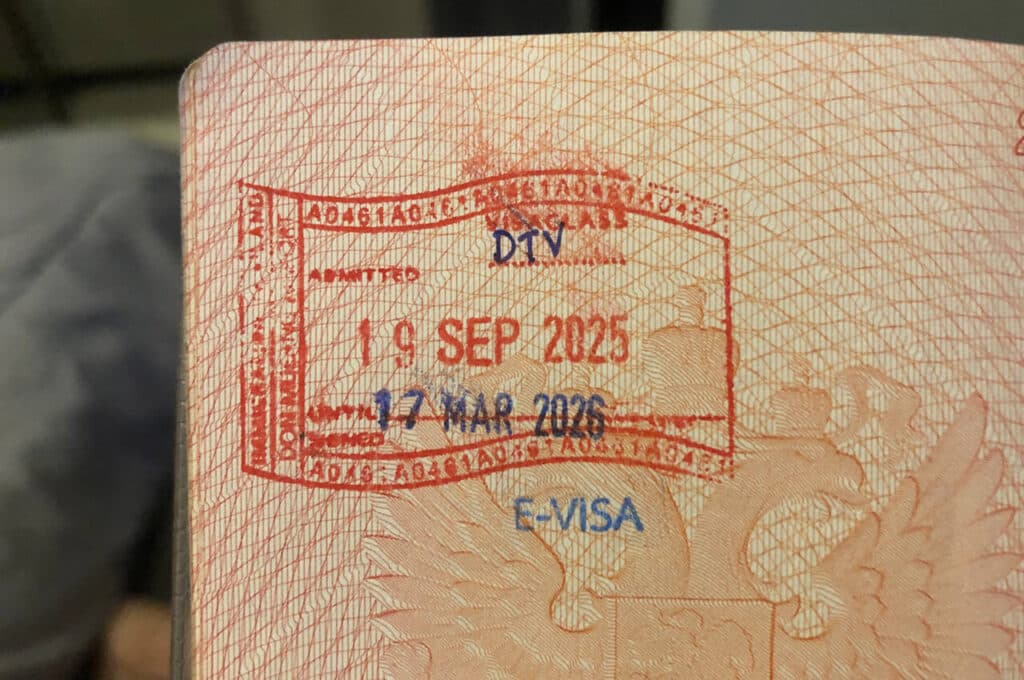
✳️ Optional 180-Day Extension
For each entry, you’re allowed to extend your stay by an additional 180 days through a Thai immigration office.
- 🧾 You’ll need to submit a new set of documents
- 💵 Extension fee: 1,900 THB
Personally, I’d rather just do a quick trip abroad and re-enter. 😉
🕒 90-Day Reporting Requirement
Like other long-term Thai visas, the DTV visa requires 90-day reporting. You must notify immigration of your current address every 90 days. You can report up to 15 days before the 90-day deadline or within 7 days after it.
📍 Ways to report your stay:
- In person at an immigration office
- Online at tm47.immigration.go.th
(Note: I haven’t done this myself yet, but friends say the first report must be done in person)
Required Documents for the DTV Visa
As mentioned earlier, the DTV visa in Thailand can be issued for different purposes — and your document package depends on the category you apply under.
✅ Documents required in all cases:
- Passport photo
- Passport
- Proof of current location, usually a photo of your passport with the entry stamp
- Financial documents:
- Bank statement showing at least 500,000 THB (~$15,700) in your account
- 3-month transaction history
🛑 There’s a common myth that the money must be in a Thai bank account. That’s false. You’re applying as a tourist from outside Thailand — you’re not expected to have a Thai bank account yet. In practice, a bank account in your home country works perfectly fine.
➡️ Additional documents depend on the purpose of your visa:
👨🏻💻 If You’re Applying as a Remote Worker or Freelancer
To apply for a DTV visa as a digital nomad or remote worker, you’ll need to submit additional documents based on your work type:
📌 For Remote Employees:
- Employment contract that shows your salary
- Company registration documents
- Letter from your employer confirming that you work remotely
📌 For Freelancers:
- Proof of income, such as a statement from a tax app (or a similar document from your country)
- Portfolio: links to platforms like Upwork, Fiverr, personal websites, Instagram, Behance — anything that shows your work and client history
⚠️ In some cases, you might be asked for extra materials, like:
- Photos of your work setup
- A short description of your profession and how you earn money
🥊 If Your Purpose Is Sports Training or Medical Treatment
To apply for a DTV visa for sports courses or medical treatment in Thailand, you’ll need the following:
- Acceptance letter from the school or clinic confirming your enrollment or treatment
- Registration documents from the organization — to prove it’s a legitimate and licensed institution
💡 Muay Thai courses are a popular choice. It’s best to choose a program that lasts at least 6 months to improve your chances of approval. Expect to pay around 20,000 THB for a 6-month course, which usually includes about 40 training sessions.
👉 This visa option is ideal if you have the required bank balance but don’t work remotely.
👨👩👧👦 If You’re Applying as a DTV Visa Dependent
If you’re applying for a DTV dependent visa (as a spouse or child of a DTV visa holder), you’ll need:
- A copy of your relative’s DTV visa
- Proof of relationship, such as:
- Marriage certificate
- Birth or adoption certificate
DTV Visa Processing Time
On average, the DTV visa takes 5–7 business days to process — though this can vary if the embassy requests additional documents.
🔍 My Personal Timeline:
- September 5 (Friday): Paid the consular fee
- September 10 (Wednesday): Got a request for extra documents
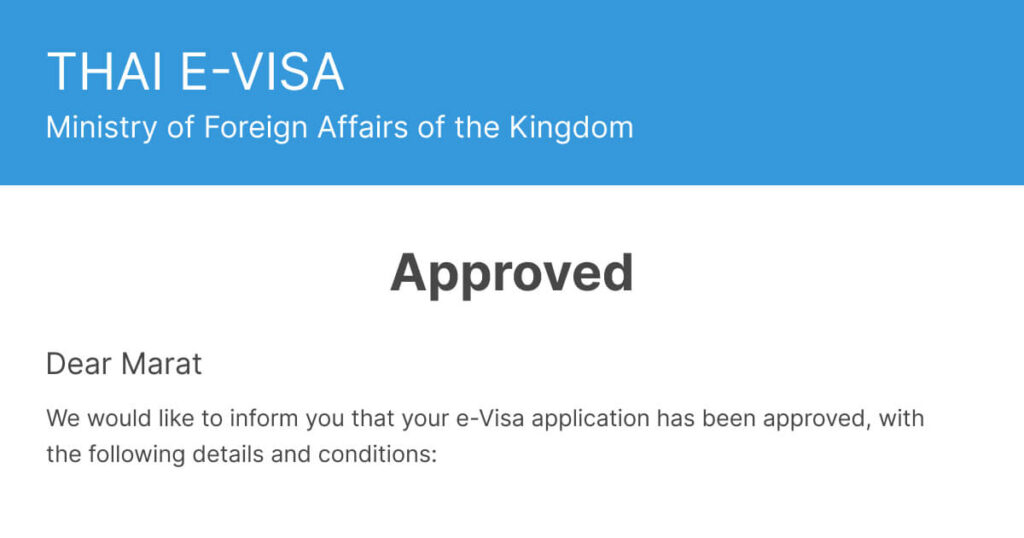
- September 16 (Tuesday): Visa approved
💡 Total: 11 calendar days (7 working days)
How Much Time Should You Allow?
If you’re flying out of Thailand to apply for the visa in another country, I recommend planning for at least 2 weeks — to account for weekends, holidays, and possible follow-ups.
Border Control Questions
According to visa agencies and travelers, Thai immigration officers may ask a few questions about your DTV visa upon entry — mainly to check your reaction and consistency. This happens in roughly 30% of cases.
Typical questions include:
- What’s the name of the company you work for?
- Where is the company located? What’s the director’s name?
- What exactly do you do for work?
🧳 In my case, I wasn’t asked anything — they simply stamped me in for 180 days.
FAQs
Yes, you can work remotely in Thailand on a DTV visa, as long as your income comes from foreign clients or companies. However, you’re not allowed to work for Thai employers or offer services locally, since the visa doesn’t include a Thai work permit.
Yes, technically, if you stay in Thailand more than 180 days per year on a DTV visa, you become a tax resident and may be required to pay tax on foreign income brought into the country. In practice, tourists and digital nomads aren’t heavily scrutinized, but the law does exist. A tax treaty won’t exempt you, though it might reduce what you owe. For official info, see Thailand’s revenue department guide.
Officially, no — Thai banks usually require a work permit or at least a student visa, and the DTV visa doesn’t meet their criteria. I tried and was rejected. If I manage to open an account, I’ll share how. In the meantime, I recommend using the TrueMoney Wallet — I explained in another post how it lets you pay via Thai QR code without a local bank account.
The DTV visa’s soft power goal is to attract foreigners with money who want to stay long-term in Thailand without needing an online job or freelance portfolio.
