✅ Updated on 29.12.2025

What Is the 90-Day Report?
The 90-day report is a mandatory procedure for foreigners. The idea is simple: every 90 days, you must notify the immigration office of your place of stay in Thailand.
The procedure is free of charge. No stamps are added to your passport. You simply receive an A5-sized paper confirming that the immigration office has accepted your report.
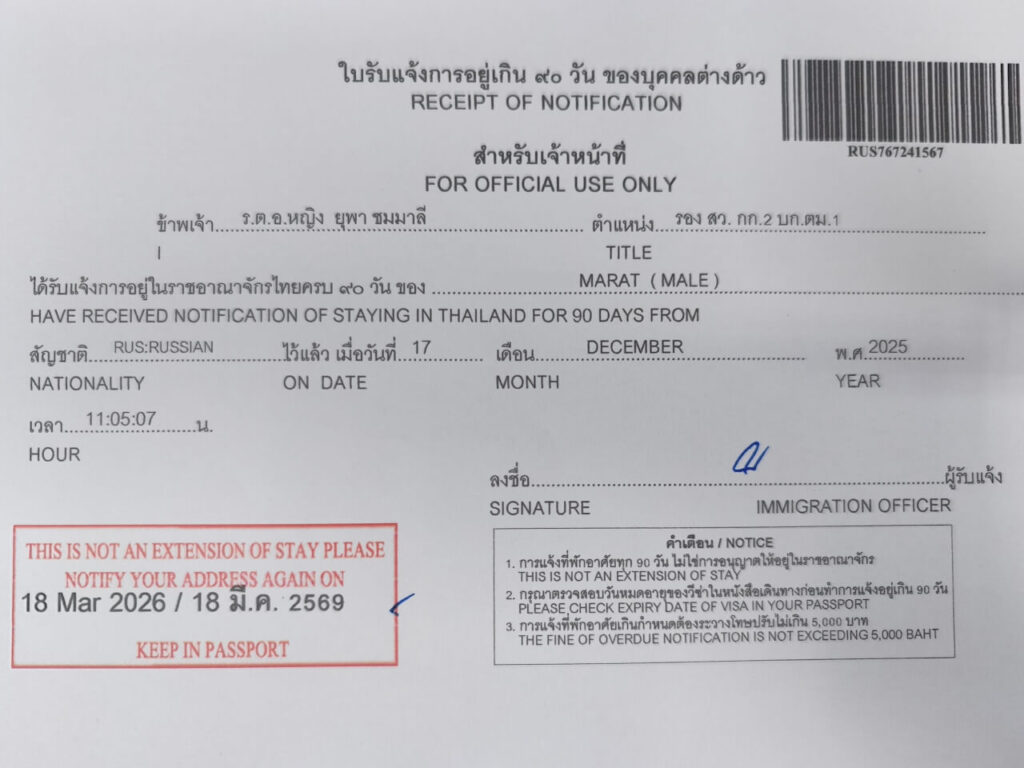
In simple terms, during the Thai 90-day report, a foreigner tells Thai Immigration: “Hello, I live here.” And the immigration office replies: “Okay, we’ve received your notification. Here’s your receipt.”
Who Needs to File a 90-Day Report?
The 90-day report is required for all foreigners who stay in Thailand continuously for 90 days. This mainly applies to holders of long-term visas: DTV, retirement, student, work, LTR, Smart, and even Thai Elite.
I personally spoke with a Thai Elite representative at an immigration office in Bangkok. She confirmed that even holders of this visa must file the 90-day report. However, in their case, the service provider can submit it on your behalf if you give them your passport.
If you enter Thailand on a visa exemption stamp or on a tourist visa valid for up to 90 days, you do not need to file a report. The 90-day report is also not required if you have a long-term visa but leave Thailand every 90 days, because each exit breaks the continuous period of stay in the country.
What Happens If You Don’t File the 90-Day Report or File It Late?
If you fail to file the report or submit it late, a fine of 2,000 baht applies. If a foreigner is arrested, the fine can increase to up to 5,000 baht.
Sources:
- tm47.immigration.go.th — the website for online submission of the 90-day report
- uttaradit.immigration.go.th — the website of the immigration office in Uttaradit province
As you can see, the fine is relatively small, and personally, I haven’t heard of anyone actually being fined for missing the 90-day report. But Murphy’s law still applies: if something can go wrong, it will. So it’s better to file these reports on time.
Documents Required for the 90-Day Report
- Passport
- Completed TM47 form (download the form)
I also brought a TM30 form with me, but they didn’t ask for it. Still, I recommend having it just in case. I filed my report at the Bangkok immigration office, and the rules can sometimes differ from province to province.
👉 Here’s a detailed explanation of what the TM30 is and how to obtain it
How to File the 90-Day Report
There are two ways to file the 90-day report in Thailand:
- In person at an immigration office
- Online via tm47.immigration.go.th
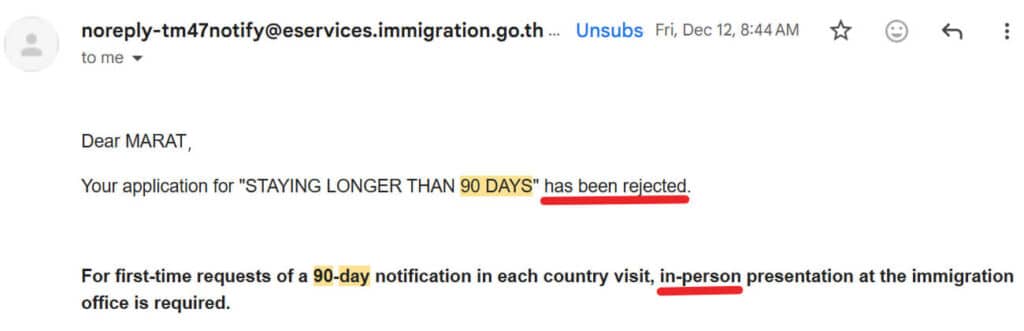
Unfortunately, the first report must be filed in person. I tried submitting it online, but my application was rejected.
Below is what the 90-day reporting procedure looks like step by step.
1️⃣ Print and Complete the TM47 Form
You can get the form directly at the immigration office, but I strongly recommend filling it out in advance. It genuinely saves time.

Usually, people first queue to get a number, receive the TM47 form, fill it out, and then have to queue again from the end. If your form is already completed, you can get your queue number immediately.
2️⃣ Go to the Immigration Office
Visit the immigration office of the province where you live. It’s easy to find — just search for immigration office on Google Maps.
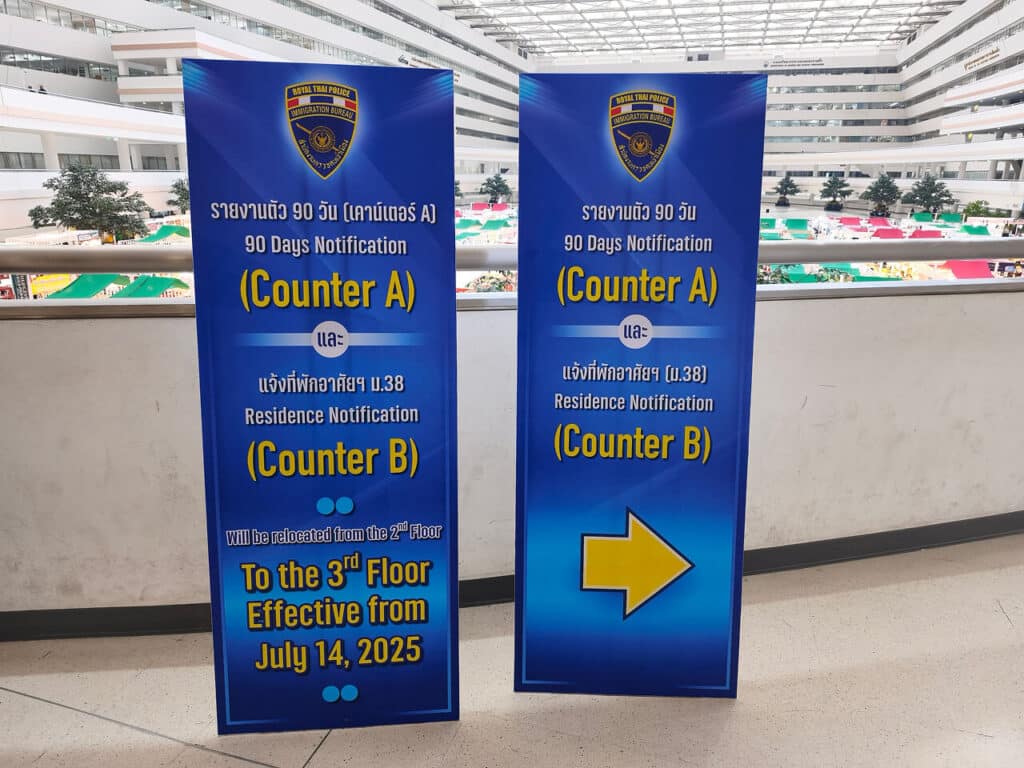
Examples of immigration offices:
- Bangkok
- Phuket (Patong, Phuket Town)
- Pattaya
- Samui
- Phangan
- Chiang Mai
- Krabi
3️⃣ Get a Queue Number
Find the information counter for the 90-day report, submit your documents, and receive a queue number.
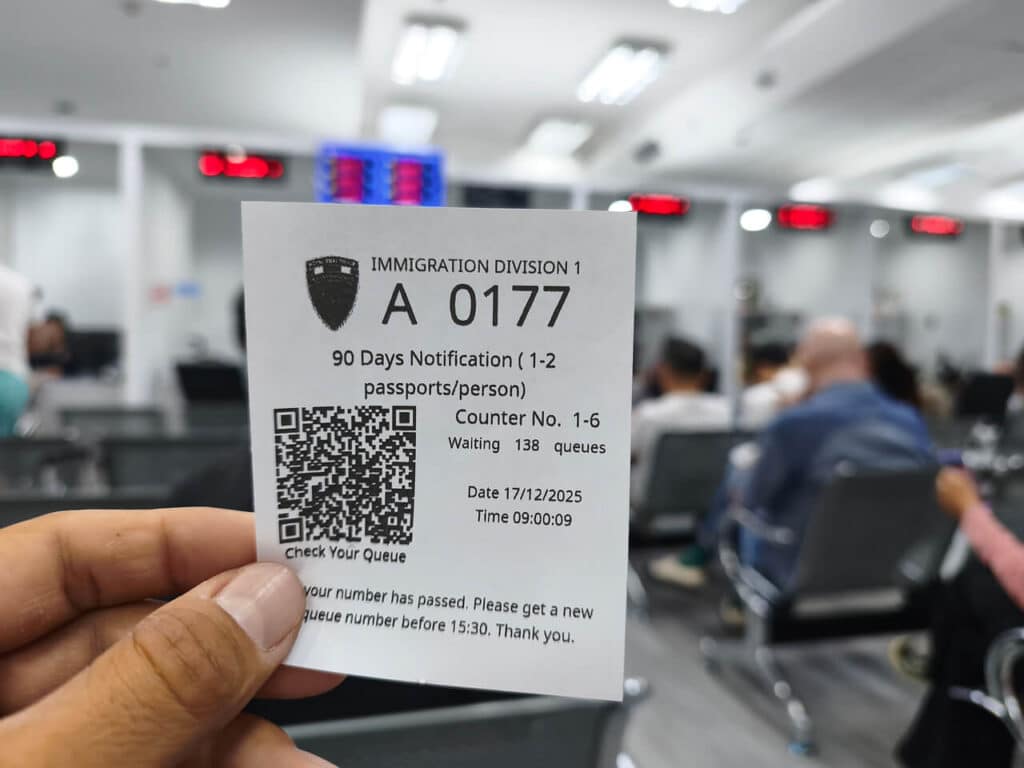
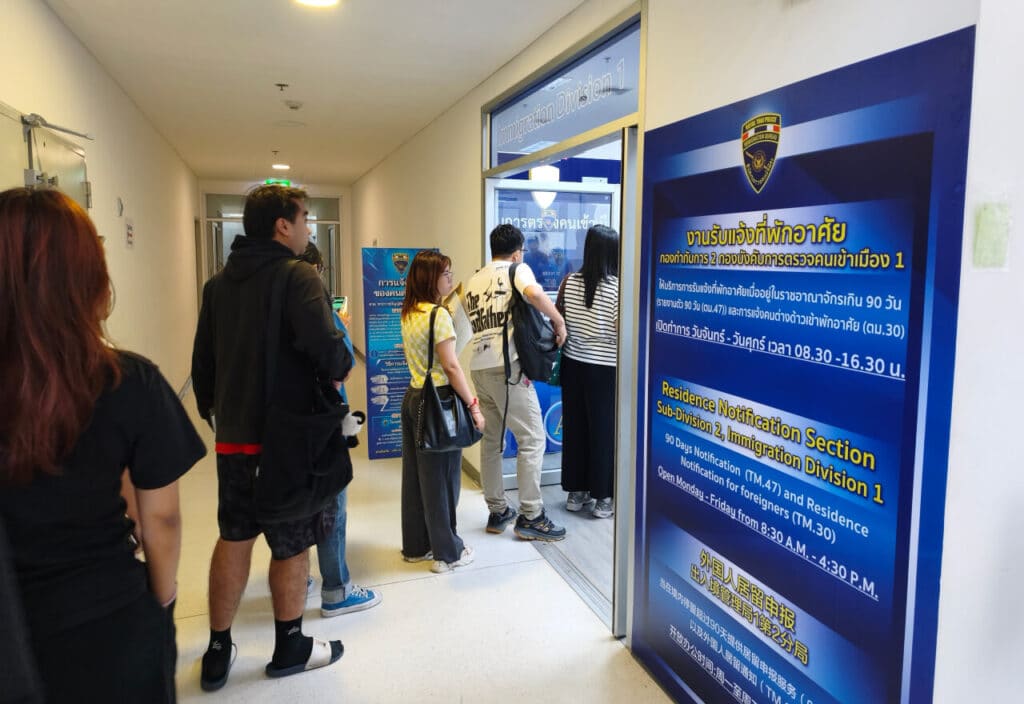
While waiting, you’re free to do your own thing. I usually just walk around the immigration office. In Bangkok, it’s quite large — there are shops, food courts, and even a 400-meter running track.
4️⃣ Submit the Report
When your number is called, hand your documents to the immigration officer and receive a receipt. No stamps are placed in your passport.
The actual submission takes no more than two minutes. Most of the time is spent waiting in line.
FAQs
You can file the 90-day report up to 15 days before the end of the 90-day period and up to 7 days after it ends.
