
✅ Updated on 24.01.2026

Location and How to Get There
The National Museum Bangkok is located in the historic heart of the city — the Phra Nakhon district. This is where Bangkok originally began to take shape.
💡 Interesting fact: Phra Nakhon is entirely located on Rattanakosin Island. Yes, you read that right — the National Museum is technically on an island. The area is surrounded by water on all sides: the Chao Phraya River on one side and canals on the other.
Getting there by public transport
The easiest way is to take the MRT to Sanam Chai MRT Station. From there, you can grab a tuk-tuk or book an electric tuk-tuk via the MuvMi app.
Opening Hours
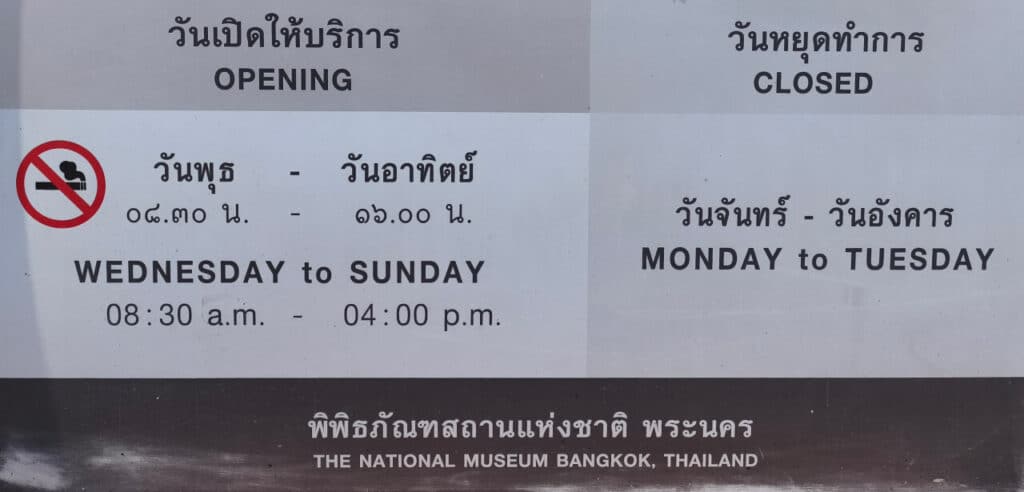
- Wednesday–Sunday: 08:30–16:00
- Monday–Tuesday: Closed
Tickets are sold until 15:30. I recommend setting aside at least 4 hours for your visit. The museum is large, and there’s a lot of detailed information about Thai history — rushing through it would be a mistake.
Admission Fees
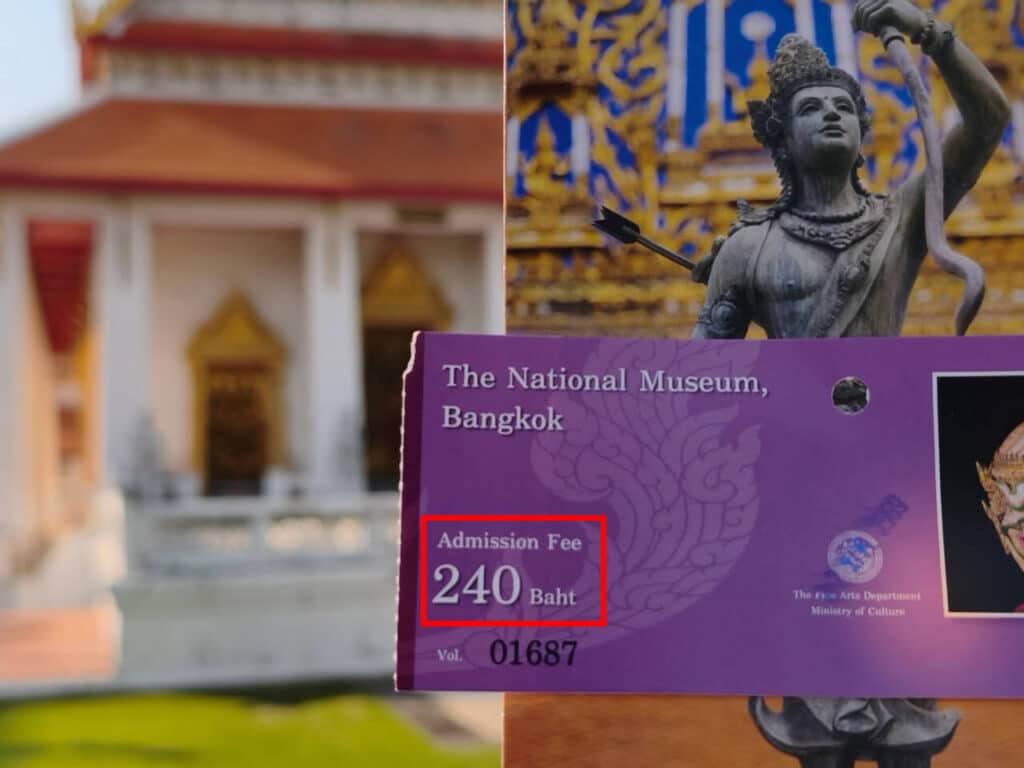
- Foreign visitors: 240 THB
- Thai school pupils and university students (with a valid student ID): Free
- Thai residents aged 60+: Free
Facilities
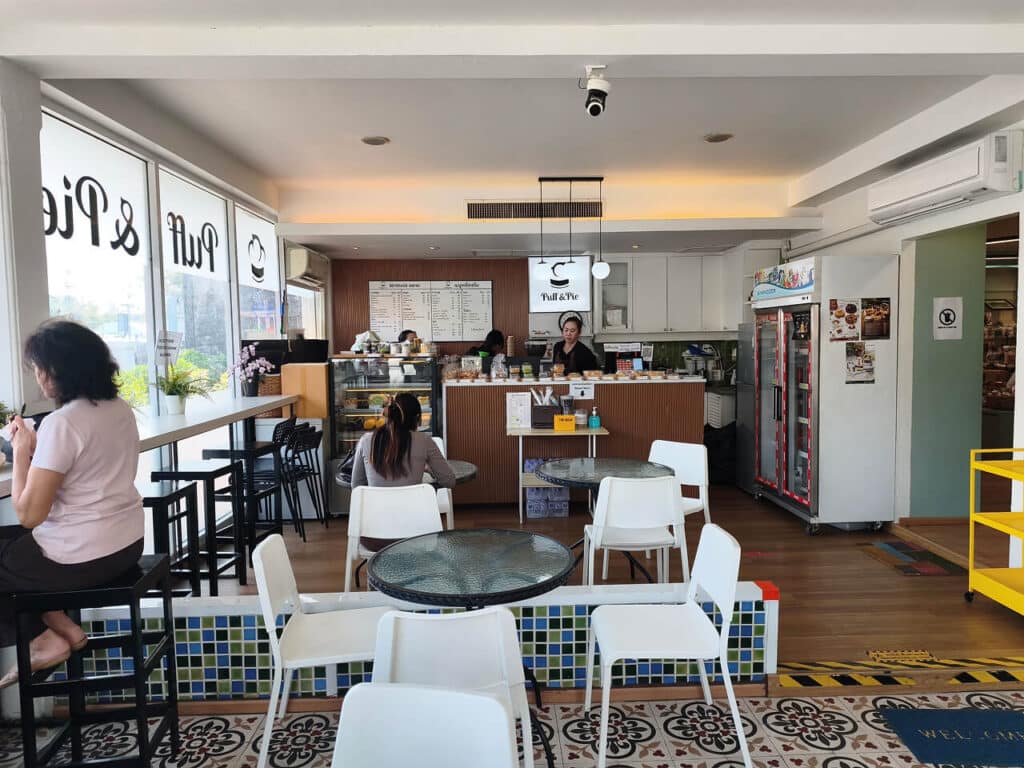
The National Museum Bangkok has two cafés on the grounds where you can order food and drinks, as well as free restrooms, which is always a nice bonus when exploring museums for several hours.
What to See
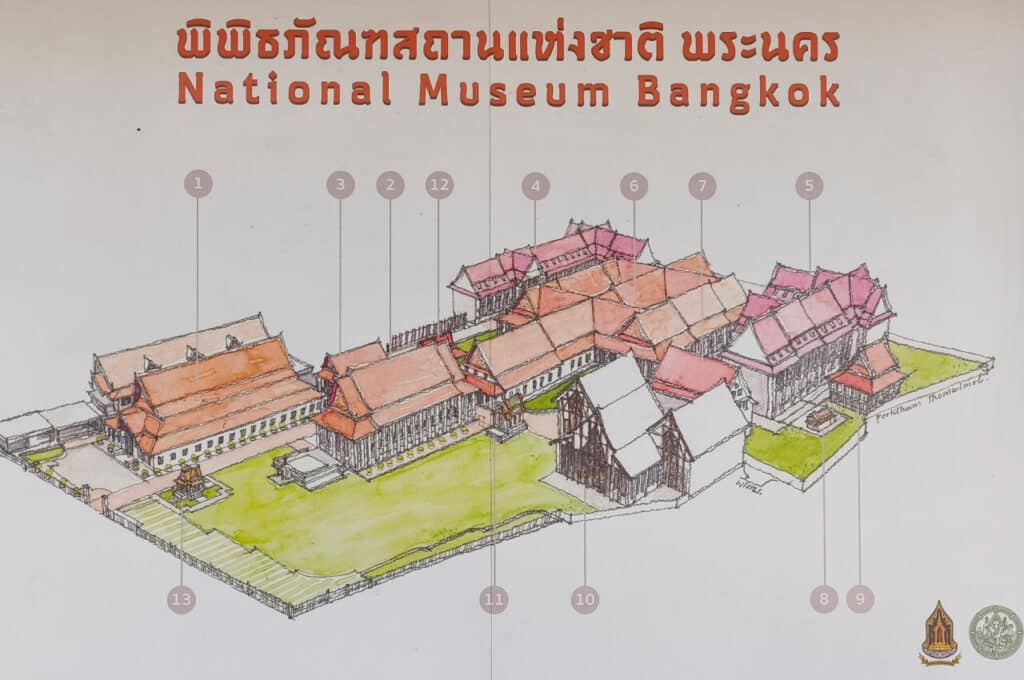
The museum consists of 13 buildings. The most interesting ones, in my opinion, are Buildings No. 4, 5, and 6.
1️⃣ Siwamokkhaphiman Hall
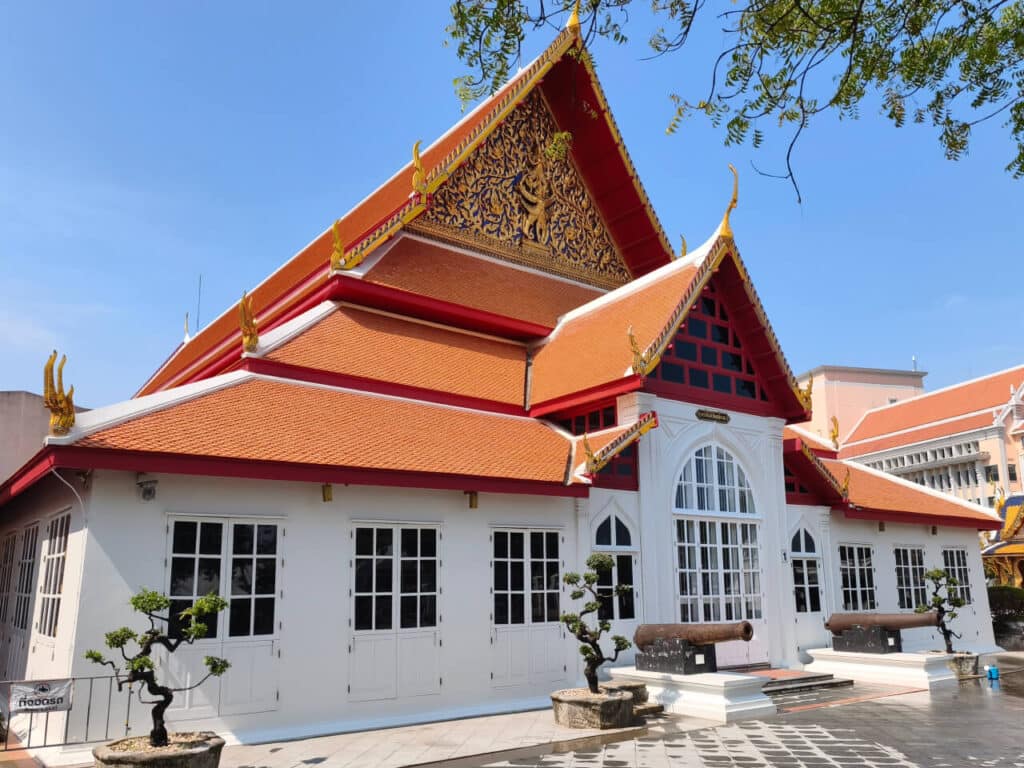
Siwamokkhaphiman Hall is one of the oldest buildings in Bangkok. It was built during the reign of Rama I (1782–1809).
Originally, the building was located within the Grand Palace grounds and was used for royal audiences and religious ceremonies. Over time, its role changed several times: first it became a royal museum, then a royal library, and today it serves as an exhibition space dedicated to Thai history and art.
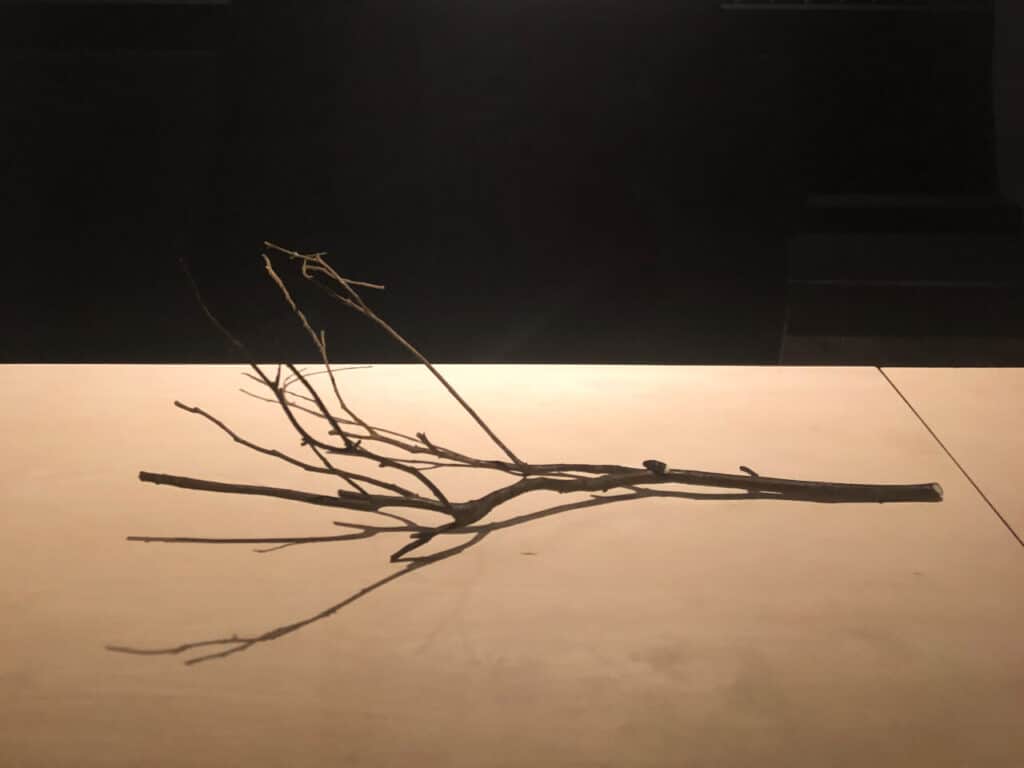
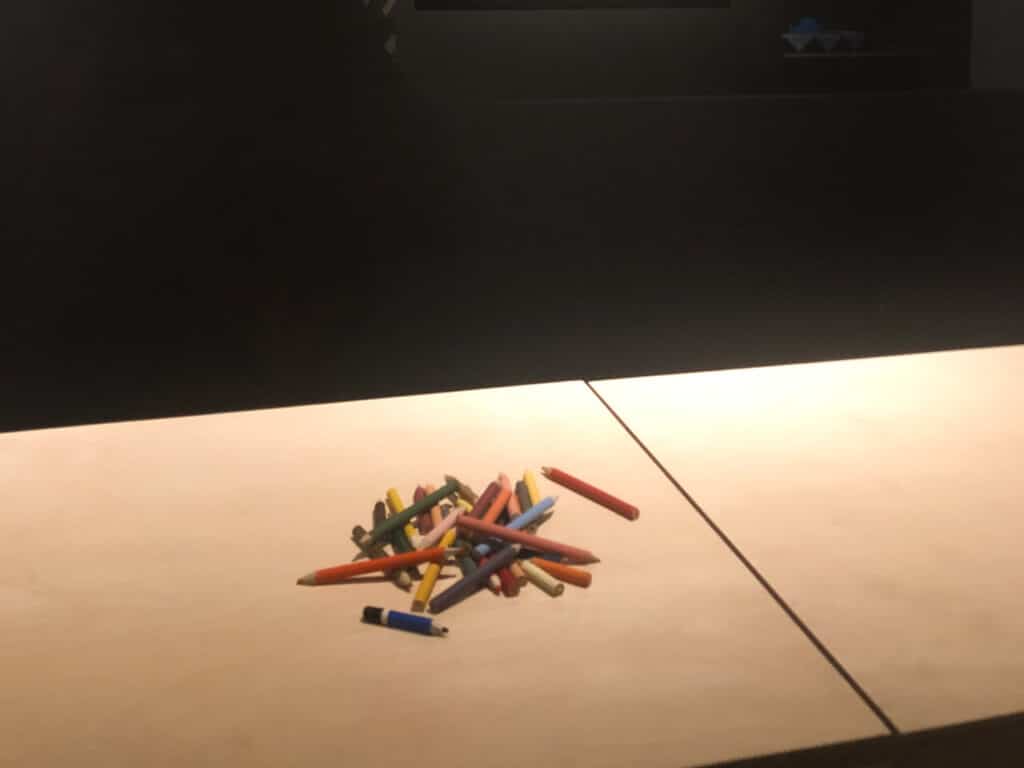
I once happened to visit one of the temporary exhibitions here and, to be honest, it was pretty underwhelming. Maybe I just don’t understand art well enough 😄.
2️⃣ Buddhaisawan Chapel

Buddhaisawan Chapel houses the second most important Buddha statue in Thailand, right after the Emerald Buddha.
This is also one of the best places in the museum to see traditional Thai wall paintings. These murals were not created just for decoration — they were meant to teach monks and ordinary people moral lessons through clear, visual storytelling.
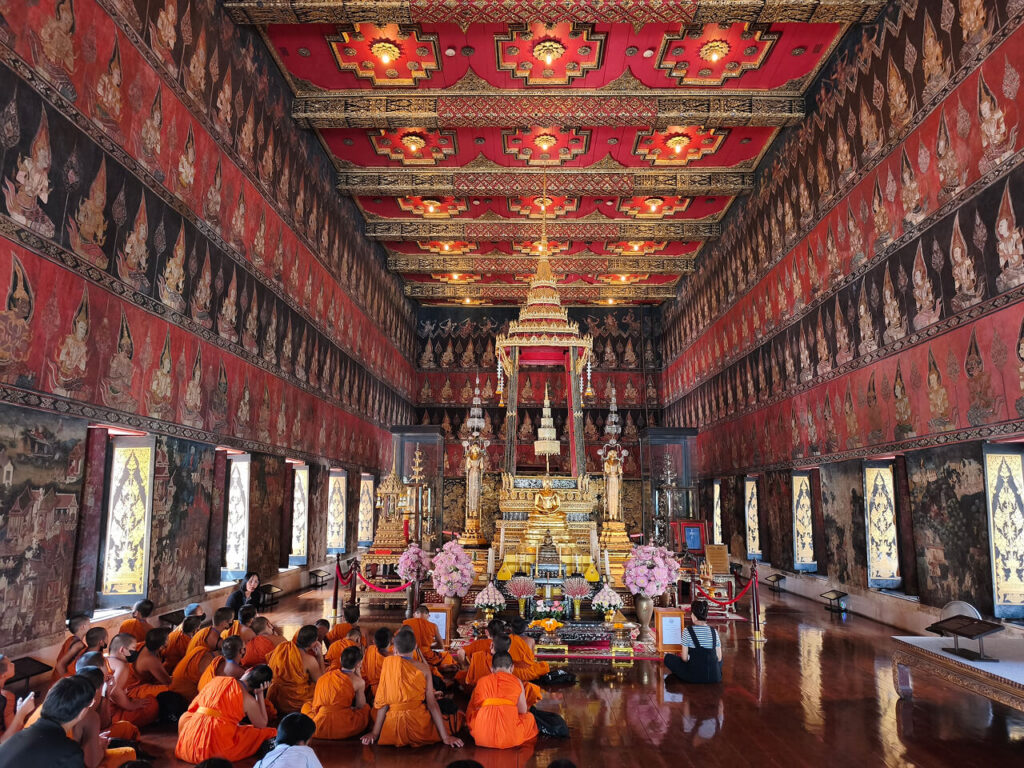
Most of the frescoes depict good deeds from the life of the Buddha or ancient Indian tales about his past lives. The idea was simple: these are the virtues people should strive for.
3️⃣ The Red House
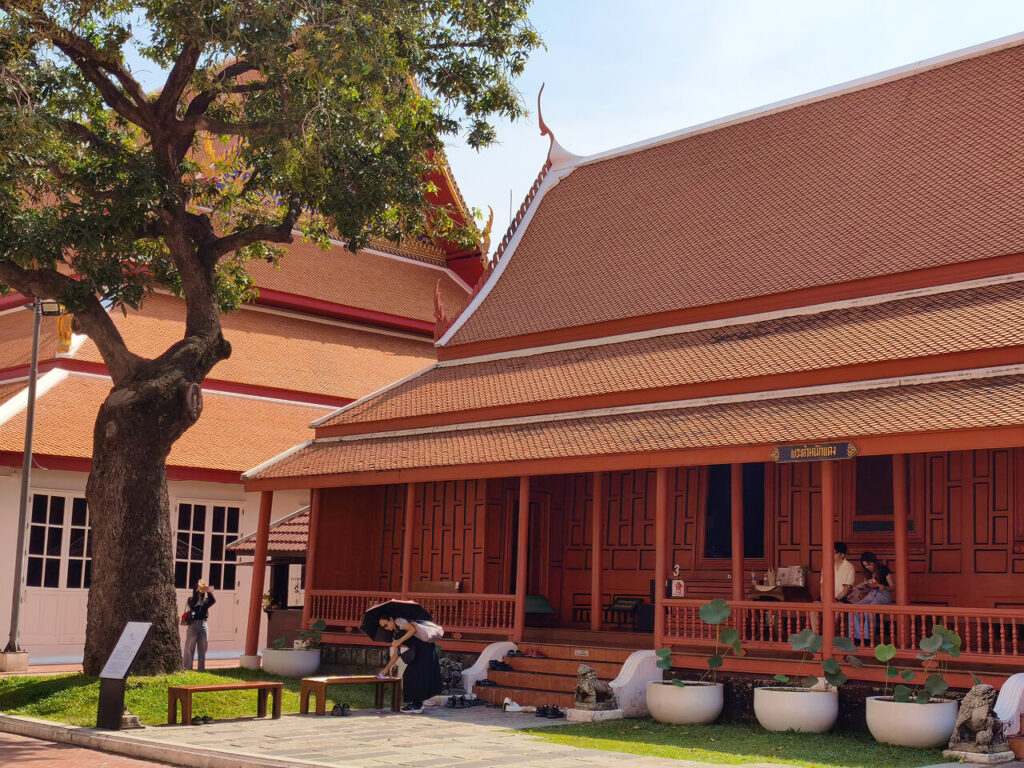
The Red House was used by women of the royal family. It was first home to Princess Srisudarak, the elder sister of Rama I, and later to the mother of Rama IV.
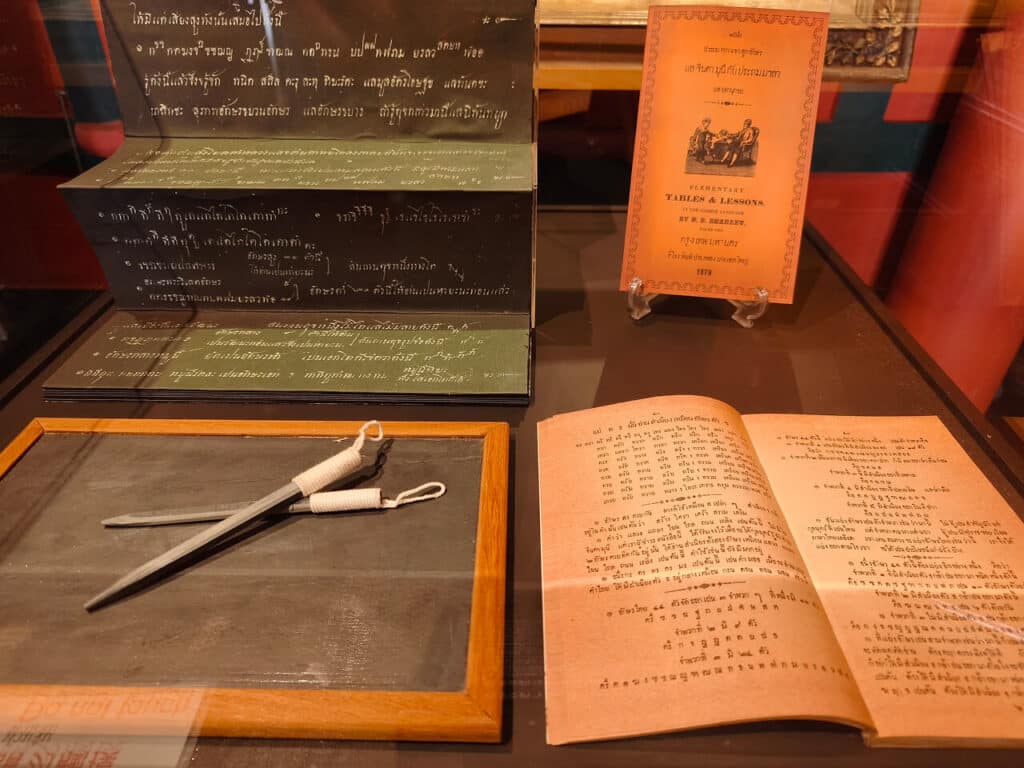
Because of this, the Red House offers a rare glimpse into the everyday life of royal women and children. Inside, you’ll see items they actually used:
- a wooden bed placed near a fire, where women slept after childbirth,
- children’s toys,
- and learning tools used to practice reading and writing.

4️⃣ Maha Surasinghanat Building
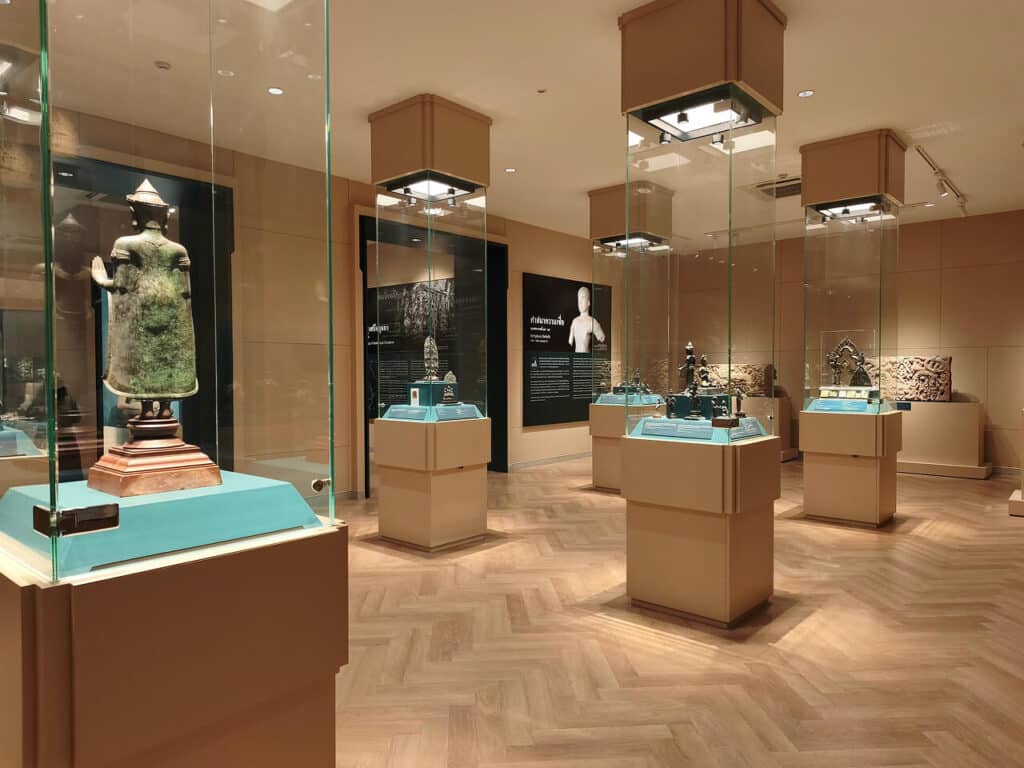
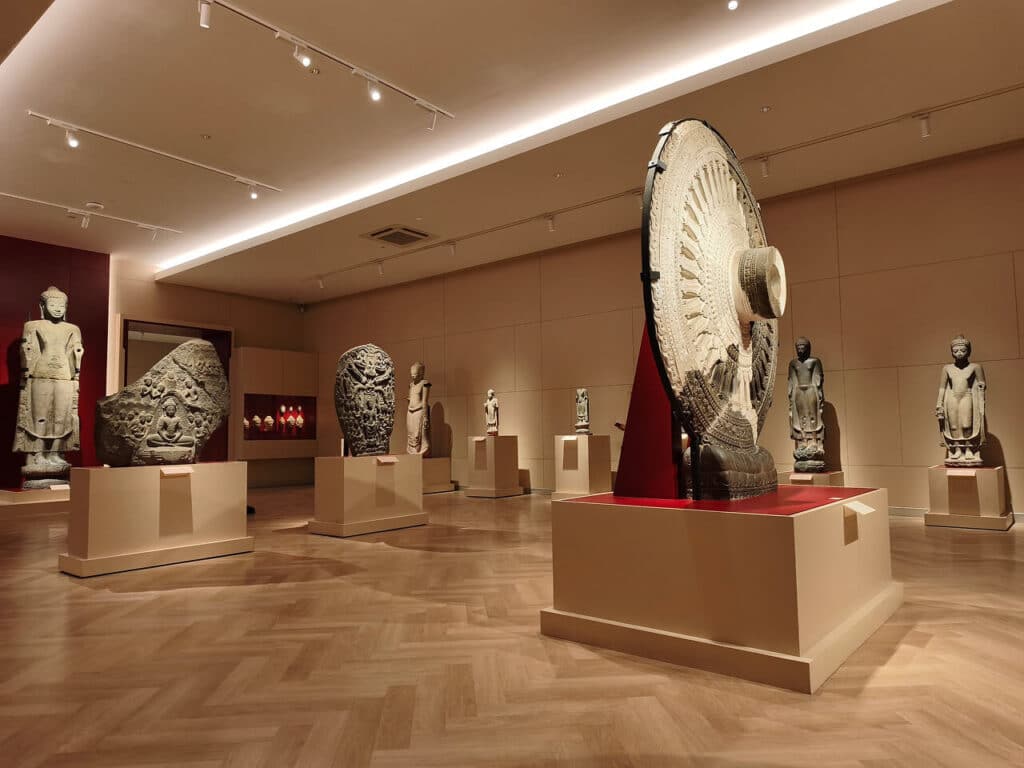
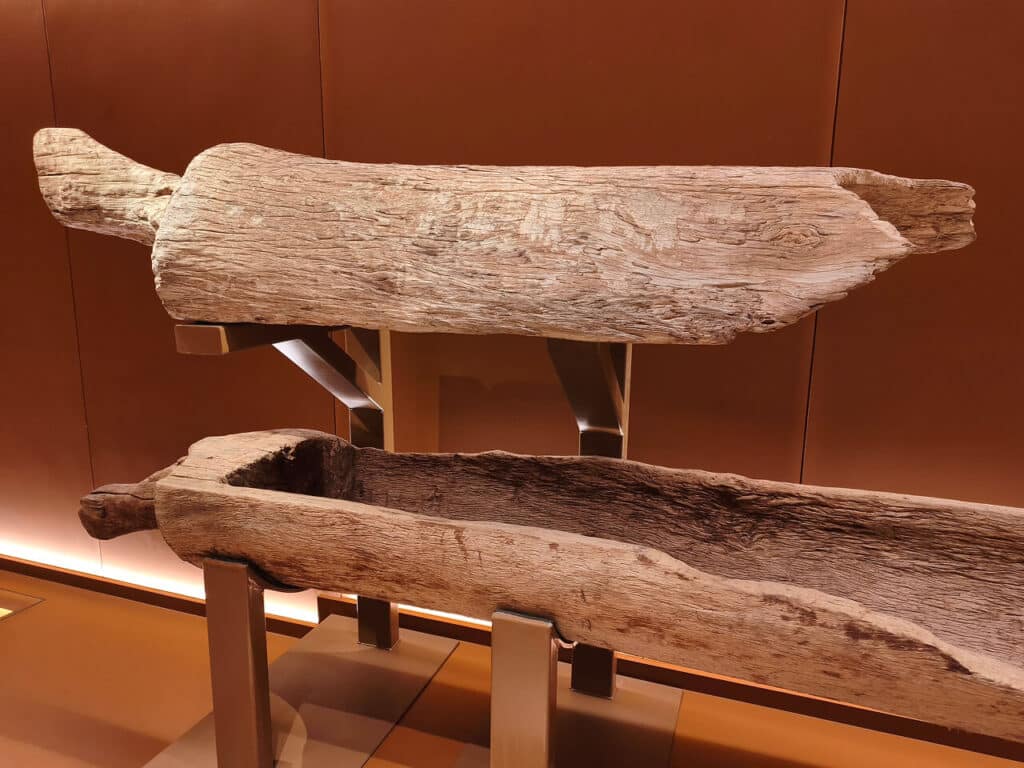
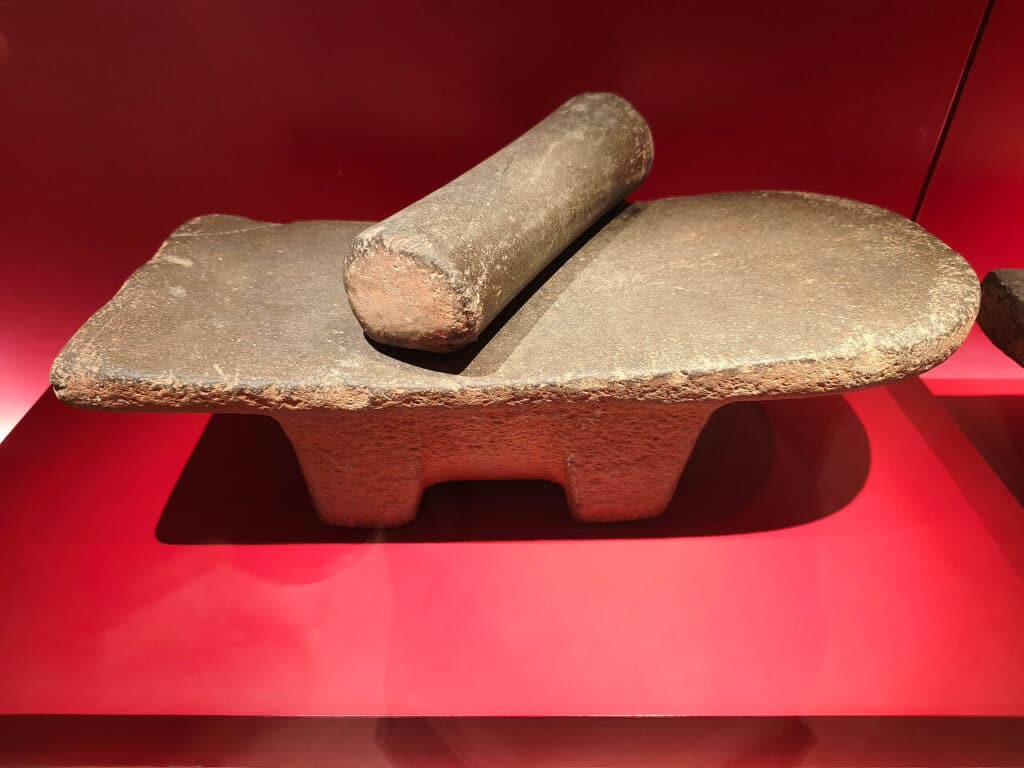
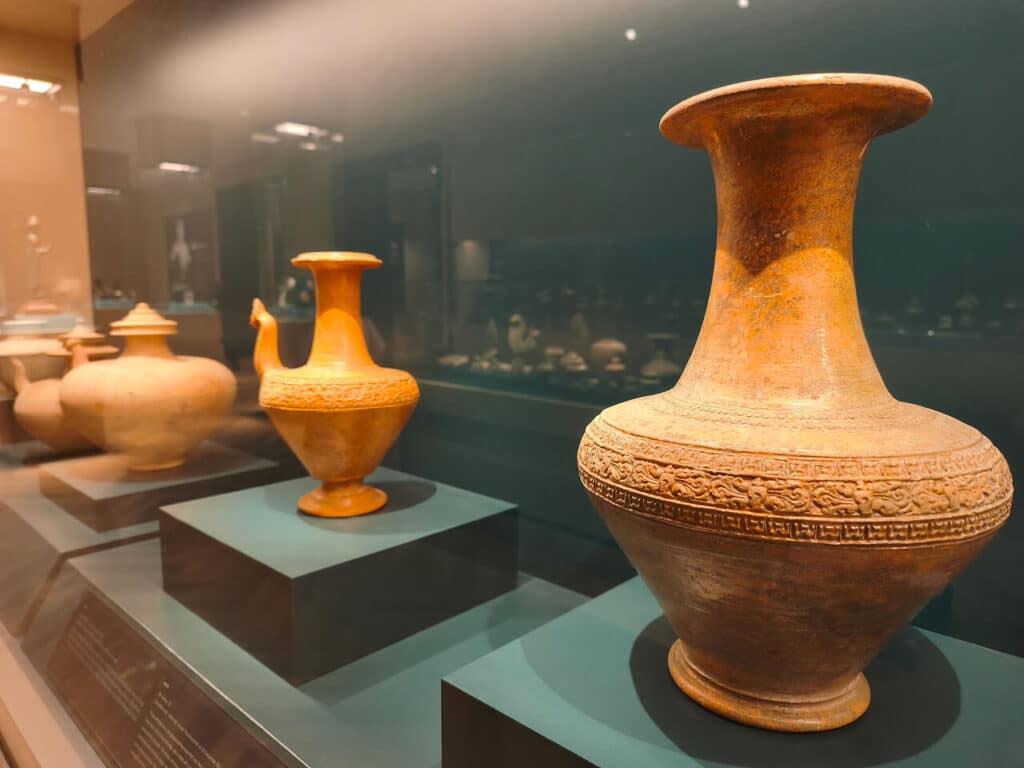
The Maha Surasinghanat Building focuses on archaeology and the history of Thailand before the 13th century AD. The exhibition is spread across six rooms:
- Room 401 — Asian art
- Room 402 — Prehistoric period
- Room 403 — Dvaravati period (6th–11th centuries)
- Rooms 404–405 — Lopburi period (9th–15th centuries)
- Room 406 — Srivijaya period and Java art (7th–13th centuries)
In this building, you’ll learn:
- why Thailand’s geography made it a crossroads of trade routes between India and China — and how that shaped its culture;
- what everyday tools and weapons looked like in different historical periods;
- how Thailand’s development fits into the broader timeline of world history.
✅ If you actually stop to read and absorb the information, this section alone can take a lot of time. That’s exactly why I recommend budgeting at least 4 hours for the museum overall.
5️⃣ Praphat Phiphitthaphan Building
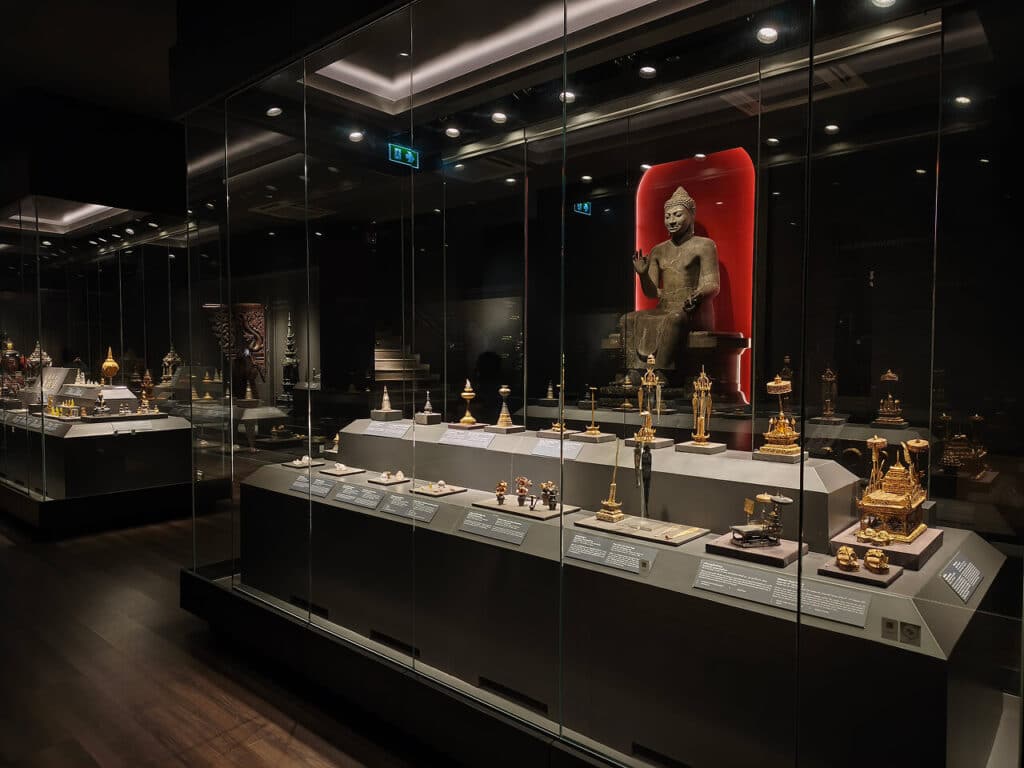
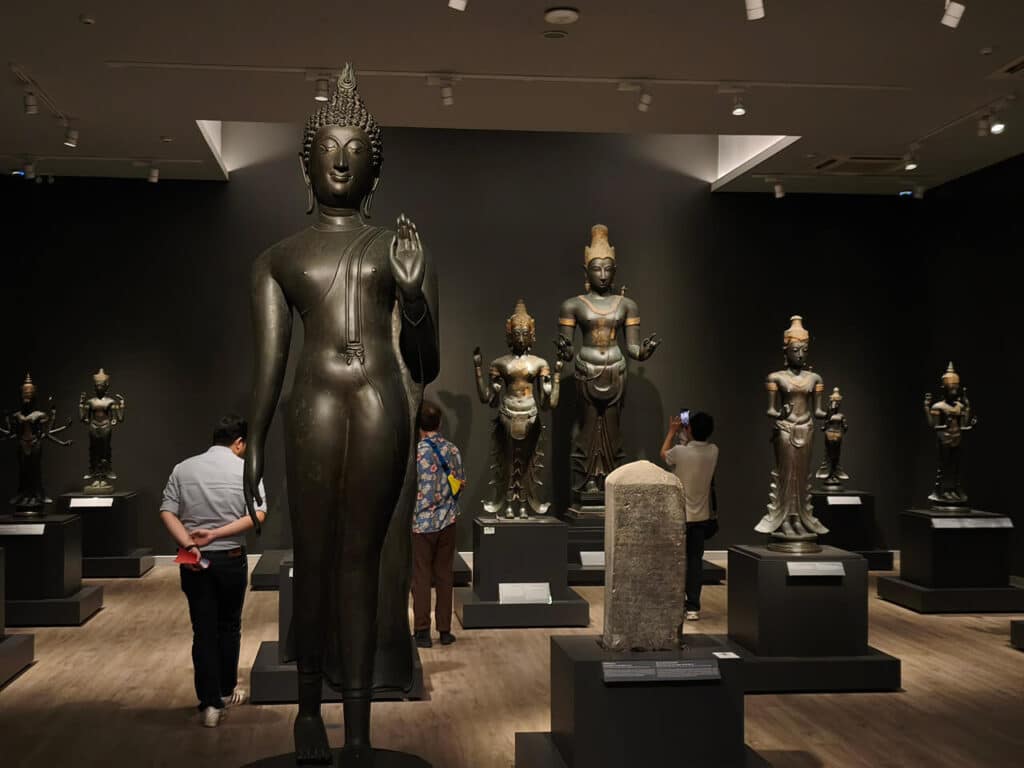
The Praphat Phiphitthaphan Building contains five exhibition halls dedicated to Thai history and archaeology from the 13th century onward.
- Room 501 — Lanna Period
The Lanna Kingdom was founded in 1296, with Chiang Mai as its capital. Historically, it occupied much of what is now northern Thailand. The room focuses on regional identity, religion, and distinctive Lanna-style art. - Room 502 — Sukhothai Period
The Sukhothai Kingdom emerged south of Lanna in the 13th century. Over time, it expanded significantly and became a prosperous state. The surviving artworks from this period clearly reflect its cultural and political strength. - Room 503 — Ayutthaya Period
The Ayutthaya Kingdom was founded in 1350 in the Chao Phraya River Basin and later absorbed the Sukhothai Kingdom. Ayutthaya grew into a powerful economic and political center and lasted for 417 years, leaving behind a rich artistic and architectural legacy. - Room 504 — Thonburi and Early Rattanakosin Periods
After the fall of Ayutthaya in 1767, the capital of the Thai kingdom was moved to Thonburi, a former southern outpost on the western bank of the Chao Phraya River. Shortly afterward, a new capital — Rattanakosin — was established on the eastern bank in 1782 by Rama I, modeled after Ayutthaya. - Room 505 — Rattanakosin Period
The reign of Rama IV took place during a time of aggressive Western colonial expansion. To safeguard national security, the king pursued an active foreign policy, establishing diplomatic relations with European powers and the United States, while also initiating modernization within the country. From this period onward, Thai art gradually began to absorb Western cultural influences.
✅ This building is useful if you want to understand how Thai history evolved into the modern state — step by step, dynasty by dynasty.

6️⃣ Phra Wiman
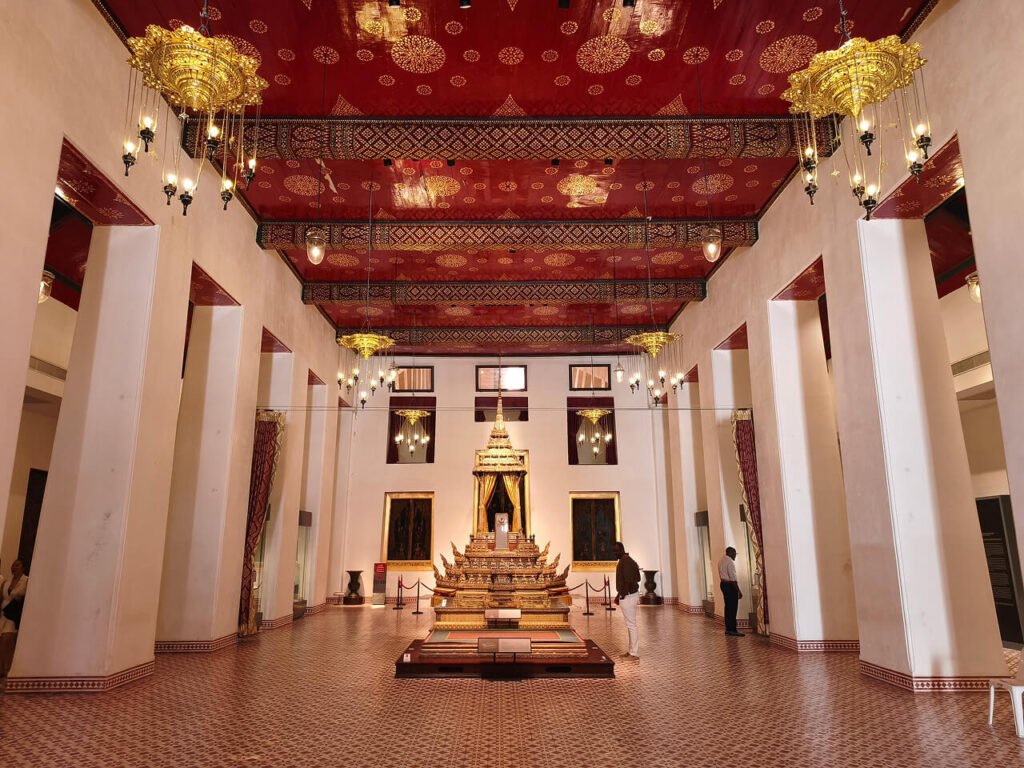
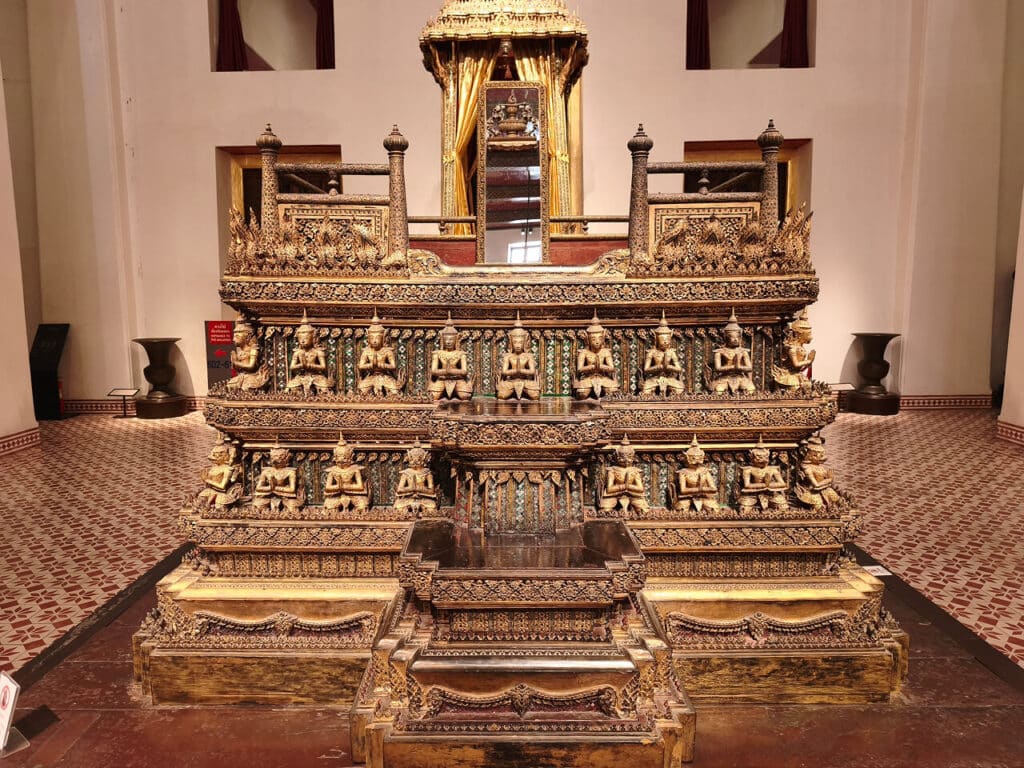
The Phra Wiman houses 14 exhibition halls dedicated to traditional Thai art. This is one of the most comprehensive and time-consuming sections of the museum — in a good way.
- Room 601 — Grand Hall
This hall features the original throne of Pinklao, the younger brother of Rama IV. - Room 602 — History of Wang Na Palace
An introduction to Wang Na Palace, the residence of vice-kings and heirs to the throne, and its later transformation into the National Museum. - Room 603 — Royal Palanquins
A collection of palanquins used by kings, nobles, and monks, strictly according to rank and ceremonial tradition. - Room 604 — Thai Music
The evolution of Thai music told through royal court instruments — from classical ensembles to rare ceremonial forms. - Room 605 — Performing Arts
Shadow puppetry, Khon masks, and royal puppets as a living heritage of Thai epics and court performances. - Room 606 — 19th-Century Decorative Arts
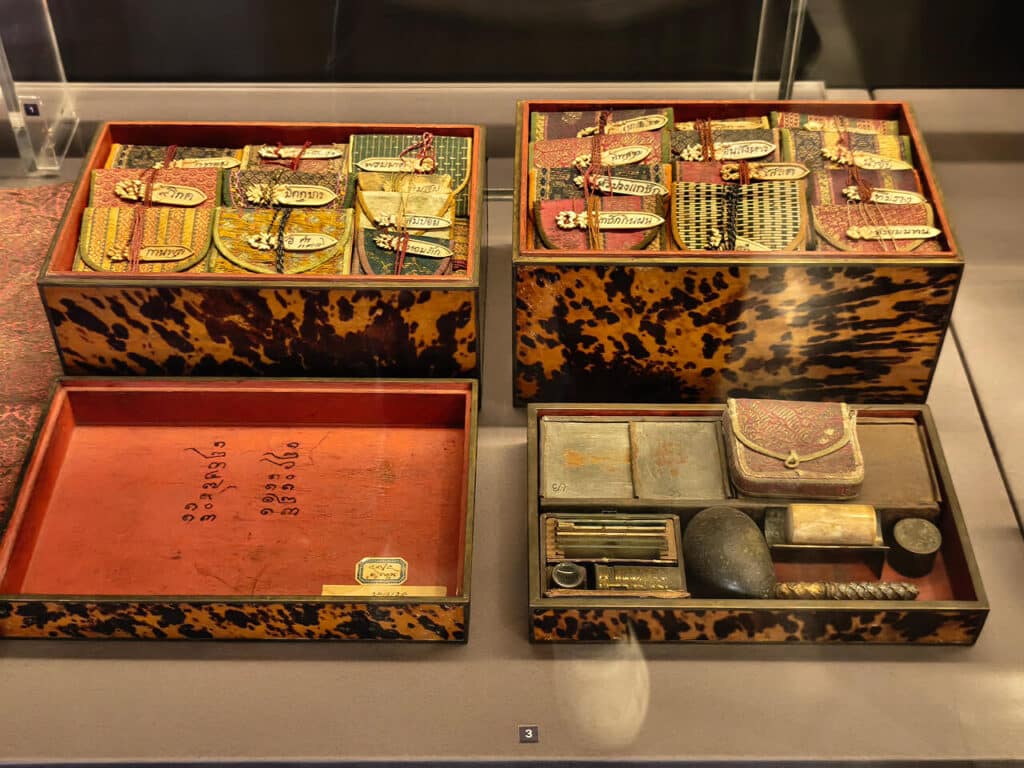
Objects from the 19th century decorated with Thai mother-of-pearl inlay, showcasing exceptional lacquer and decorative craftsmanship. - Room 607 — Court Ceramics
Elegant ceramics used in royal and ceremonial contexts, reflecting the taste and status of the Thai elite. - Room 608 — Silver and Niello
Ceremonial vessels made of silver and niello, demonstrating the refined skill of Thai artisans and court gift traditions. - Room 609 — Royal Elephant Saddles
Ceremonial elephant saddles used by kings and nobility — symbols of power, prestige, and artistic refinement. - Room 610 — Teak Wood Carving
Thai teak carving, from mythological creatures to architectural elements and royal chariots. - Room 611 — Court Textiles and Costumes
Fabrics, embroidery, and royal garments reflecting regional diversity and international influences in Thai dress. - Room 612 — Ceramics Across the Ages
Ceramics ranging from prehistoric Ban Chiang to the Bangkok era, illustrating the development of daily life, trade, and artistic traditions. - Room 613 — Monastic Life
Objects from the everyday and ritual life of monks, highlighting asceticism, symbolism, and Buddhist traditions. - Room 614 — Military Arts
Weapons, war equipment, war elephants, and carved ivory pieces reveal the close connection between warfare, ritual, and art in Thai history.
7️⃣ Issaret Rachanuson Building
The Issaret Rachanuson Building is a two-story mansion that once served as the residence of Vice-King Pinklao, the brother of Rama IV.
One unusual feature of the building is that there is no internal staircase connecting the first and second floors. According to traditional Thai beliefs, ascending from beneath the building was considered inauspicious, so external staircases were used instead.
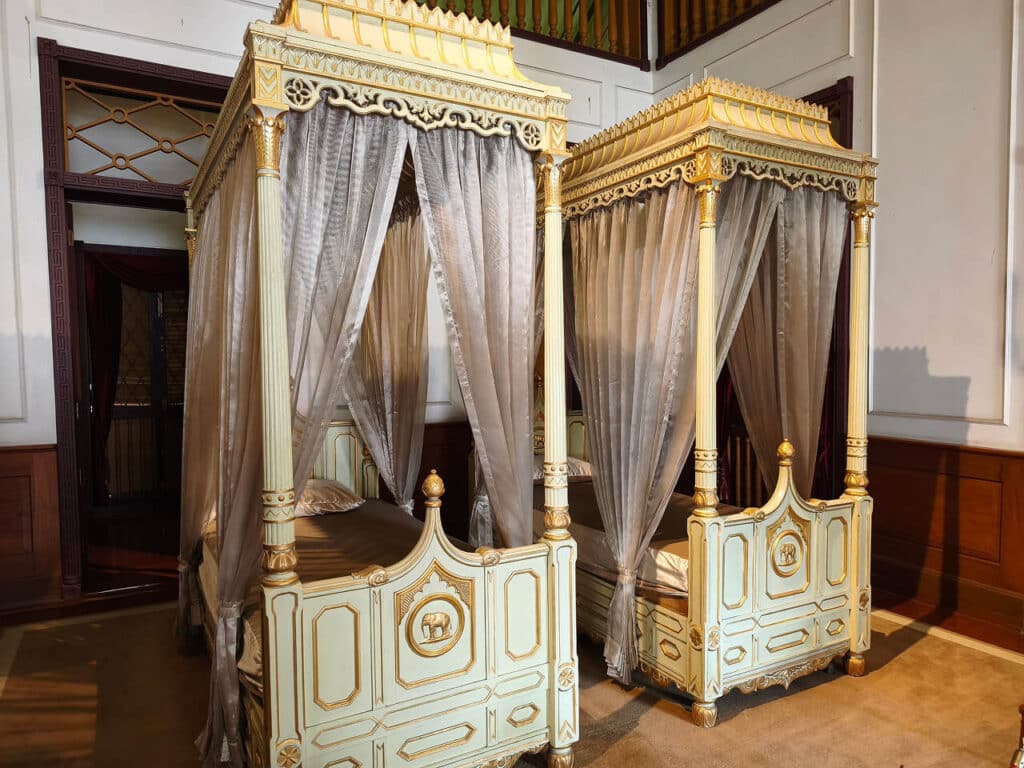
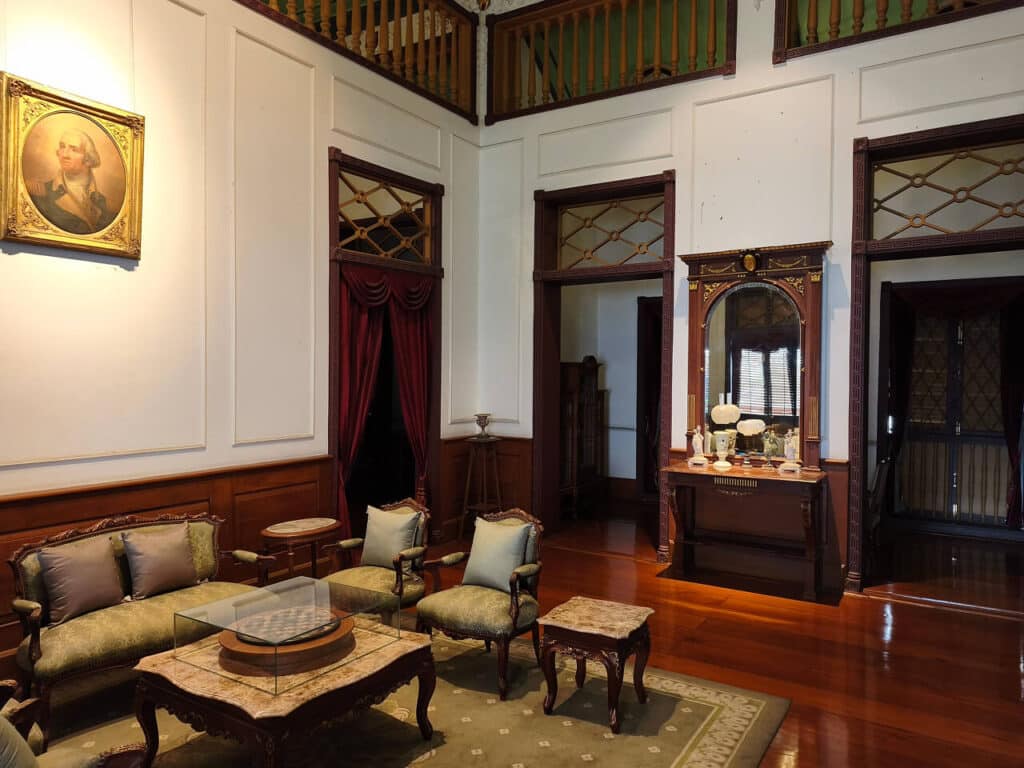
The ground floor was предназначed for courtiers and servants, while the upper floor was the vice-king’s private area. It consisted of five rooms:
- a library,
- a reception room,
- a dining room,
- a bedroom,
- and a dressing room.
8️⃣ Nukit Ratchaborihan Shrine
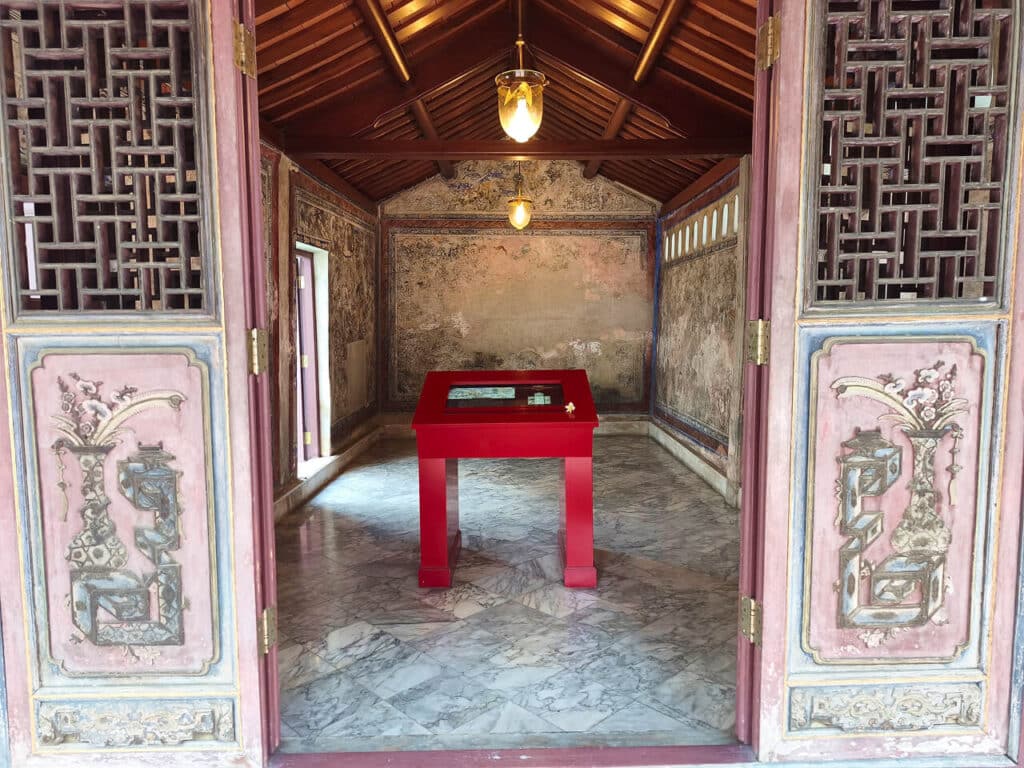
The Nukit Ratchaborihan Shrine is the only surviving structure of the Chinese residence Boworn Pariwat, built by order of Vice-King Pinklao in the 19th century.
The shrine’s main highlight is its wall paintings based on the 16th-century Chinese novel Investiture of the Gods. This is a unique fresco cycle in Thailand, entirely dedicated to this Chinese epic.
The murals are read from right to left and depict a mythological war between the kingdoms of Xiqi and Chaoge: magical battle formations, fortress sieges, heroic duels, and direct intervention by the gods.
9️⃣ Chao Phraya Yommarat Memorial Hall
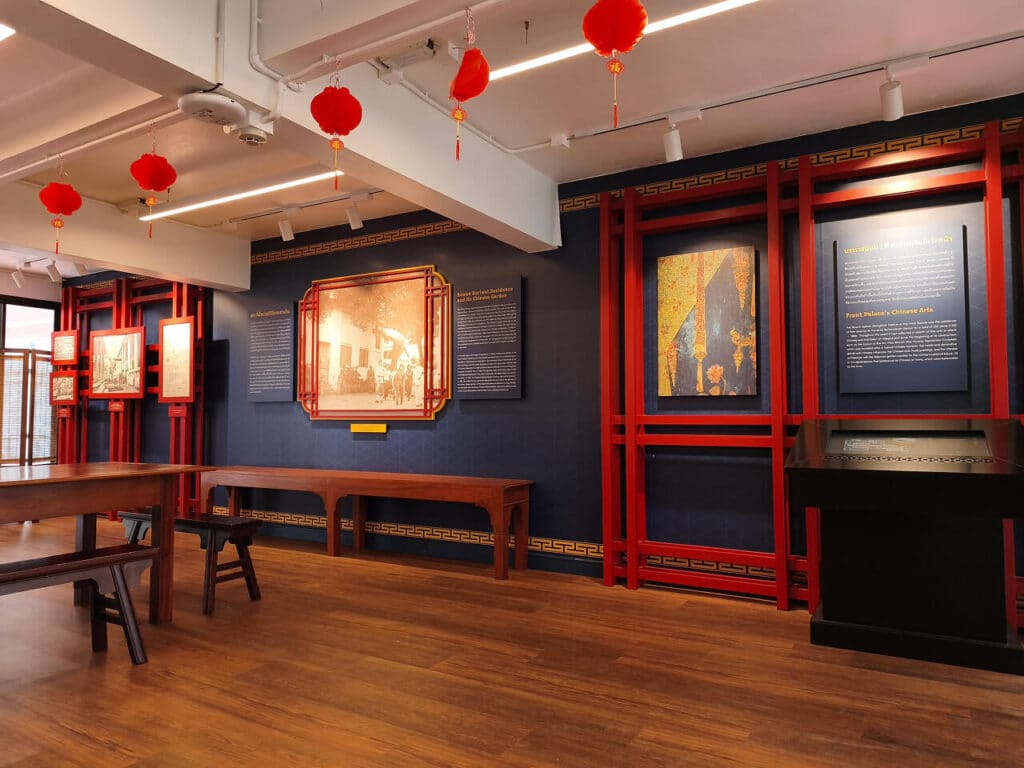
The Chao Phraya Yommarat Memorial Hall is dedicated to Pan Sukhum, one of the key reformers of Thailand in the late 19th and early 20th centuries.
Here, Chao Phraya is not a river, but the highest aristocratic rank, while Yommarat is a title.
Pan Sukhum:
- served under Rama V and Rama VI;
- spent 11 years as a diplomat in England;
- oversaw the introduction of electricity, modern water supply systems, and police reform;
- founded Thailand’s first cement factory — the future Siam Cement Group;
- served as regent to King Rama VIII from 1935 to 1938.
🔟 Building of the Royal Funeral Chariots
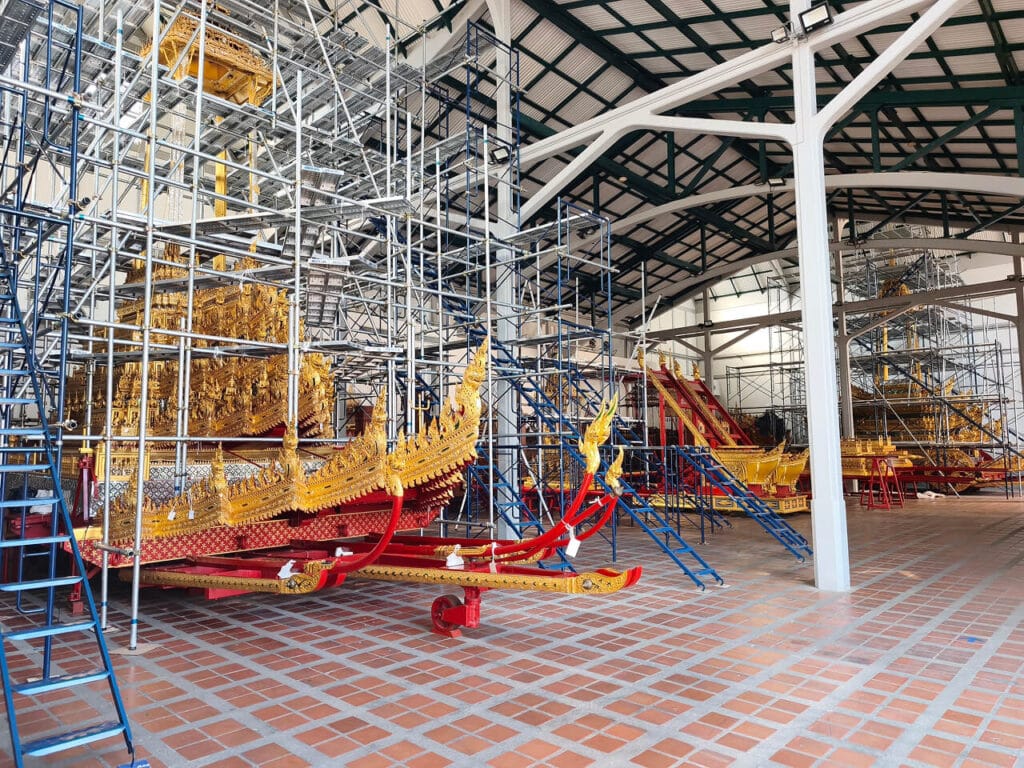
This hall houses royal funeral chariots, palanquins, urns, ceremonial umbrellas, and other ritual objects used in the cremation ceremonies of monarchs and members of the royal family. The building itself, including its massive doors, was specifically designed to accommodate the extraordinary height of the chariots with their towering spires.
The main highlight is Phra Maha Phichai Ratcharot (“Great Chariot of Victory”):
- built in 1795 during the reign of Rama I;
- carved from teak, decorated with gold leaf and glass mosaics;
- symbolizes the mythical Mount Meru, the center of the universe in Buddhist and Hindu cosmology;
- approximately 13 meters high and weighing over 20 tons;
- pulled by 216 soldiers during ceremonies;
- last restored in 2017 for the cremation of Rama IX.
1️⃣1️⃣ Mangkhala Phisek Pavilion
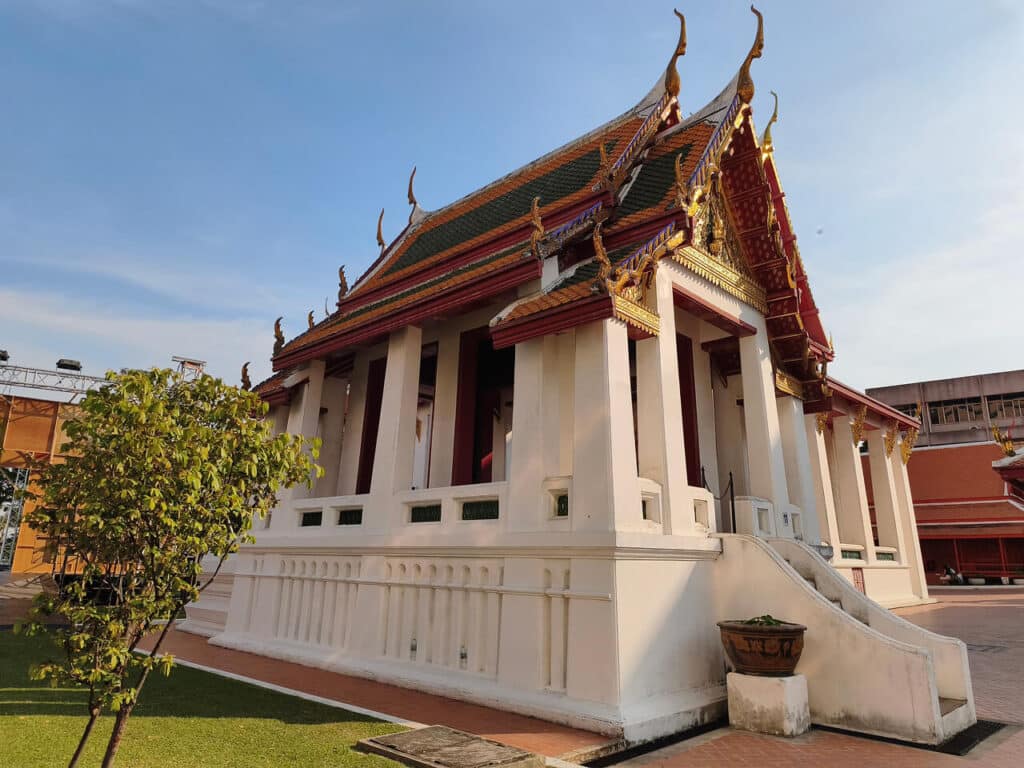
The Mangkhala Phisek Pavilion features a special platform designed for mounting and dismounting a war elephant.
During the reigns of Rama II, Rama IV, and Rama V, the pavilion was used for the ritual bathing of a prince chosen to become the future vice-king.
This purification ritual took place before the investiture ceremony — the formal act of appointment or bestowal of title — which was held in the Buddhaisawan Chapel (Building No. 2).
1️⃣2️⃣ Samran Mukkhamat Pavilion
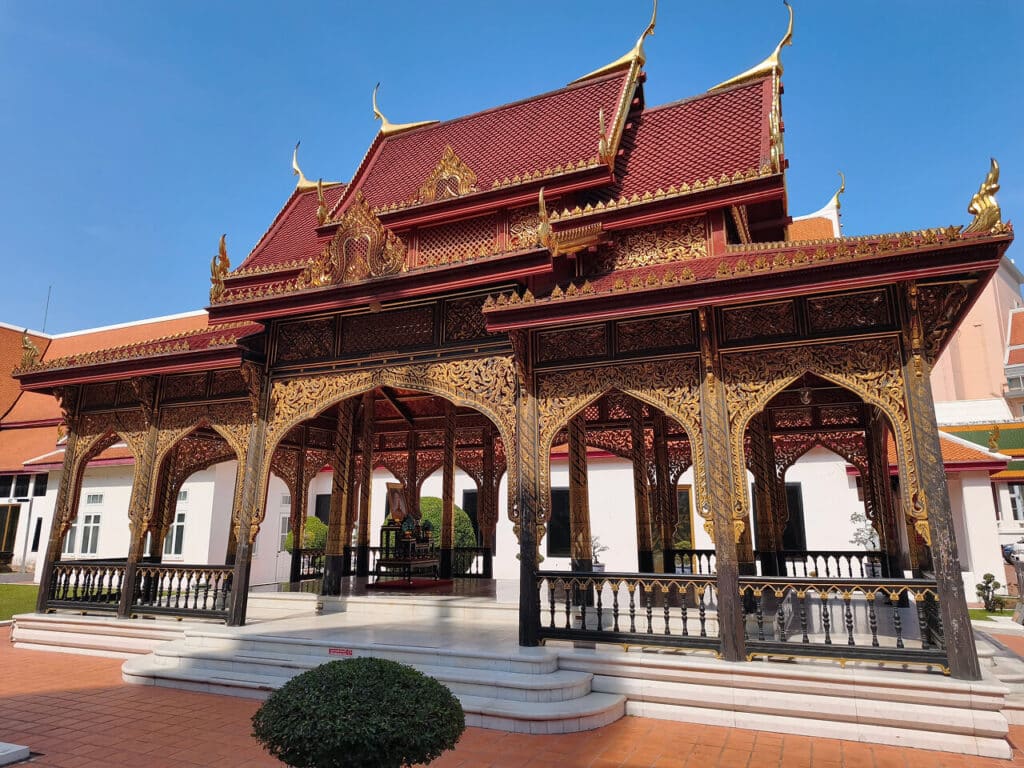
The Samran Mukkhamat Pavilion was built during the reign of Rama V in the early 20th century as a ceremonial pavilion for royal bathing rituals at Dusit Palace.
During the reign of Rama VII, the pavilion was relocated to the National Museum Bangkok. It is still used today for official receptions and ceremonial events.
1️⃣3️⃣ Long Song Pavilion
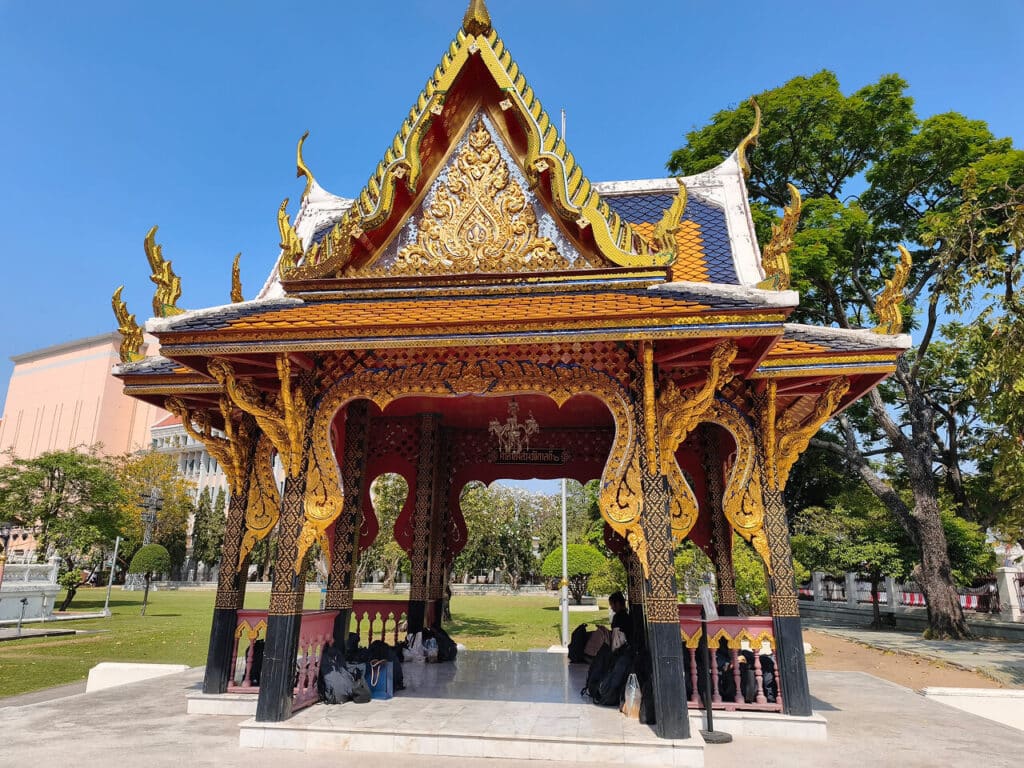
The Long Song Pavilion was built during the reign of Rama VI. Originally, it stood within the grounds of Sanam Chandra Palace in Nakhon Pathom.
The pavilion was used as a place where ceremonial garments were removed during royal rituals.
