✅ Updated on 06.03.2026

🚗 Car Rental
I rented a car through the Local Rent service for 1,200 baht per day. The 3,000 baht deposit didn’t require a credit card. The car was relatively new, everything went smoothly, and the deposit was returned without any delays.
The main advantage of traveling by car is the freedom — you can stop anywhere along the way and you’re not dependent on public transport schedules.
If you don’t drive, you can still get to Erawan National Park by bus or train. I explained these options in detail here.
⏰ Departure
I recommend leaving no later than 7 AM. This way you’ll arrive before dark, check into your hotel, and still have time to enjoy a swim in the clear waters of the River Kwai.
Here’s the Google Maps route so you can simply turn on navigation and follow it without any hassle.
Stop 1 — Café with a View of the Temple
📍 Location
🕒 Distance & time: 135 km, about 2 hours 30 minutes
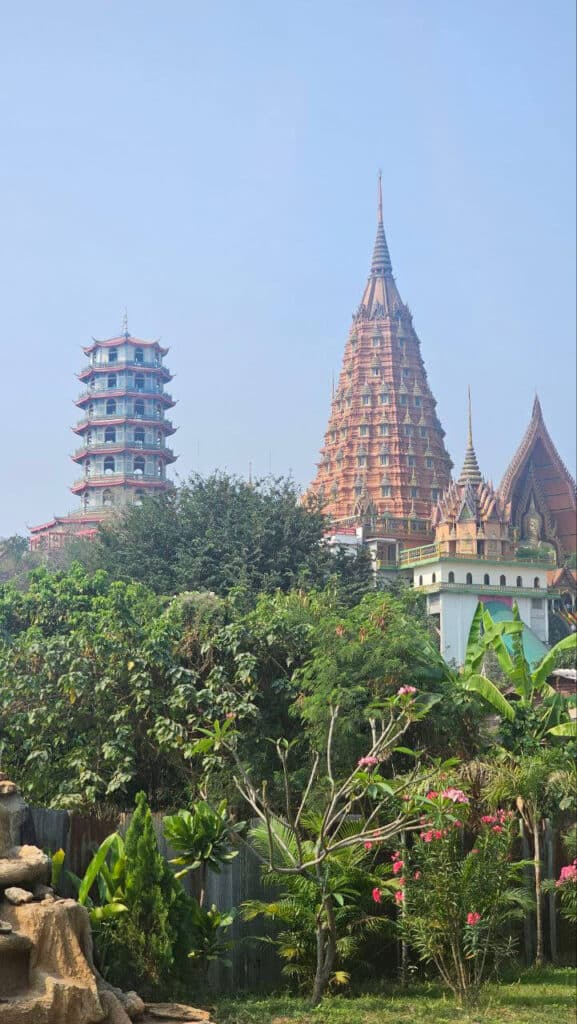
This café offers a great view of Tiger Cave Temple. After about 2.5 hours on the road from Bangkok, you’ll definitely start feeling hungry — so it’s a perfect place to take a break.
Prices here are quite reasonable. If you walk further into the courtyard, you’ll find cozy tables surrounded by mango and banana trees, with coconut palms nearby. The atmosphere is fantastic — especially after a long drive.
Stop 2 — Tiger Cave Temple

📍 Location
🕒 Distance & time: 900 meters, about 3 minutes
💰 Entrance fee: Free
🚗 Parking: Free (it’s better to park at this parking area rather than the main one — the climb to the top is shorter)
Tiger Cave Temple is one of the most impressive and memorable places in Kanchanaburi Province. It’s a great stop where you can combine sightseeing with a bit of adventure.
The temple sits on top of a hill, and the panoramic views from the summit are absolutely worth the steep climb.
If you don’t feel like walking up the stairs, you can take the funicular for 40 baht round trip. It operates Friday to Sunday.
I also recommend climbing the tower on the left side right after you reach the top. The views from there are even better, and it’s a great spot for photos.
Stop 3 — The Largest Rain Tree in the World
📍 Location
🕒 Distance & time: 11 km, about 16 minutes
💰 Entrance fee: Free
🚗 Parking: Free
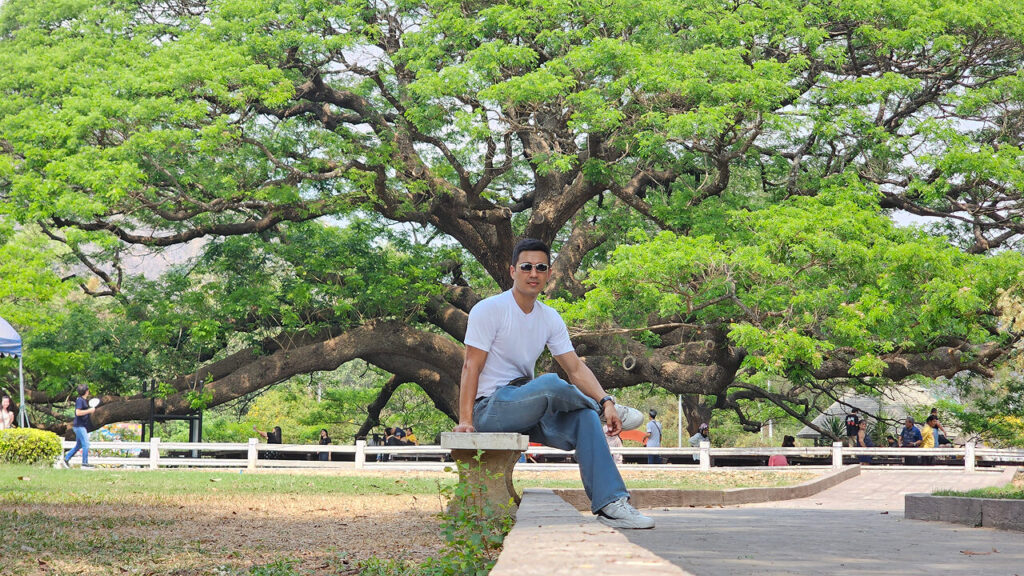
This is the largest tree I’ve ever seen. What makes it impressive isn’t the width of the trunk, but the enormous spread of its branches. They stretch out 52 meters in diameter, forming a massive green canopy.
The tree itself is about 20 meters tall, and as of 2026 it is 127 years old.
It’s a great place to relax in the shade of the huge branches, take some beautiful photos, and simply enjoy the quiet surroundings. Nearby you’ll find small stalls selling food, souvenirs, and fresh sugarcane juice for around 20 baht.
Stop 4 — Bridge over the River Kwai
📍 Location
🕒 Distance & time: 25 km, about 20 minutes — drive northwest. You can pass through there; ignore Google Maps if it tries to send you back the way you came.
💰 Entrance fee: Free
🚗 Parking: Free
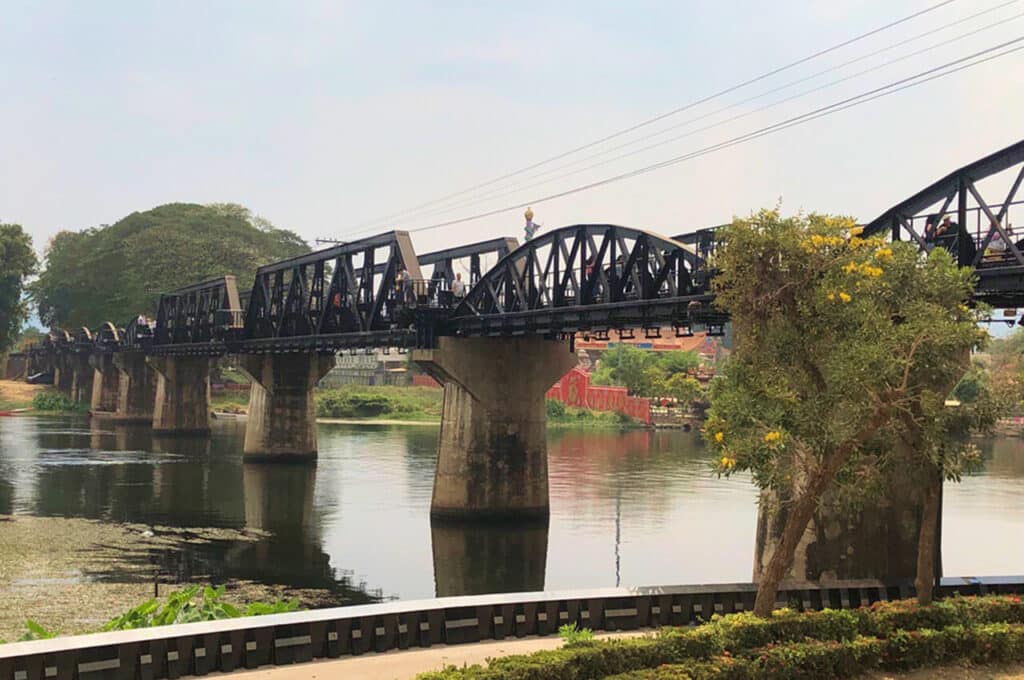
The Bridge over the River Kwai is not just a tourist attraction in Kanchanaburi — it’s a place with a deep and tragic history.
The bridge became part of the Death Railway, a railroad built by Japan during World War II to connect Thailand with Burma (modern-day Myanmar). Construction took place between 1940 and 1943, and it relied on forced labor from prisoners of war and civilians from Southeast Asia.
More than 250,000 people worked on the railway in brutal conditions. Around 90,000 civilians and 12,000 prisoners of war died during its construction.
Today, the bridge stands as a symbol of remembrance and respect for those who lost their lives. It became internationally famous thanks to the film The Bridge on the River Kwai.
💡 Walking Across the Bridge

Today you can walk along the old railway tracks, take photos overlooking the river, and experience a place where beautiful scenery meets a powerful historical legacy.
At certain times of the day, a tourist train slowly crosses the bridge, which makes for a great photo opportunity.
🚂 Train Ride Along the Death Railway

One of the most memorable experiences here is riding the train along the surviving section of the Death Railway to Nam Tok station. The route offers beautiful views, especially along the cliffs and above the river.
You can also buy train tickets from Bangkok to Nam Tok if you want to experience the railway from start to finish.
🕰️ Thailand–Burma Railway Museum
Before visiting the bridge, you may want to stop by the nearby Death Railway Museum to better understand the history behind the railway’s construction.
Next to the museum is a war cemetery, where around 7,000 prisoners of war who died during the construction are buried.
🏞️ Riverside Walk or Boat Tour
If you’d like to see the bridge from a different perspective, you can rent a boat and view it from the river.
🛍️ Local Market and Street Food
Near the bridge, there’s a local market where you can find inexpensive souvenirs and try Thai street food at very reasonable prices.
Stop 5 — Hotel on the River Kwai
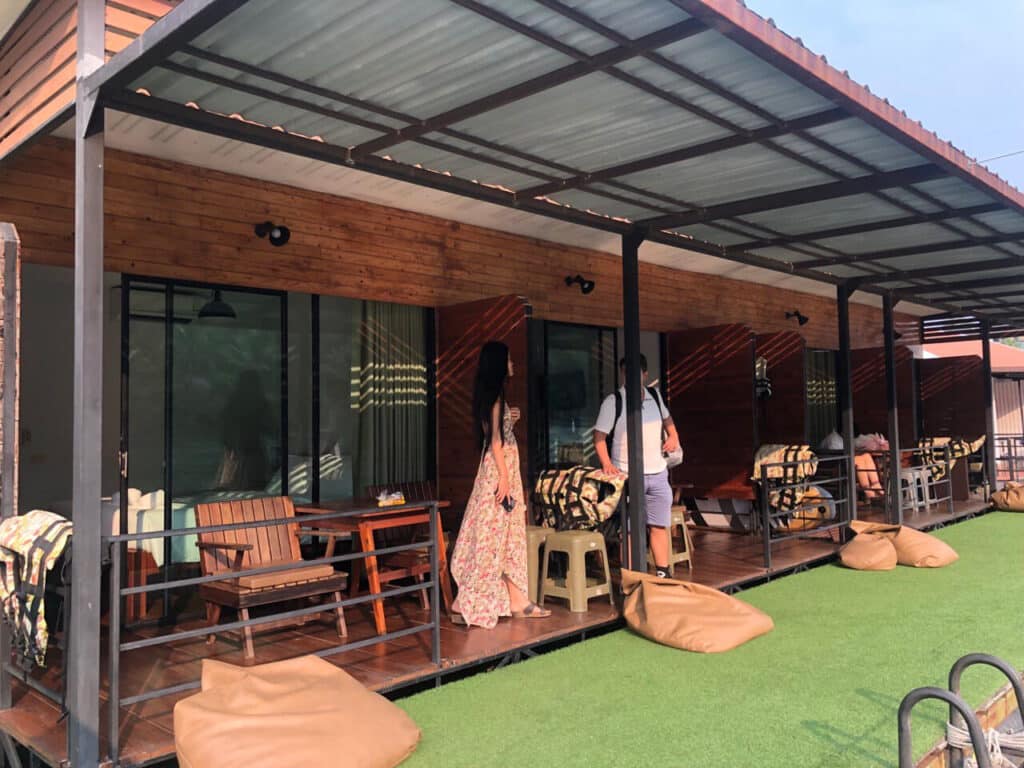
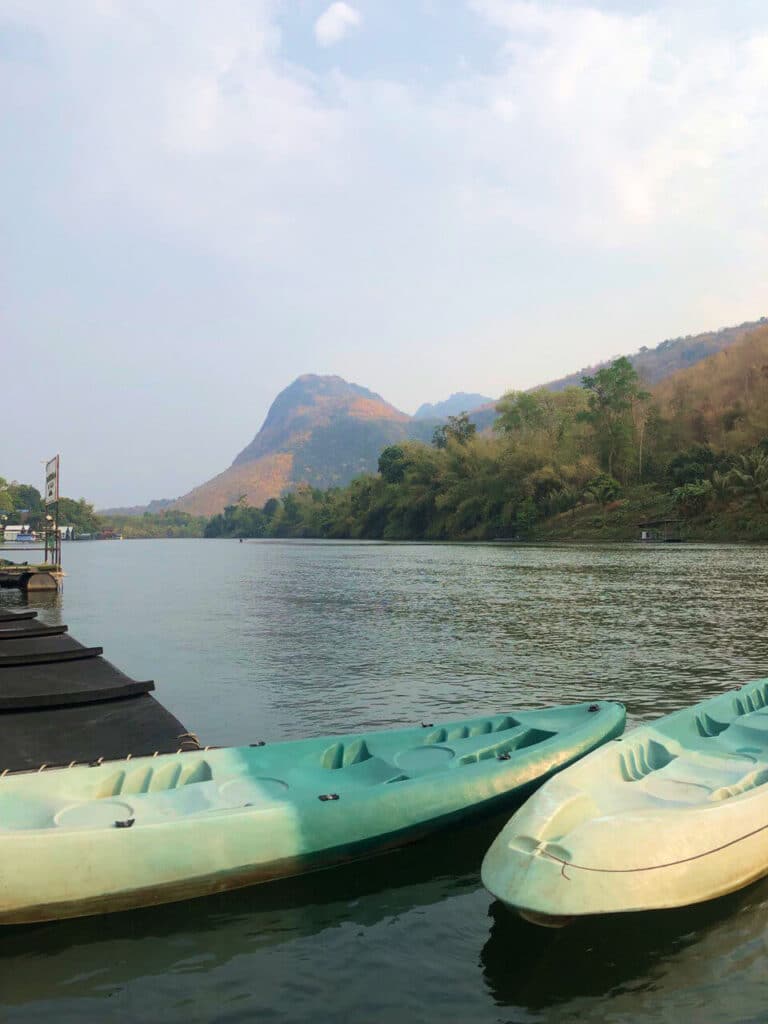
- Baan Krupong — I stayed at this hotel and had a great experience.
- Lake Hill Resort Kanchanaburi — my friends stayed here and liked it as well.
- Chor Ngar Thong — this was my initial choice, but it was already fully booked.
- Top View Erawan Kanchanaburi — this hotel has a floating bar with music and drinks, where guests can relax on the water. They only have a Facebook page, where you can message them to make a reservation.
🕒 Distance & time: 57 km, about 49 minutes — the sun goes behind the hill around 4:30 PM, so I recommend checking in around 3:00 PM to have enough time for a swim before sunset.
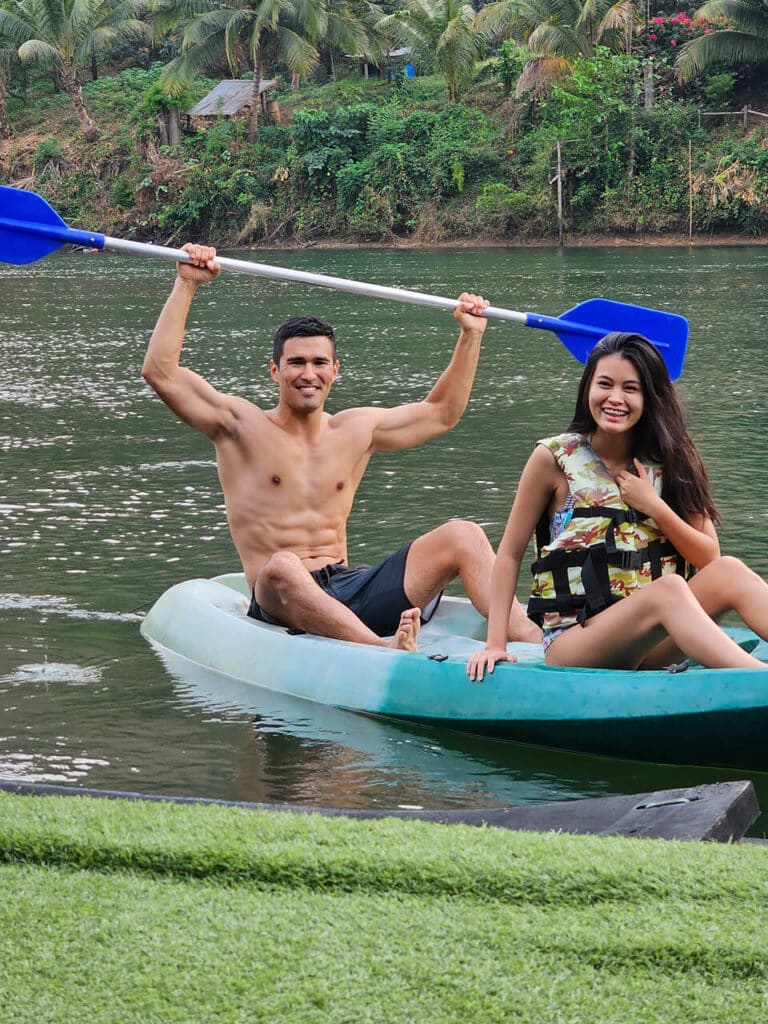
Your stay usually includes kayaks, paddle boards, life jackets, and inflatable tubes, so you’ll have everything you need to enjoy the river.
On the way, stop at 7-Eleven. Just note that the first one at the gas station doesn’t sell alcohol. It’s better to stop at another 7-Eleven nearby where you can buy drinks, and across the road there are local eateries with decent food.
Once you check into the hotel, you probably won’t feel like going anywhere else — the relaxing atmosphere kicks in immediately. That’s the perfect way to end the day.
The next morning, new adventures await. 🌿
Stop 6 — Srinagarind Dam
📍 Location
🕒 Distance & time: 10 km, about 14 minutes
💰 Entrance fee: Free
🚗 Parking: Free
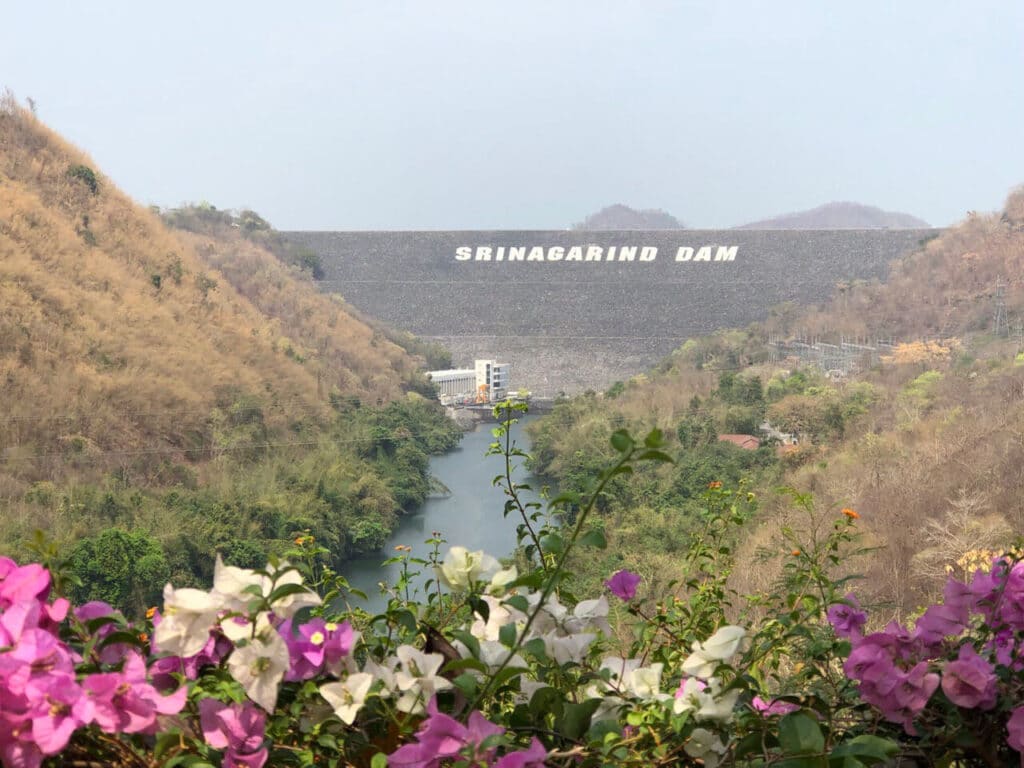
On the way to the dam, we made a couple of stops because the views along the road are incredible. I recommend not rushing — take your time and enjoy the scenery.
At the dam itself, there’s convenient parking and a well-maintained area for walking. You can even have a picnic in one of the gazebos or rent a bicycle for just 20 baht to explore the area.
If you get hungry, try the local grilled chicken or pork skewers — they’re seriously delicious.
There’s also a great café here with excellent coffee. I recommend trying an iced cappuccino or an Americano with lime and honey — incredibly refreshing. Coffee prices are very reasonable, around 45–60 baht. ☕
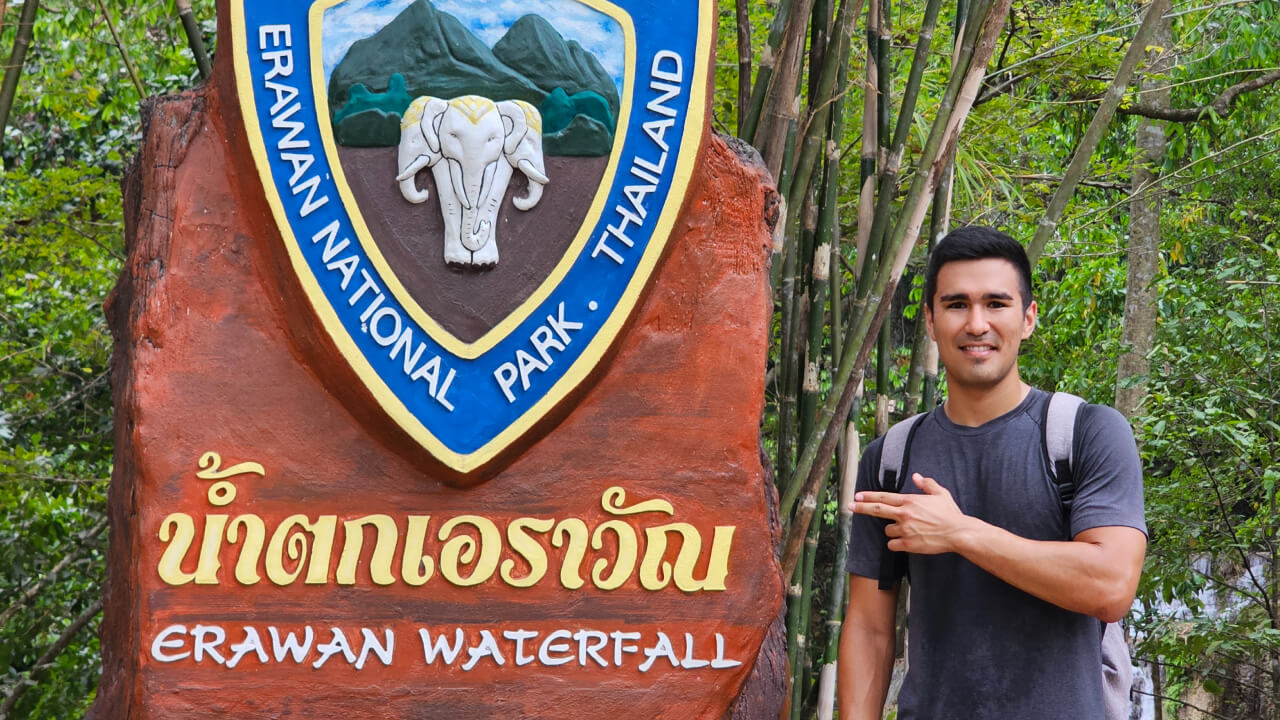
Stop 7 — Erawan National Park
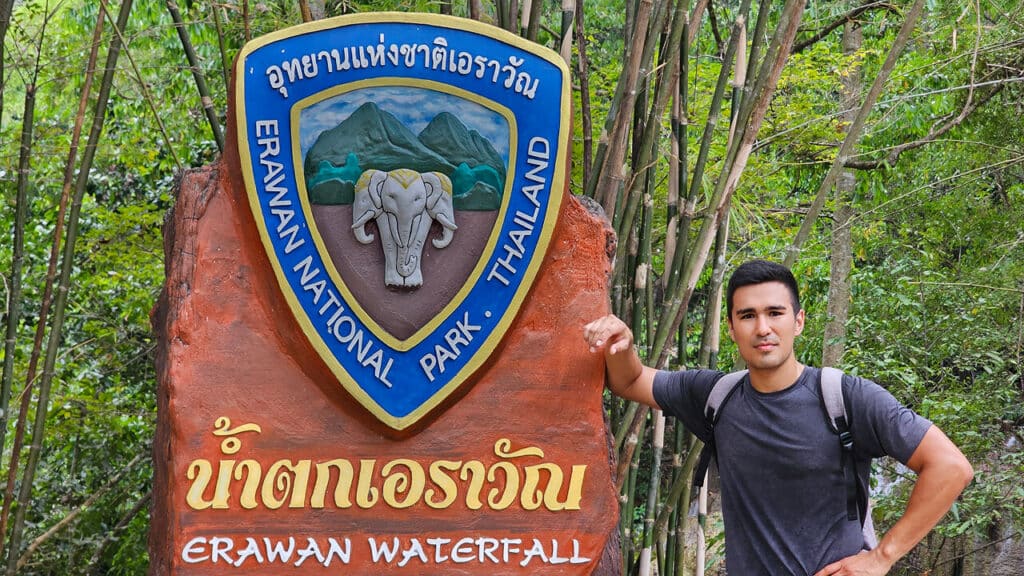
📍 Location
🕒 Distance & time: 7 km, about 16 minutes
💰 Entrance fee: 300 baht (for visitors without a Thai ID)
The main highlight of the park is Erawan Waterfall, one of the most beautiful waterfalls in Thailand.
Near the parking area you’ll find showers, toilets, and small shops selling food and drinks.
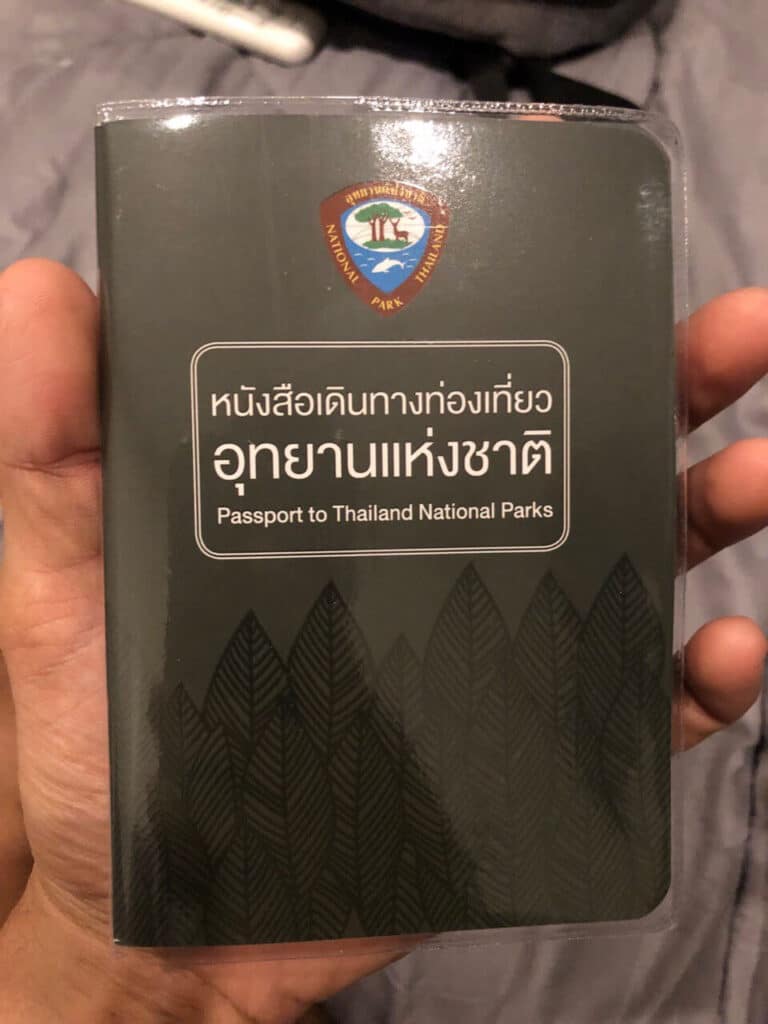
At the entrance, you can also buy a Thailand National Parks Passport — a great souvenir and a fun way to keep track of the parks you visit. It costs 120 baht with the cover included. Each new national park will stamp your passport.
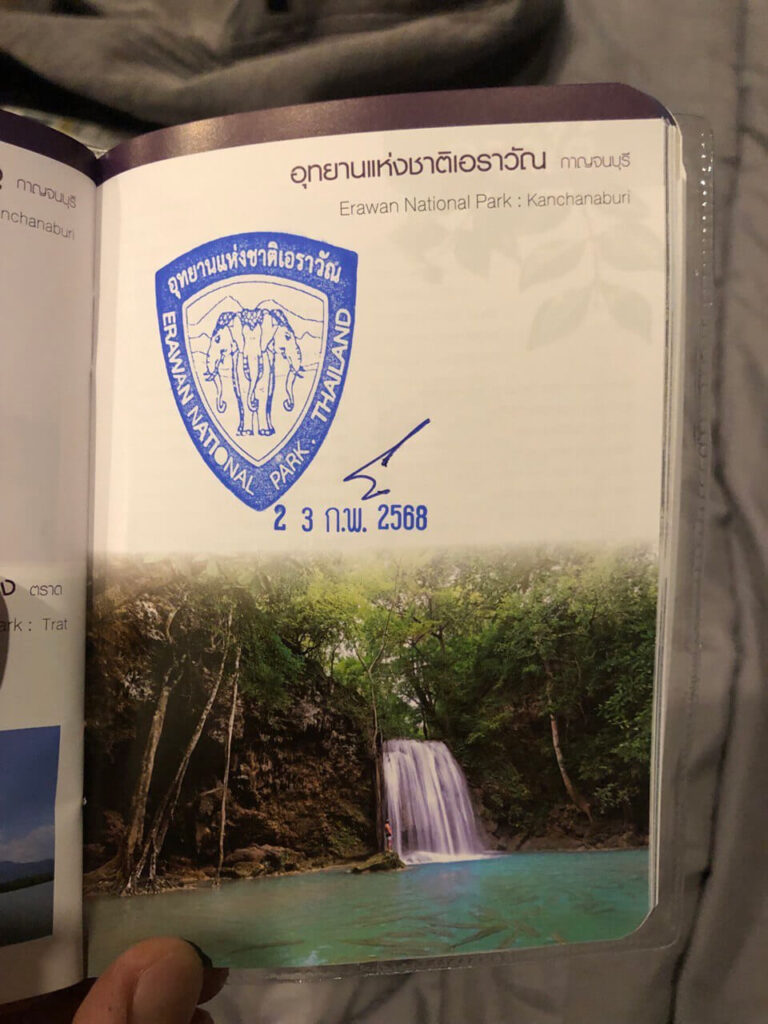
For me, this was the very first stamp in my collection.
After exploring the waterfall and the park, you can start your journey back to Bangkok.
