✅ Updated on 03.02.2026

Location and How to Get There
You can reach Wat Pho easily via the MRT subway. Take the Blue Line to Sanam Chai station, then walk about 300 meters to the temple.
Alternatively, if you’ve already visited Wat Arun, you can take a boat from Wat Arun Pier to Tha Tien Pier for just 8 baht. From there, it’s about a 150-meter walk to Wat Pho’s main entrance.
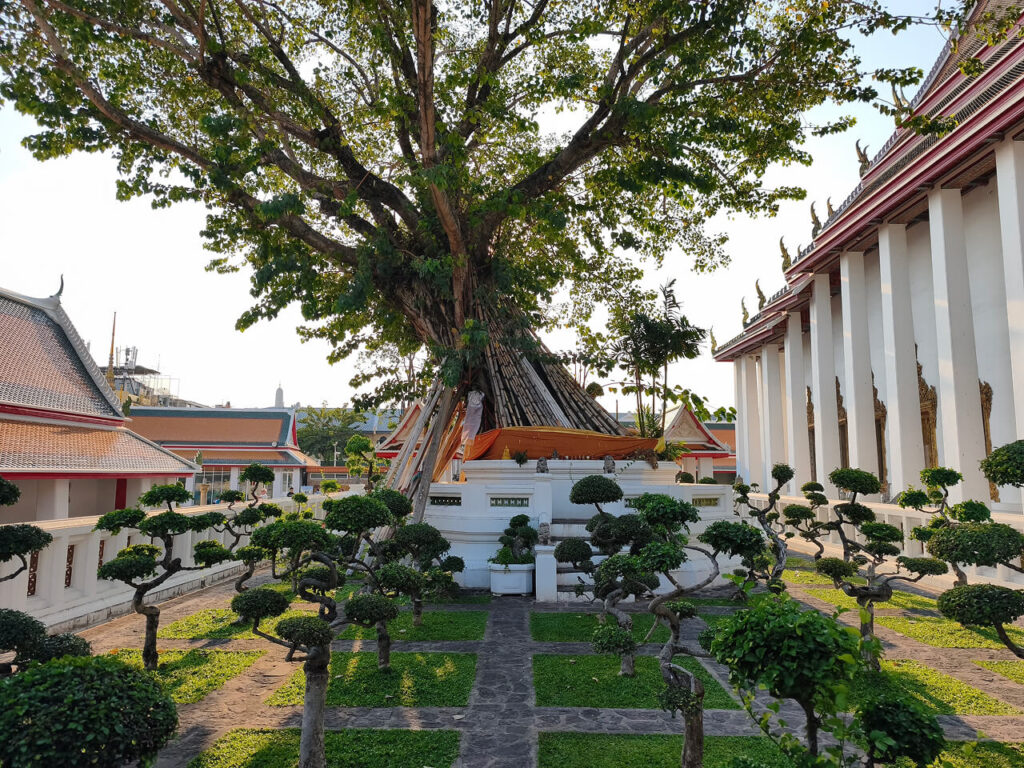
The temple is popularly known as Wat Pho. “Wat” means temple, and “Pho” refers to the Pho tree, or sacred fig, that once grew nearby.
When King Rama I restored and expanded the temple, it received its official name: Wat Phra Chetuphon Wimon Mangkhalaram Rajwaramahawihan, which translates to “The Royal Temple of the Sacred Monastery of Jetavana, Blessed and Flourishing.” But honestly, Wat Pho is much easier to say 😄
Entrance Fee
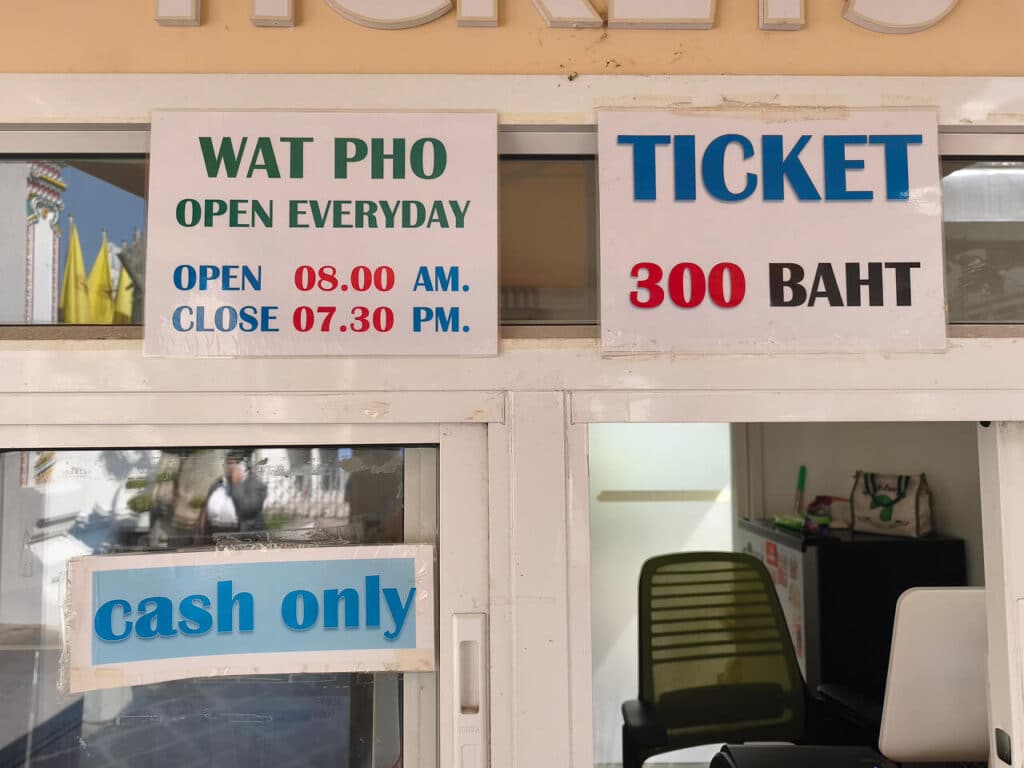
Entrance to Wat Pho costs 300 baht. Tickets are only available on-site, and payment is cash only.
💡 The exact date of Wat Pho’s construction is unknown. However, when Thailand’s capital moved to Bangkok in 1782, the temple was already standing. That means Wat Pho is older than Bangkok as the capital!
Visitor Guidelines
Make sure your knees and shoulders are covered.
Near the temple, you can buy pants or sarongs to cover your knees. Women can also borrow scarves for free to cover their shoulders.
For entering some buildings within the Wat Pho complex, shoes must be removed.
Opening Hours
Wat Pho is open daily from 8:00 AM to 7:30 PM.
I recommend visiting either right at opening or around 4:30 PM—the heat is more manageable, and the sunlight hits the temple at a great angle for photos.
Facilities
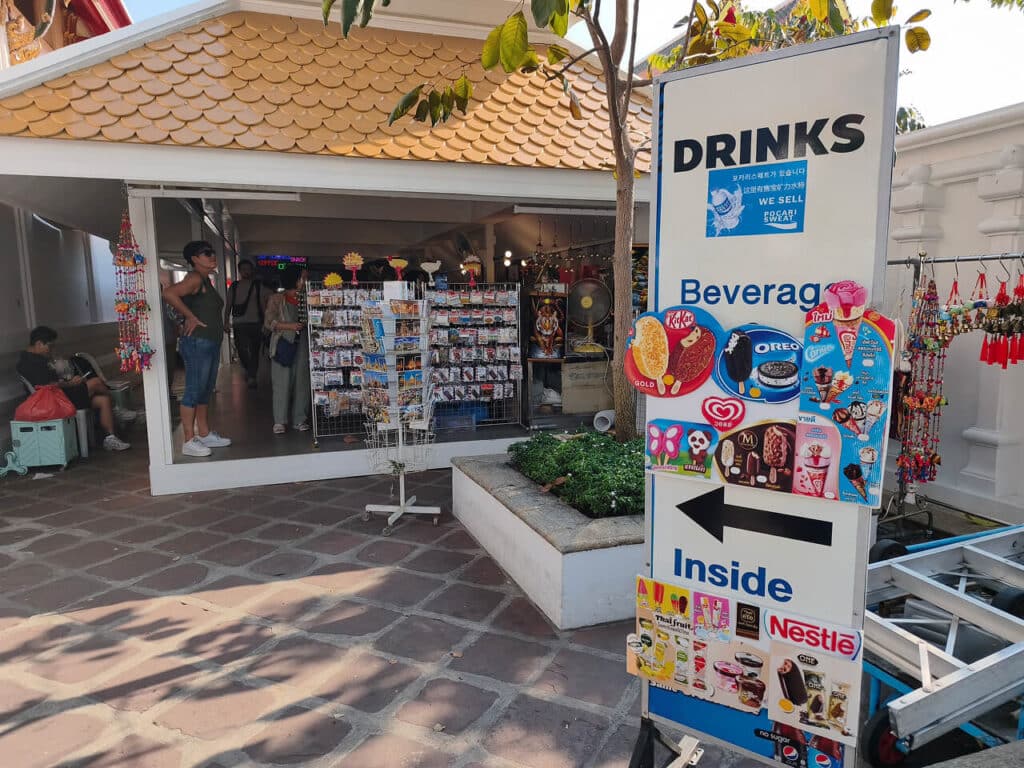
The temple grounds have free restrooms and several spots selling drinks and ice cream. A 600 ml bottle of water costs around 10 baht.
What’s Interesting at Wat Pho
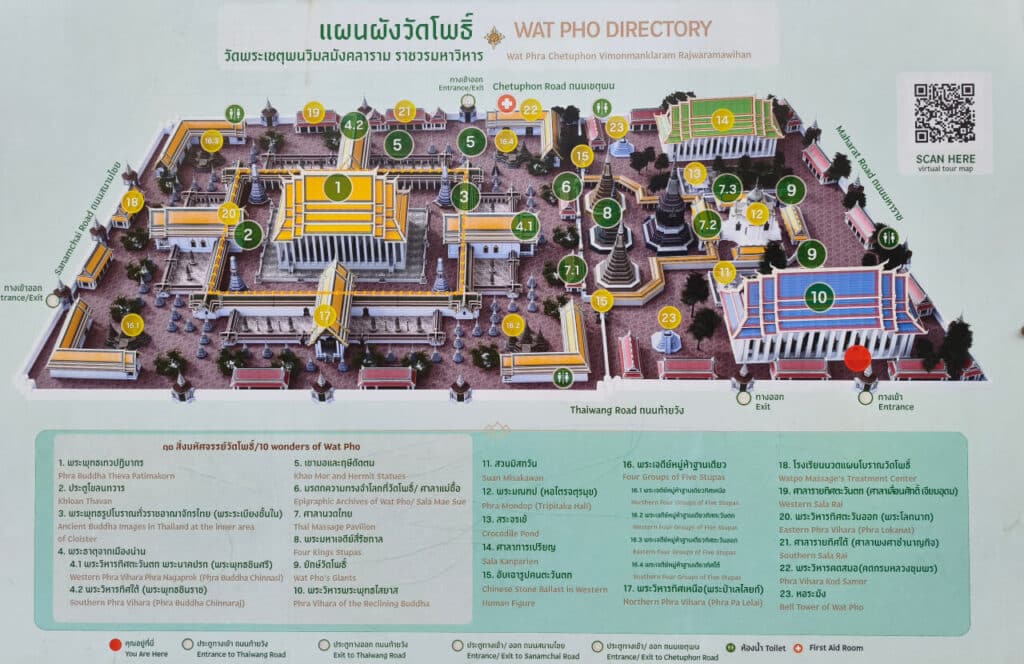
The Reclining Buddha is the main attraction of Wat Pho, but it’s far from the only highlight. The temple complex is quite large, so plan to spend at least two hours exploring.
The Reclining Buddha
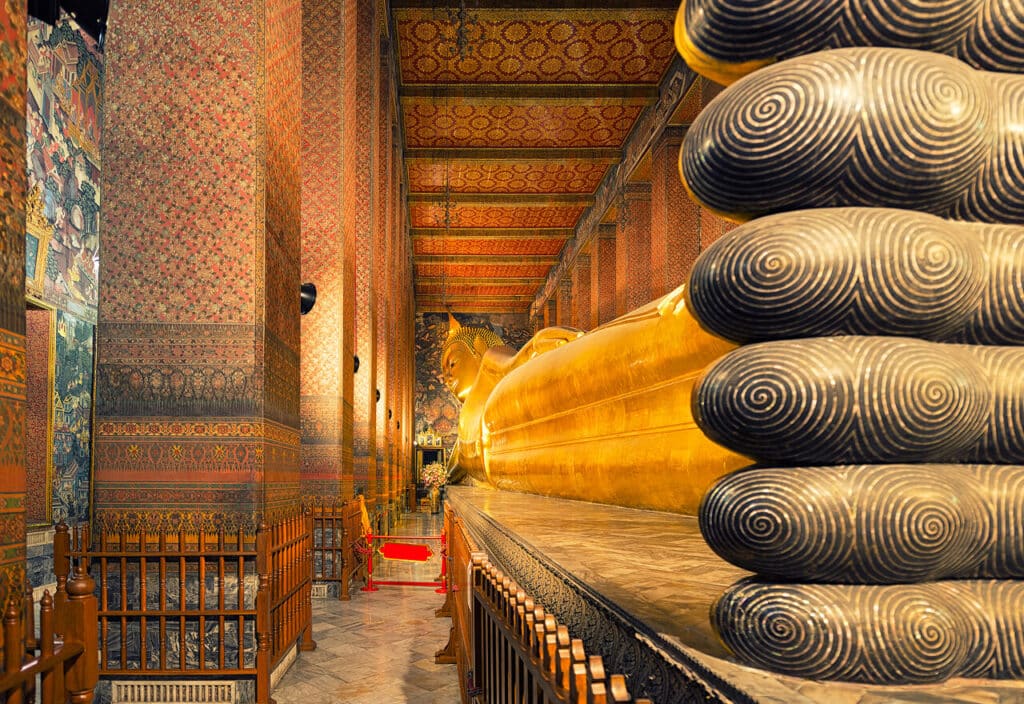
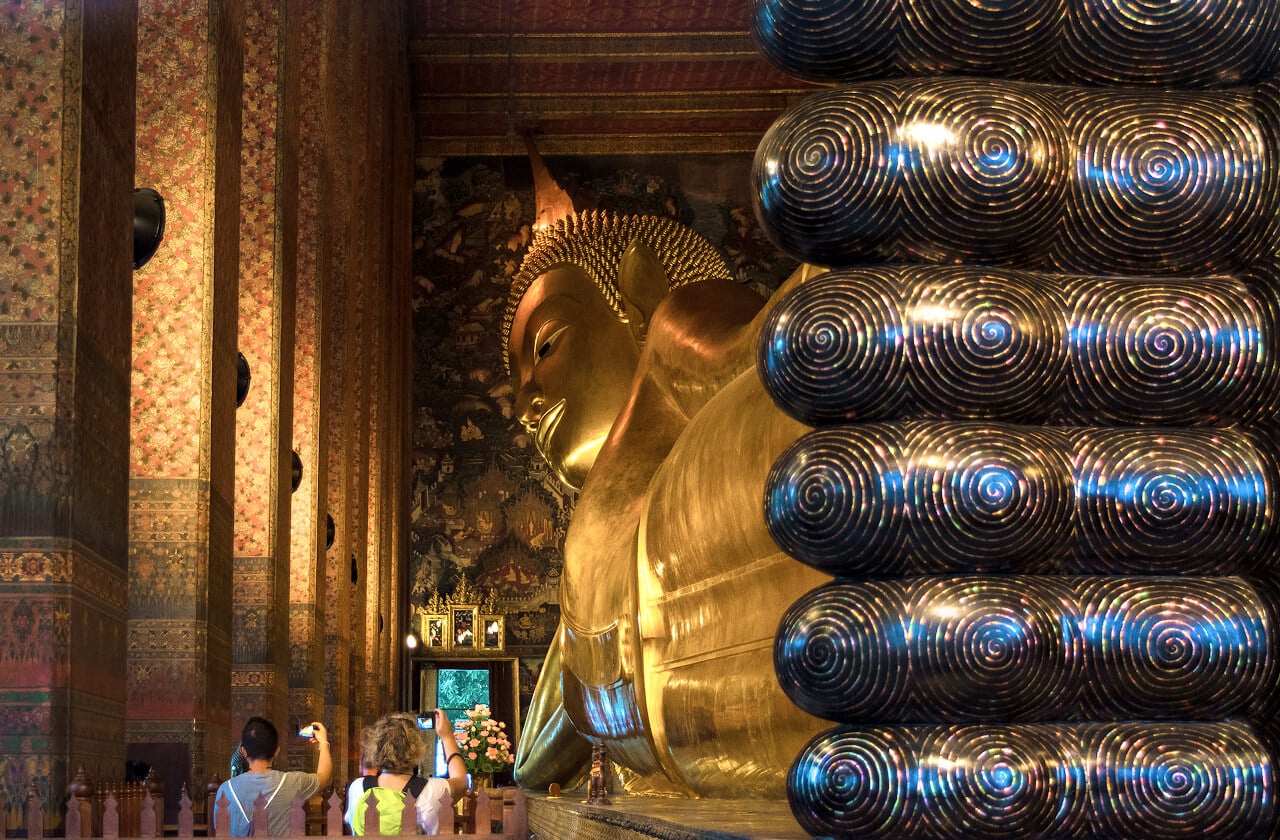
The Reclining Buddha statue is one of the largest in Thailand, measuring 46 meters long and 15 meters high. Its reclining position symbolizes Buddha’s entry into Nirvana.
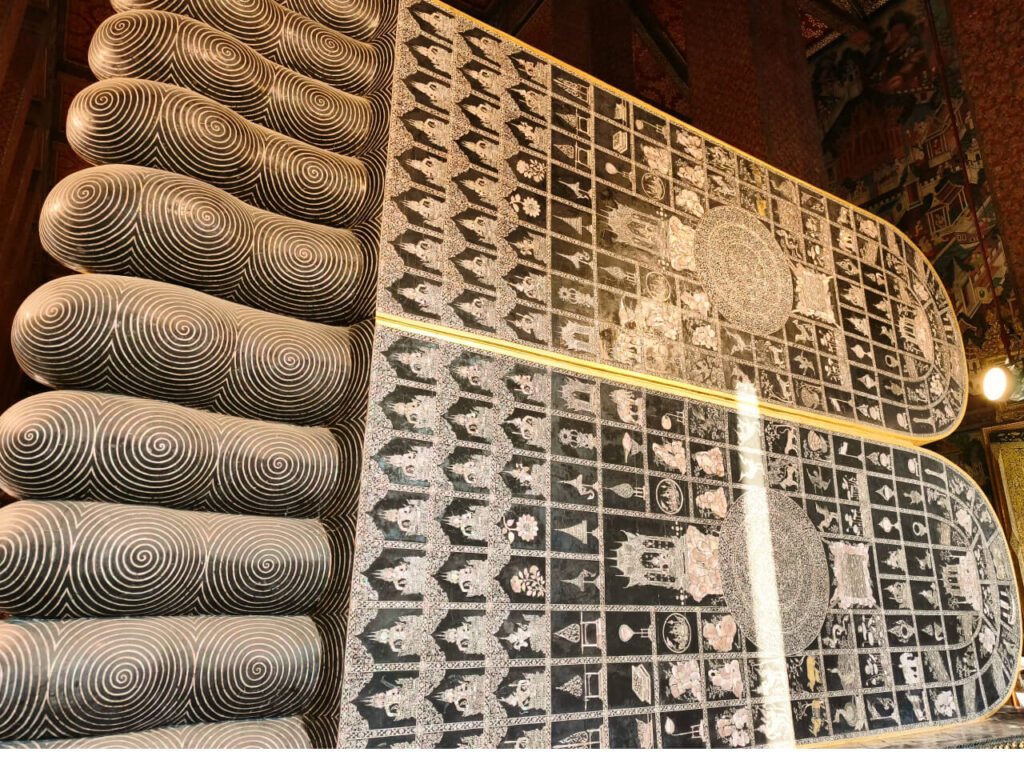
The statue’s feet are decorated with 108 auspicious Buddhist symbols made from mother-of-pearl.
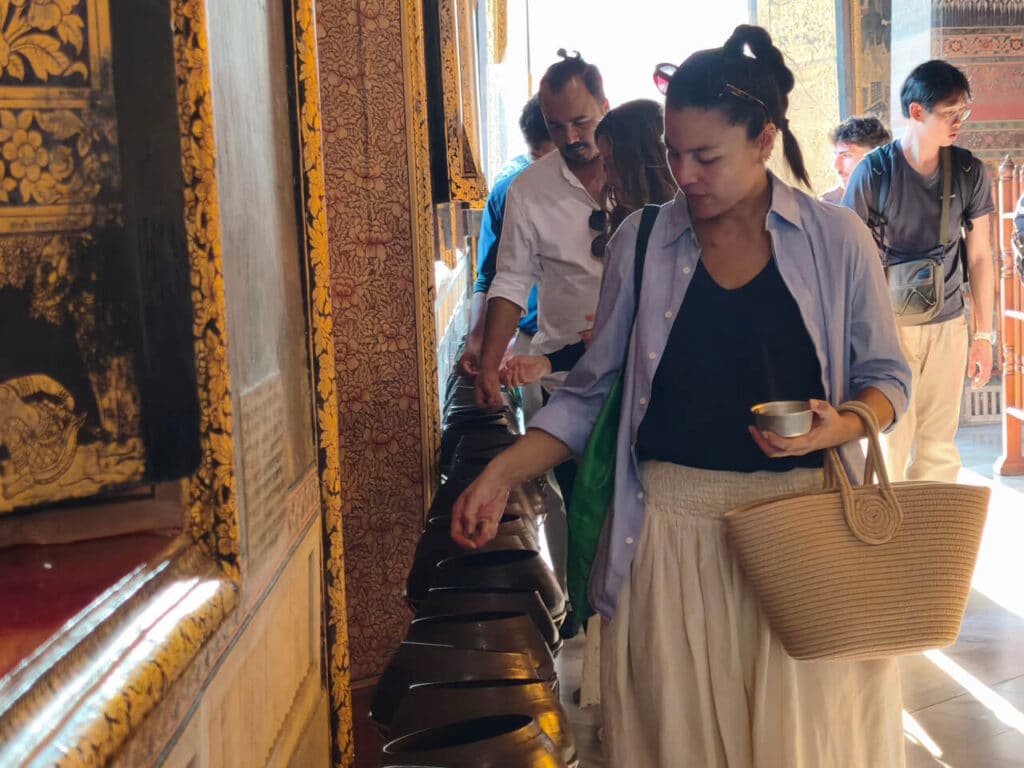
Behind the statue are 108 bronze bowls. It is believed that tossing coins into these bowls brings good luck.
Wat Pho – Thailand’s First Open University
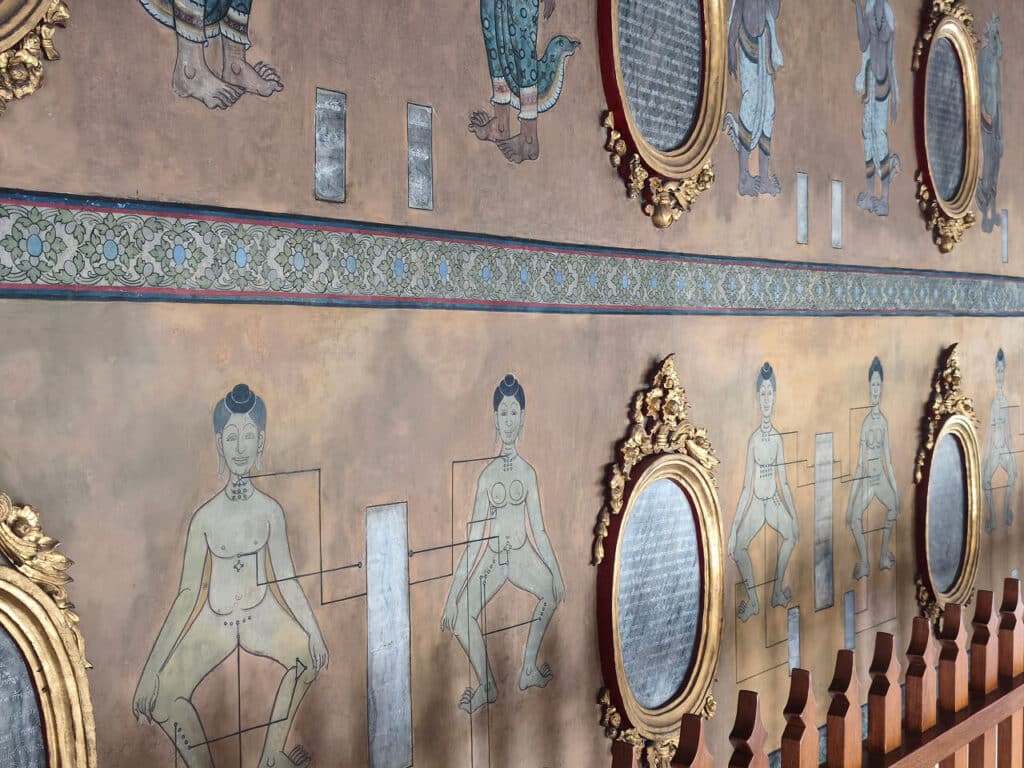
Wat Pho is recognized as Thailand’s first open university, where knowledge of traditional Thai massage was carved into the temple walls and shared with the public.
Traditional Thai Medicine School
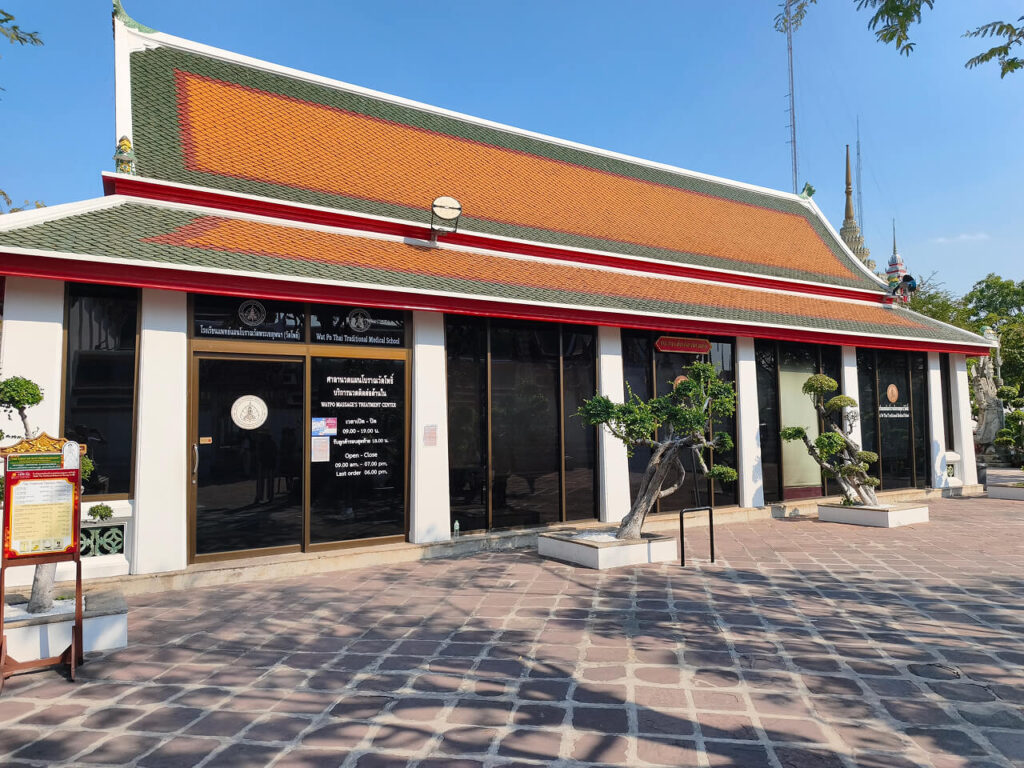
Inside the temple grounds is the Traditional Thai Medicine School, founded in the mid-20th century. Here, you can book a massage session while visiting.
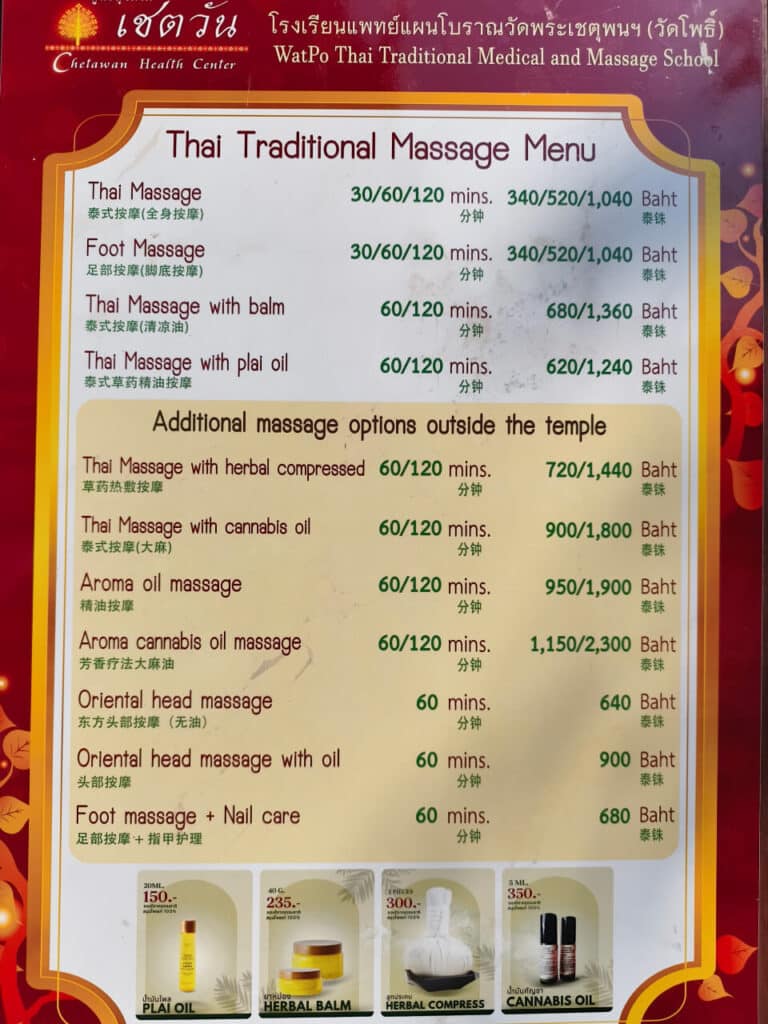
💰 Massage prices:
- Thai Massage: 30 min — 340 baht, 1 hr — 520 baht, 2 hrs — 1,040 baht
- Foot Massage: 30 min — 340 baht, 1 hr — 520 baht, 2 hrs — 1,040 baht
- Herbal Thai Massage: 1 hr — 680 baht, 2 hrs — 1,360 baht
- Oil Thai Massage: 1 hr — 620 baht, 2 hrs — 1,240 baht
Opening Hours: 9:00 AM to 7:00 PM, with the last session starting at 6:00 PM.
When I visited, the interior felt quite cramped, and the queue was about an hour long. If you plan to get a massage, it’s best to book your slot in advance and enjoy a relaxed walk around the temple while you wait.
Royal Stupas

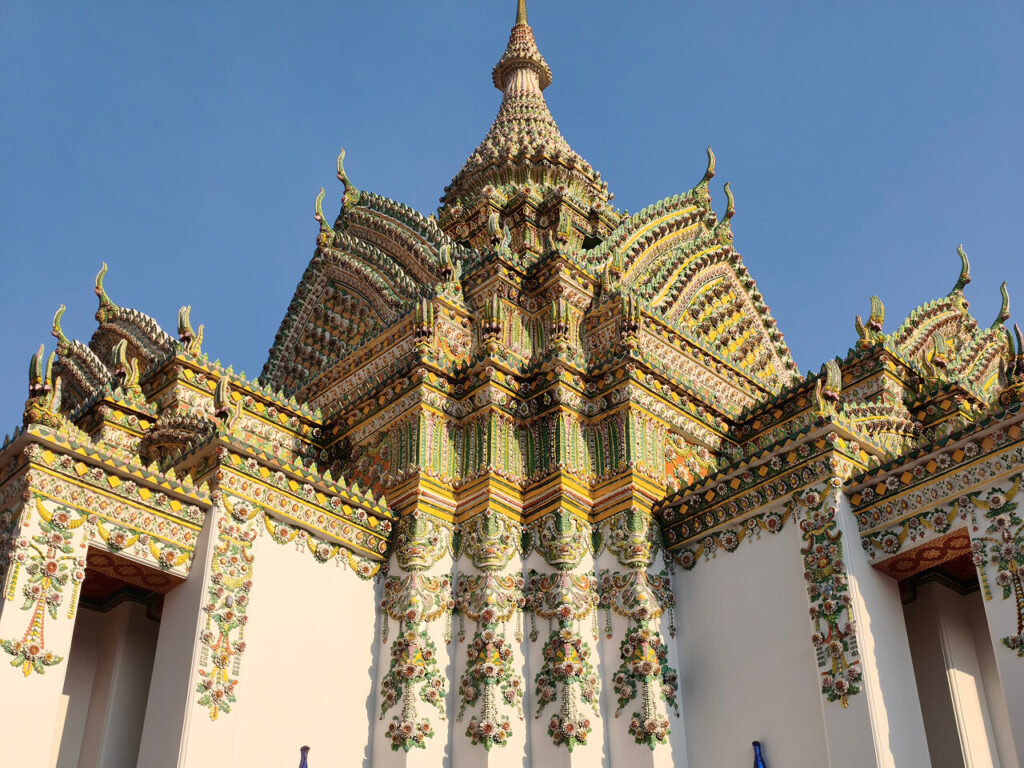
Within Wat Pho, there are four tall stupas representing the reigns of the first four kings of the Chakri Dynasty, from Rama I to Rama IV.
These stupas make for fantastic photos — they’re covered in Chinese porcelain and really stand out against the other temple buildings.
The Crocodile Pond
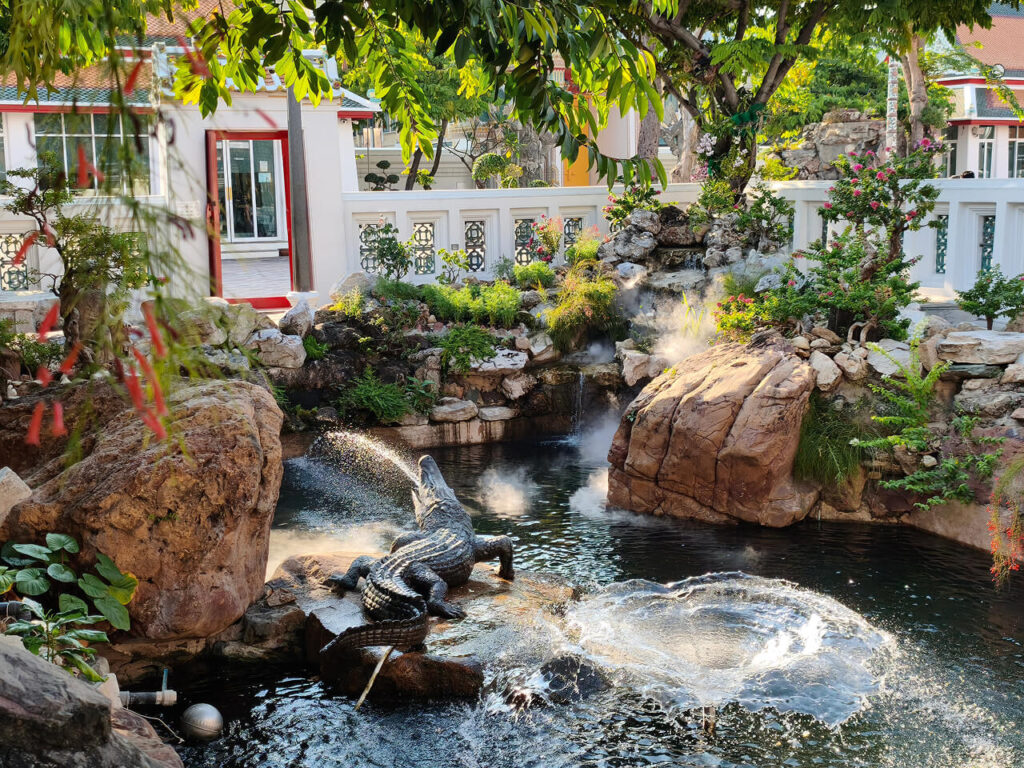
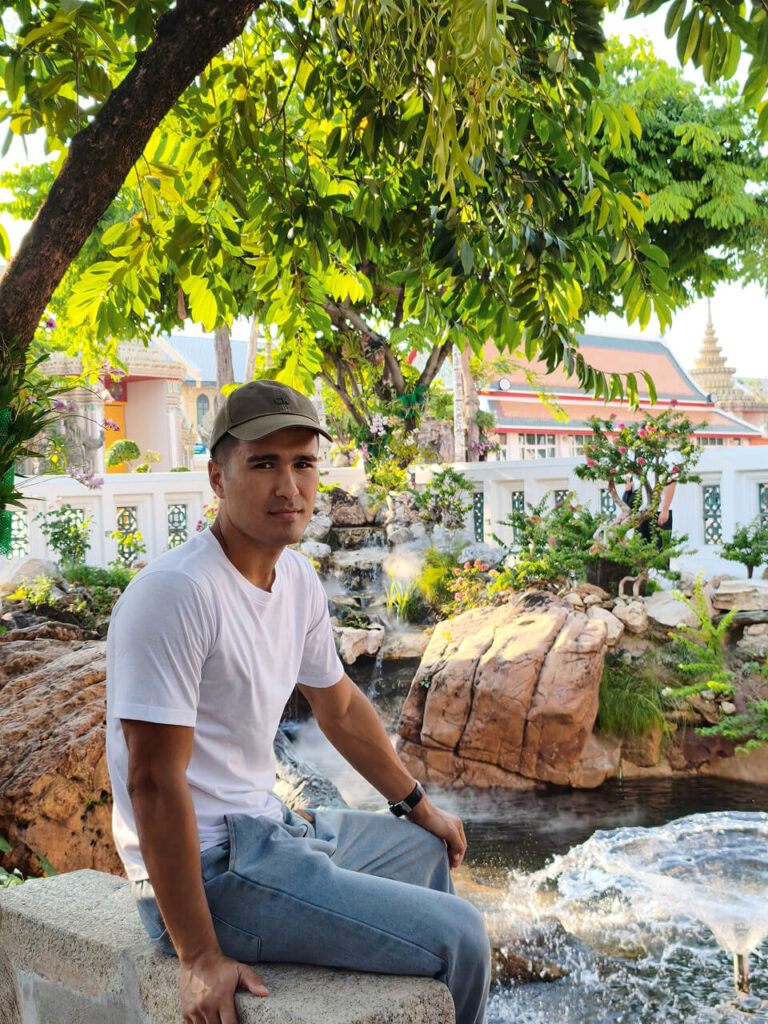
The Crocodile Pond is a peaceful spot to rest in the shade and take a break from the crowds while enjoying the fountains and greenery. Personally, this was my favorite spot at Wat Pho.
The Largest Collection of Buddha Statues
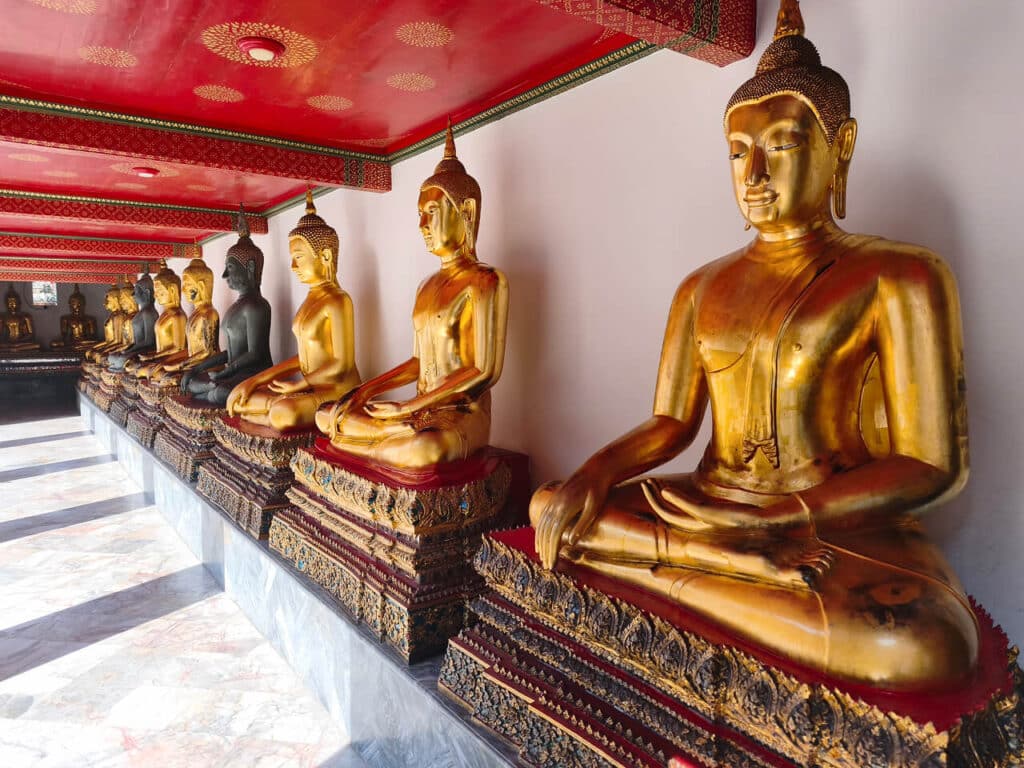
During Wat Pho’s renovation under King Rama I, Buddha statues from abandoned temples in Ayutthaya and Sukhothai were brought here.
Today, the temple houses over 1,000 Buddha statues, with the Reclining Buddha being the most significant.
Architecture
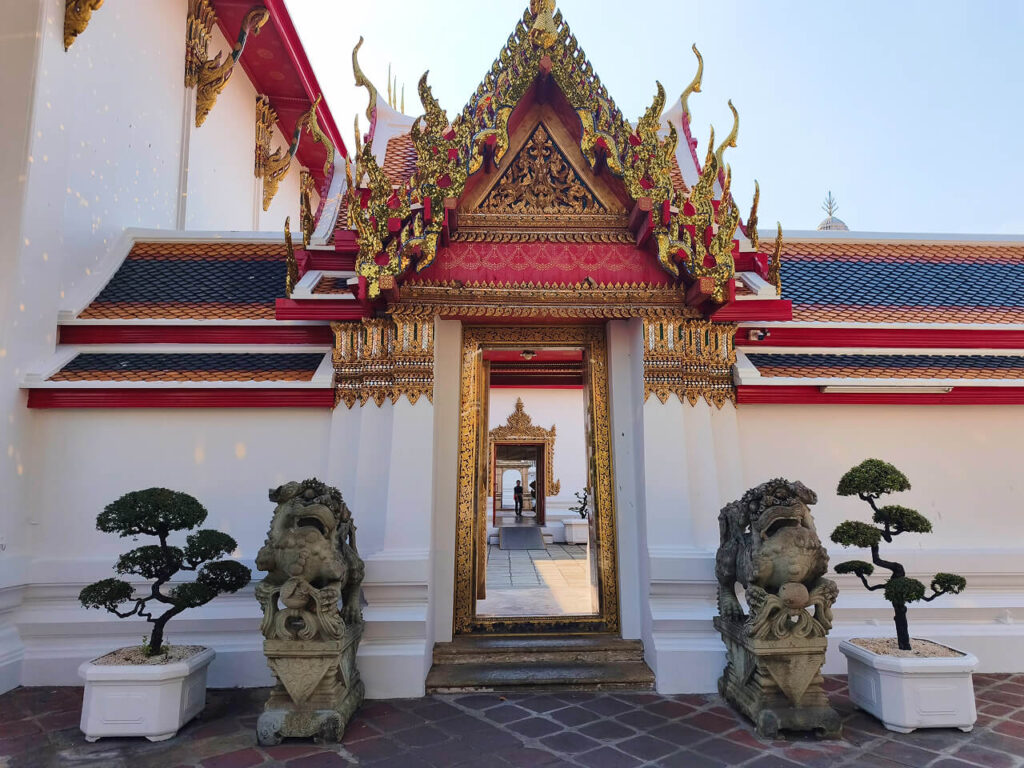
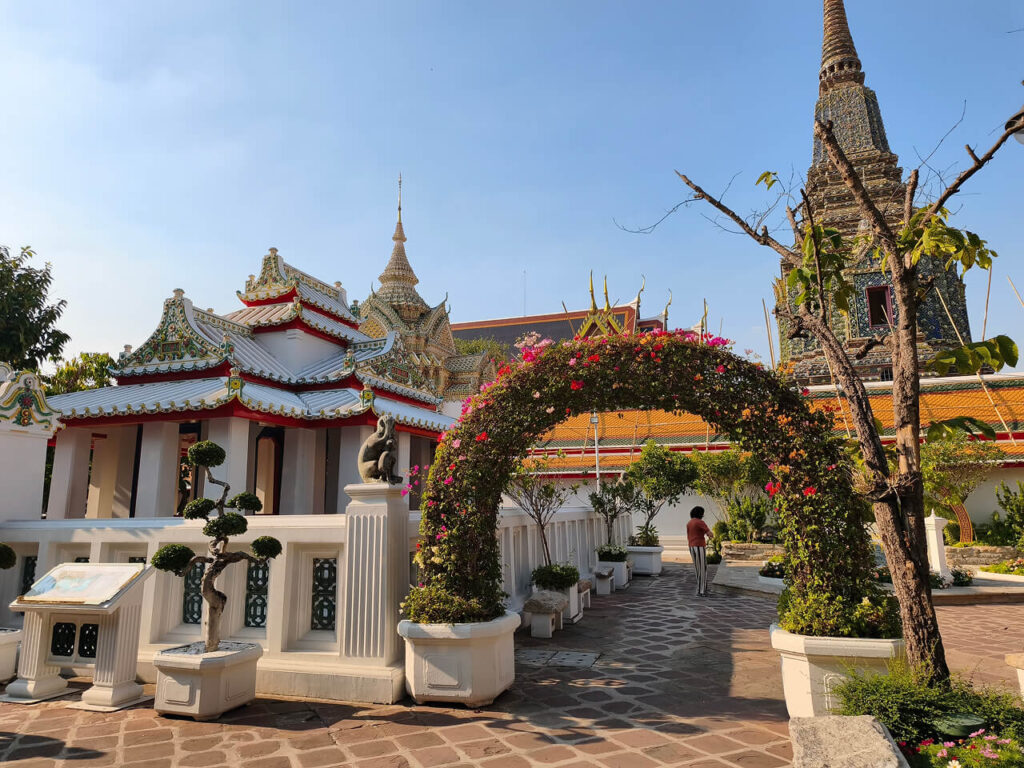
In addition to the major attractions, Wat Pho features many beautiful structures: bell towers, a library with ancient manuscripts, and other architectural elements that are a pleasure to explore as you walk through the complex.