✅ Updated on 23.04.2026

You Don’t Need a Visa to Buy a Motorbike in Thailand
Foreigners can buy a motorbike in Thailand without a visa. I purchased my motorcycle while staying in Thailand on a visa-exempt entry stamp, and it wasn’t an issue at all.
That said, your visa status does affect how you can pay. If you have a work permit, you may be able to buy a motorcycle, car, or other big-ticket items on installment payments. And if you don’t have a work permit, expect to pay the full amount upfront.
Where to Look for a Motorbike in Thailand
🆕 If You’re Buying a New Bike
If you want a brand-new motorcycle, go straight to official dealerships. That’s the safest and simplest option.
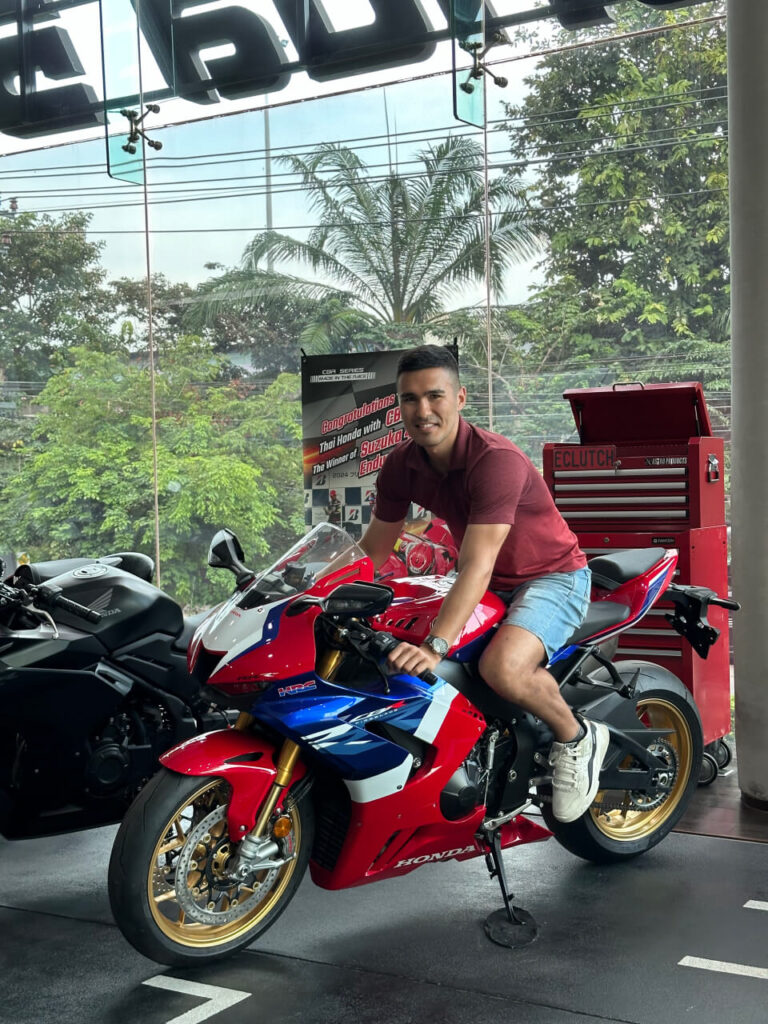
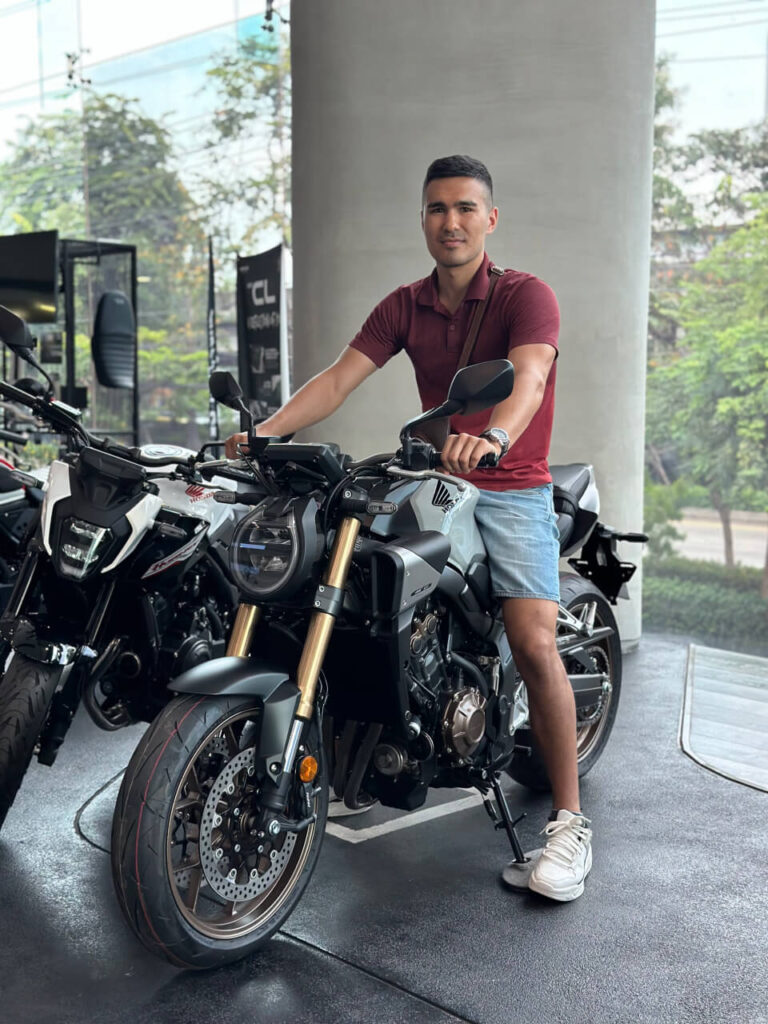
I live in Bangkok, and Honda dealerships are literally everywhere — almost every district has one. I also visited showrooms for Kawasaki, Triumph, Royal Enfield, and BMW. In other words, the choice is huge, and finding a dealership on Google Maps is easy.
👉 A small but important tip from personal experience:
If you want to do a test ride, wear long pants or jeans. If you show up in shorts, the staff will simply refuse the test ride.
🛵 If You’re Buying a Used Motorbike
You can find used motorbikes in Thailand in two main ways: through used-bike dealerships or from private sellers.
Used motorcycle dealers are easy to find on Google Maps — just search for “used motorcycle dealer”. Many of them also post listings on Facebook Marketplace, so it’s worth checking both.
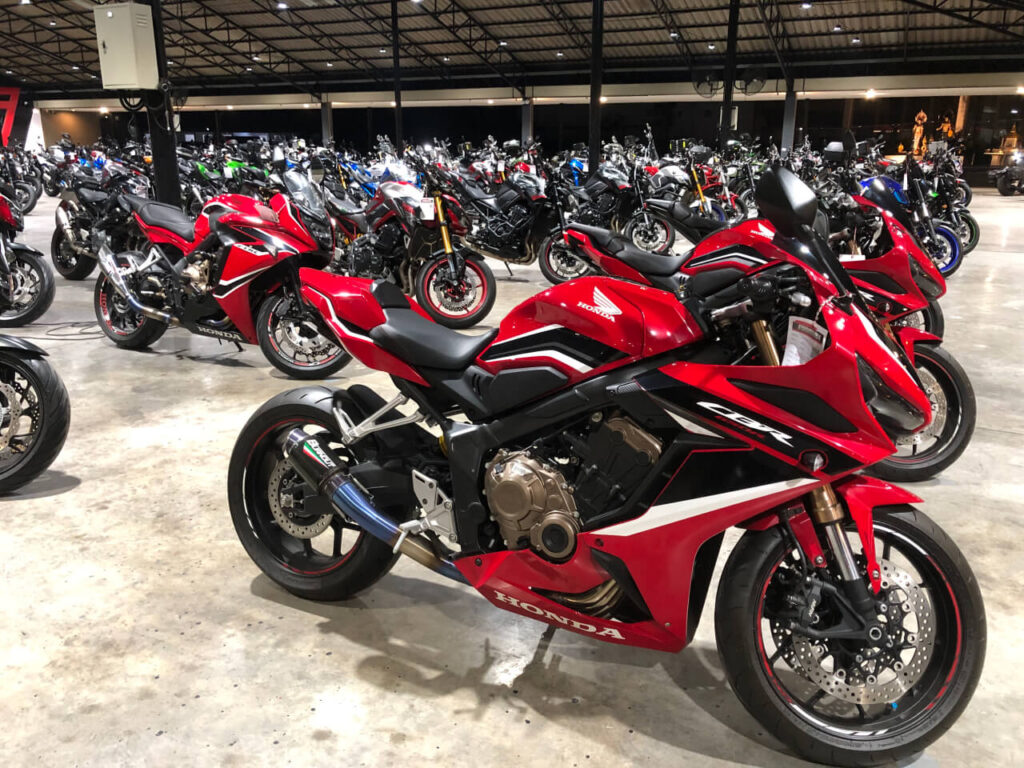
One big advantage when buying used: you’re paying the full amount upfront, which means you can and should negotiate. For example, if a bike was listed at 175,000 THB, I was often able to knock 5,000–10,000 baht off without much effort.
I checked out both dealerships and private sellers, so here’s an honest breakdown of the pros and cons of each option
| Pros and Cons | Used Motorbike Dealership | Private Seller |
|---|---|---|
| ✅ Pros | – A selection of bikes (larger or smaller depending on the shop) – Free registration and ownership transfer in your name at the Department of Land Transport – A warranty on the engine and electronics (~30 days) – Staff usually speaks English | Lowest possible price |
| ❌ Cons | Prices are higher than from private sellers | No help with paperwork — you’ll receive the documents and must handle the ownership transfer yourself |
A good example of a solid used motorbike dealership near Bangkok is Thunderbike.
What Documents Do You Need to Register a Motorbike in Your Name?
If you buy a motorbike from an official dealer or a used-bike dealership, the staff will handle all the paperwork for you. This service is usually included in the price, so you only need to provide a few documents.
Documents from the buyer:
- Your passport and a copy
- A Certificate of Residence for buying a motorbike, plus a copy
👉 Read more: How to get a Certificate of Residence in Thailand
If, like me, you’re buying a motorbike from a private seller, you’ll need to handle the ownership transfer yourself.
For this, you’ll have to visit the local Department of Land Transport (DLT) — this is Thailand’s equivalent of the traffic police or Department of Motor Vehicles (DMV).
Documents from the seller:
- The registration book (also known as the green book)
- A sale and purchase agreement (template)
- A signed ownership transfer form (template)
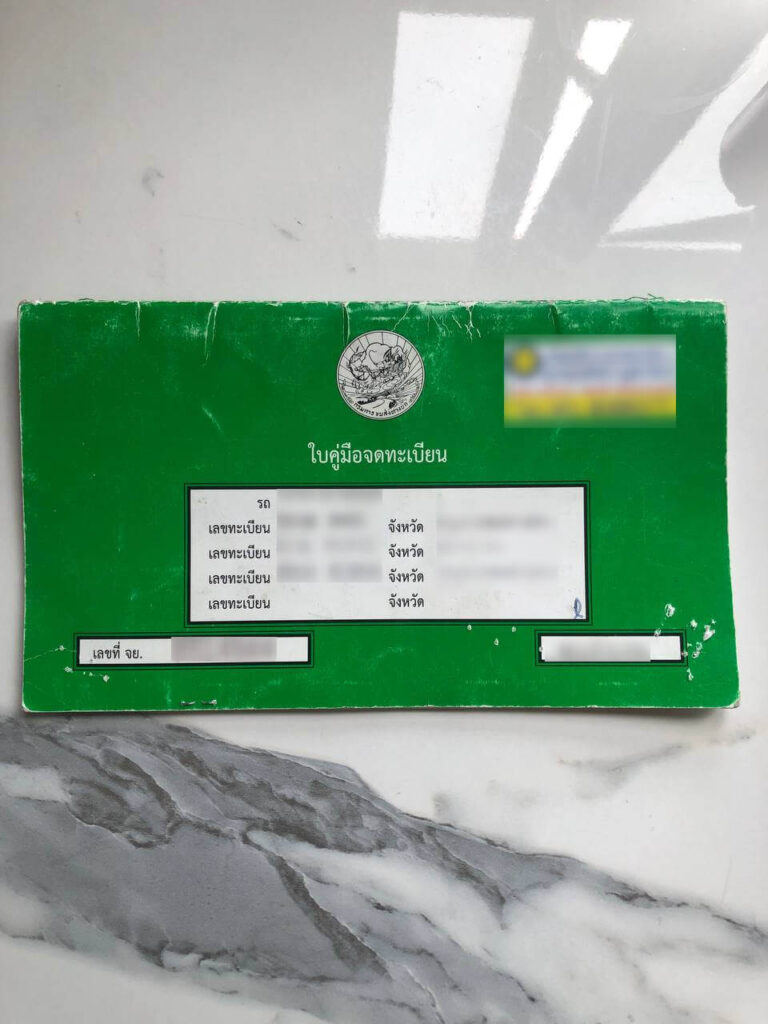

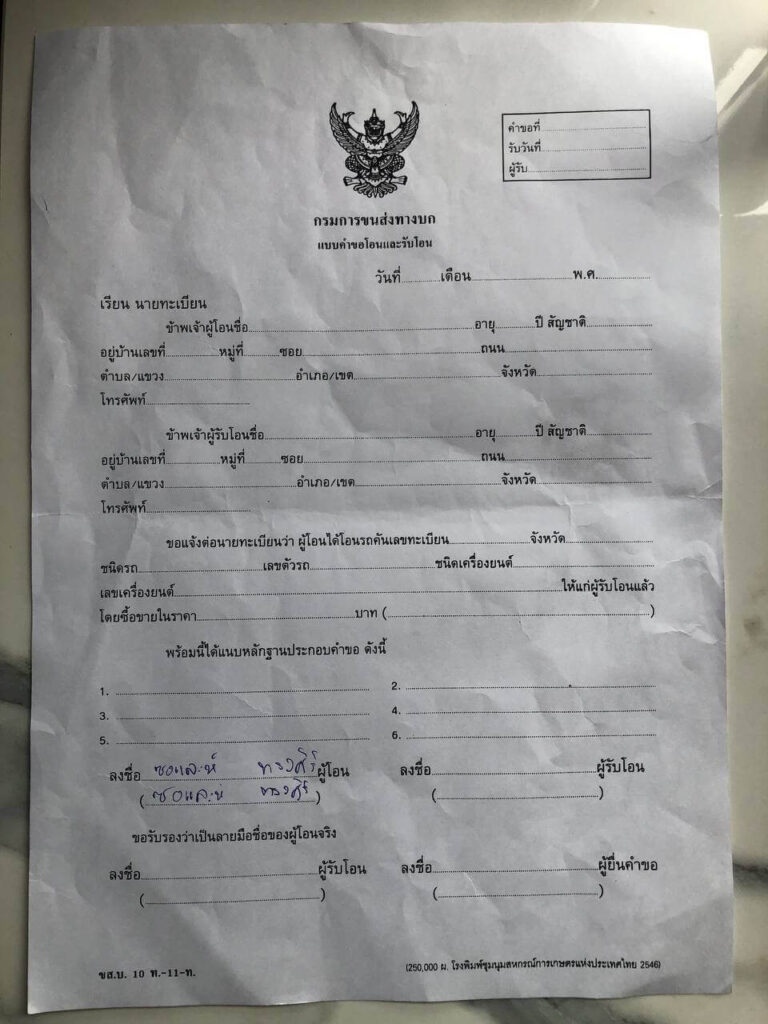
The seller doesn’t have to go to the DLT with you, since the transfer form is already signed in advance.
How to Transfer Motorcycle Ownership in Thailand
If the motorbike is registered in a different province from where you want to register it, the process will take two visits to the DLT. If it’s registered in the same province, you can usually do everything in one visit.
Here’s how it worked for me in Bangkok.
1️⃣ Go to the DLT
Open Google Maps, type DLT, and go to the nearest office.
If you’re in Bangkok and the bike is registered in another province, you need to go to the main Department of Land Transport office near Chatuchak Park, Building 2. Smaller DLT offices won’t handle inter-province transfers.
2️⃣ Information Desk (5–10 minutes)
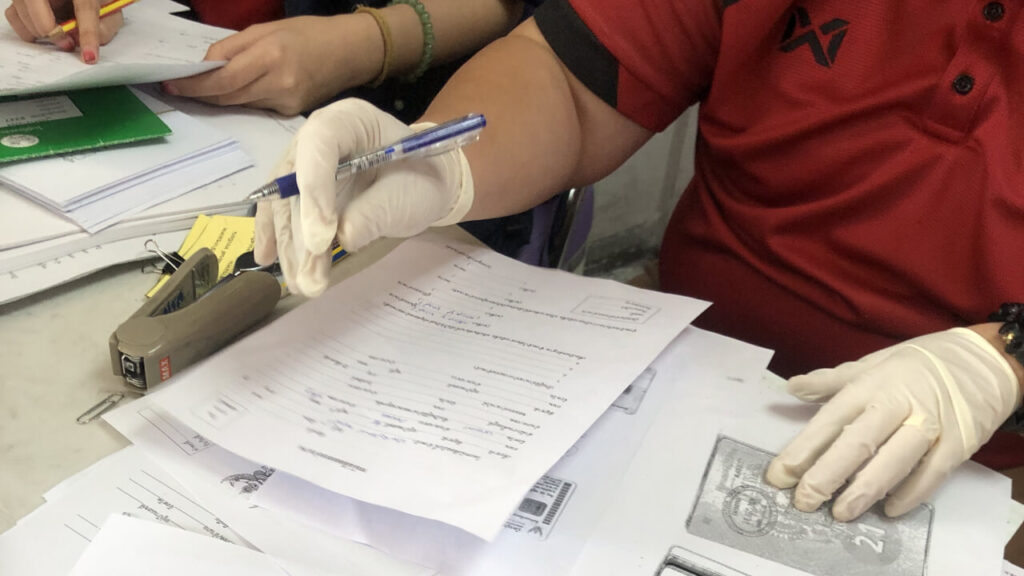
Go to the information desk and explain that you want to register the motorbike in your name. Hand over all the documents.
If you’re friendly enough, the officer may fill out the application form for you — which is a big help, because the form is in Thai.
3️⃣ Vehicle Inspection (about 15 minutes)
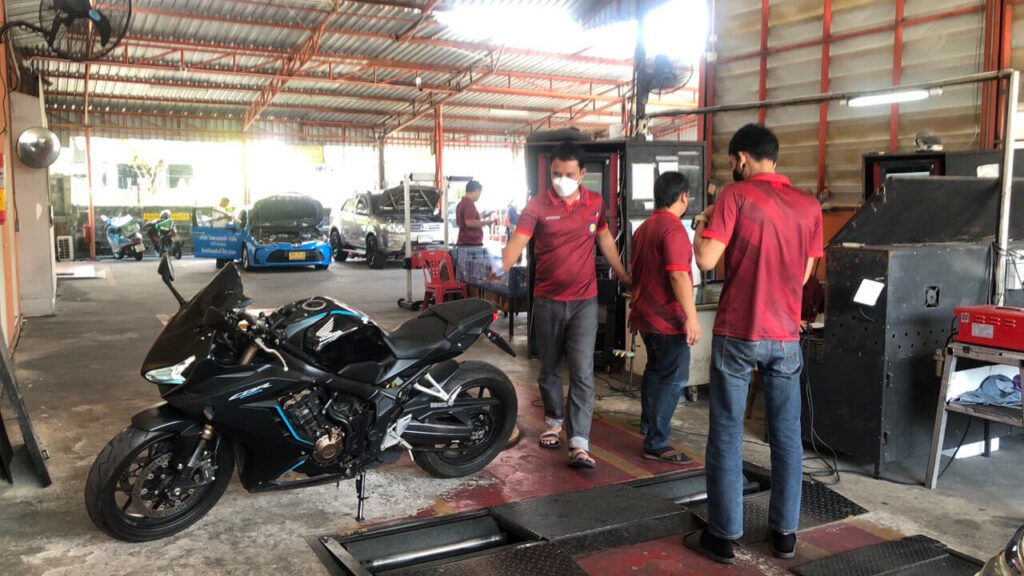
Ride the bike to Building 4 for inspection.
If the bike is from another province, you may first be sent to an additional inspection point before Building 4 — just follow the instructions.
They check:
- Noise level
- Exhaust emissions
- A few basic technical parameters
The inspection fee is 60 baht, paid on the spot.
4️⃣ Buy Mandatory Insurance (about 20 minutes)
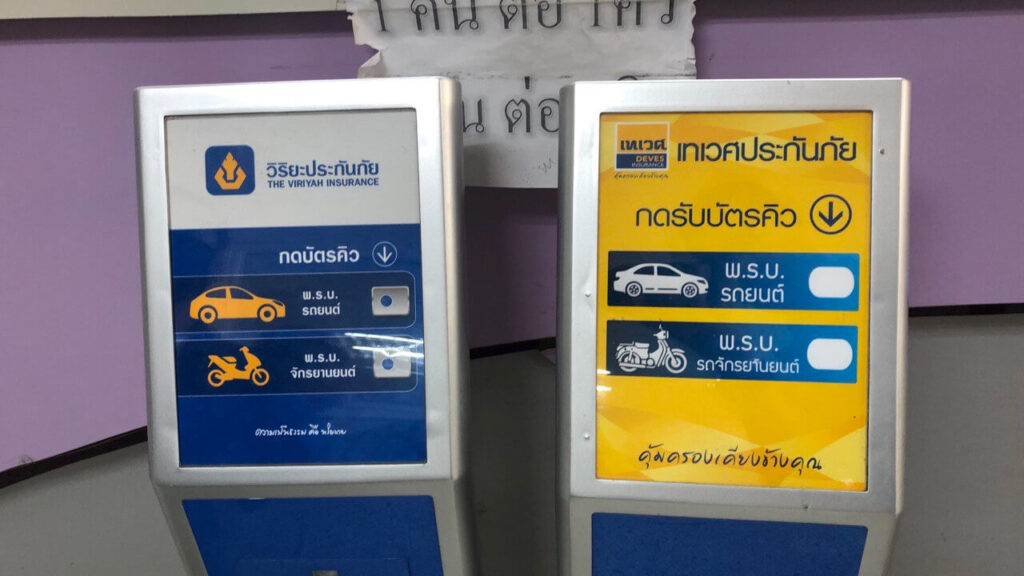
Insurance counters are located on the first floor of Building 2. Usually, you’ll be offered a choice between two insurance companies.
For motorbikes, there’s no real difference between them, so you can pick either one. The mandatory insurance costs 646 baht per year.
5️⃣ Submit Documents and Pay the Tax (1–2 hours)
Go to the ticket counter, submit your documents, and get a queue number.
When it’s your turn, hand in the paperwork and pay the annual motorbike tax, which is 100 baht.
6️⃣ Second Inspection (5–10 minutes)
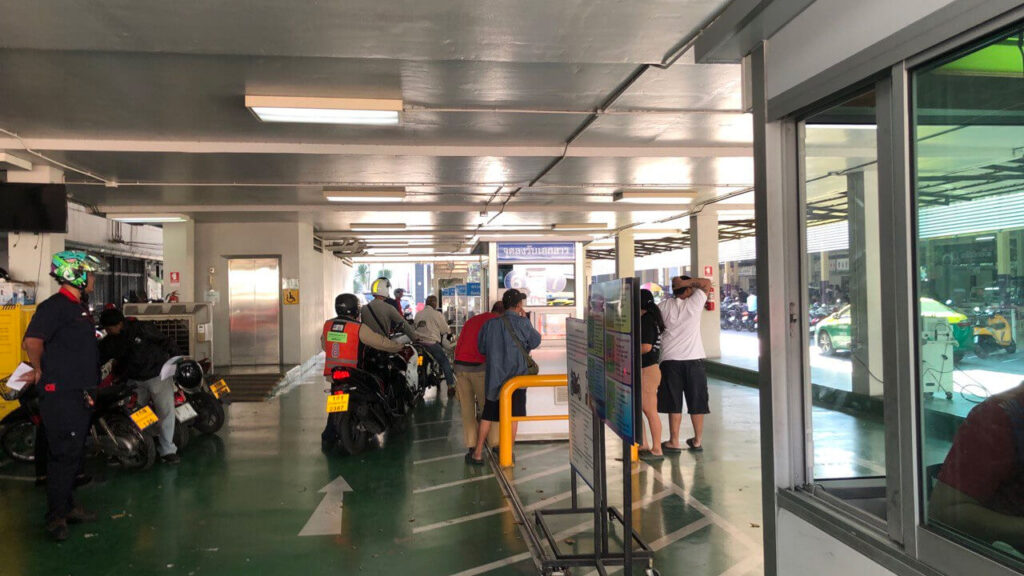
Head back to Building 4.
This time, the officers will:
- Check the VIN number
- Do a quick visual inspection of the bike
After that, you’re done for the day. You can go home and wait about one week for the motorbike to be officially registered under your name in the DLT system.
7️⃣ Return to the Information Desk (5–10 minutes)
Go back to Building 2 and return the documents.
In some cases, the staff will fill out the remaining forms for you. If not, you’ll need to complete them yourself — again, the forms are in Thai, but the officers usually help if you ask politely.
8️⃣ Get Your New License Plate (about 20 minutes)
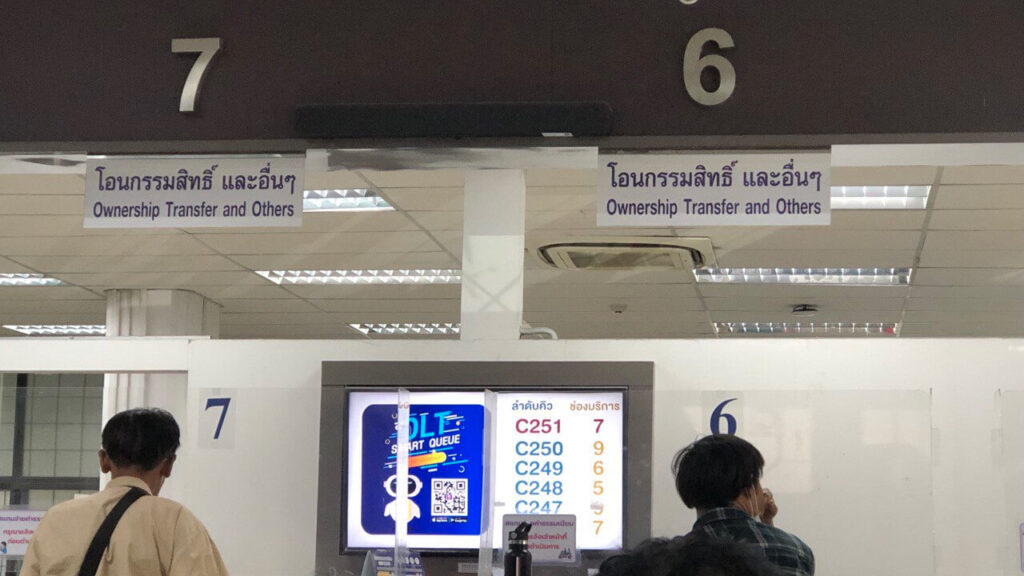
Submit your documents and take a queue number for new plate issuance. When your number is called, you’ll return the old license plate and receive a new one.
The registration fee depends on the purchase price of the bike:
- If the bike cost under 100,000 THB, registration is usually around 500 baht
- If it’s more expensive, the fee is higher
In my case, the registration cost was 980 baht.
🎉 Congrats — the bike is now officially registered in your name. Don’t forget to always carry:
- Your insurance
- Proof of paid annual tax
You can store the documents under the seat or put the tax paper in a small plastic cylinder attached near the license plate. These cylinders are sold right at the DLT office.
FAQs
No, you don’t need a motorcycle license to buy a scooter or motorbike in Thailand. You can complete the purchase without any driving license at all. However, a license is still required in practice. Official dealerships won’t allow test rides without one, and riding on public roads without a valid license can get you fined. The usual fine is between 500 and 1,000 baht.
If you don’t have a license yet, I’ve prepared a separate guide explaining how much a motorcycle license costs in Thailand and how to get one step by step.
It depends on the price of the bike. Cheap scooters are much easier to sell than expensive motorcycles. When you sell a bike as a foreigner, the buyer usually has to pay the full amount at once, while many Thais are used to buying vehicles on installment plans.
Because of this, cheaper bikes have a higher chance of selling at a fair price. Expensive motorcycles, on the other hand, tend to attract resellers who will try to push the price below market value so they can make a profit later.
